443 Greenwich: The Building Built for Privacy
443 Greenwich is the only well-known residential building in Manhattan designed so that residents need not be seen arriving. The conversion of an 1880s Tribeca warehouse added a covered motor court and underground parking, so a car can enter, discharge and leave without anyone on the street observing it.
That single feature made the building a category of one. Let's look at why it matters commercially and what a buyer should establish.
1. What the Building Is
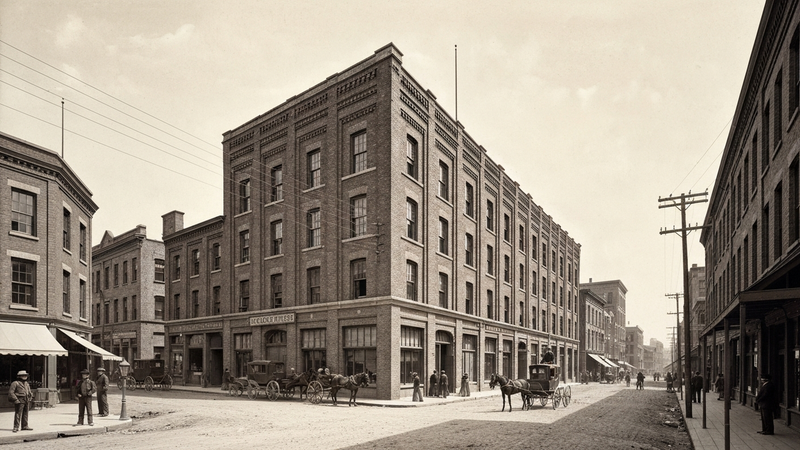
A brick industrial structure from the 1880s, converted rather than replaced. The loft proportions survive: large floor plates, high ceilings and arched windows, which produce apartments quite unlike those in a prewar apartment house.
Tribeca is full of buildings like this in origin. What separates this one is what the conversion added below ground rather than what it preserved above it.
For a buyer that means two distinct assessments: the quality of the loft apartments themselves, and the value of an arrival sequence that no other building in the district offers.
| Attribute | Detail |
|---|---|
| Address | 443 Greenwich Street, Tribeca |
| Original structure | 1880s brick warehouse and book bindery |
| Conversion | Residential condominium |
| Distinctive feature | Covered motor court and underground parking |
| Apartment type | Loft proportions, high ceilings, arched windows |
| Ownership | Condominium |
Building facts. Unit-level figures - size, exposure, charges, tax, parking - must be obtained for the specific residence.
The location is on Google Maps here.
2. Why Discretion Has a Price
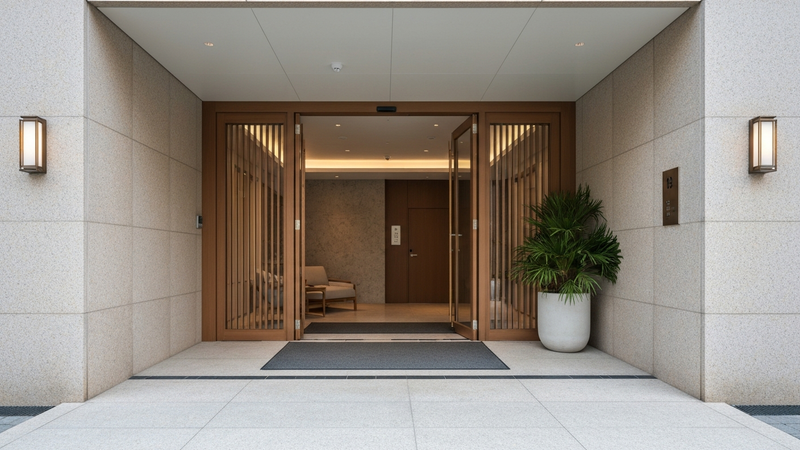
At the top of the market, a meaningful share of purchasers treat privacy as a requirement rather than a preference. A building that solves it structurally rather than through staffing serves that group in a way a doorman cannot.
The commercial consequence is a wider buyer pool at resale among exactly the purchasers who pay the most, which is an unusual combination. Most distinguishing features narrow an audience; this one broadens it at the top.
It is also not reproducible. Adding a covered court and underground access to an existing Manhattan building is close to impossible, which is why no competitor has followed.
Our luxury purchase guide covers how attributes of this kind are priced at the top of the market.
3. The Diligence an 1880s Conversion Requires
The ordinary condominium review: audited financial statements, the reserve balance in dollars, assessment history and two years of board minutes.
Then the age. A structure from the 1880s carries facade, structural and systems obligations that a 2019 tower does not, and the reserve study should state what is scheduled and how it is funded.
Ask also about the below-grade construction. Underground parking and a motor court in lower Manhattan mean waterproofing, drainage and mechanical systems that require ongoing attention.
Our building diligence guide sets out the full document list and how to read a reserve study.
4. Buying Here as an Overseas Purchaser

Straightforward as a condominium: no board approval vote, non-resident and entity ownership accepted, subletting governed by written building rules rather than by discretion.
Mansion tax applies from $1 million on the whole price, reaching 2.25% between $5 and $10 million, 3.25% above $10 million and 3.9% above $25 million, paid by the buyer at closing.
Settle ownership structure before contract; US estate tax reaches non-resident owners above a $60,000 exemption on US-situs assets. See our estate tax guide and buying from overseas guide.
Privacy and ownership structure
New York property records are public, and the name on a deed is searchable by anyone. Buyers who value discretion generally hold through an entity for that reason as well as for estate and liability planning.
In a condominium that is straightforward, since there is no board vote to satisfy. Settle the structure with your attorney before contract rather than attempting to change it afterwards.
Loft apartments and how they differ
An 1880s industrial floor plate produces open volumes rather than sequences of rooms, and the position of columns, windows and services varies more between units than in purpose-built housing.
That makes the specific apartment the whole question. Ask for dimensions and ceiling heights measured on camera — our remote viewing guide covers what to request.
Parking in Manhattan
Where a building includes parking, establish whether a space is deeded to the unit, licensed, or available only by waiting list, and what it costs monthly. The three arrangements have quite different values.
In a building where the parking is part of the privacy proposition rather than a convenience, this is worth confirming in writing rather than assuming from the marketing.
Final Thoughts: A Feature That Cannot Be Copied
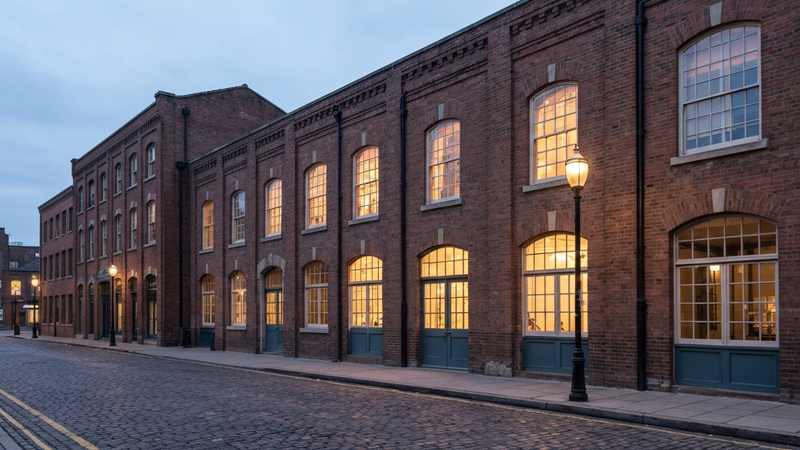
Most premium features in New York can be built again somewhere better. This one cannot, because it required an existing structure with the site and the below-grade room to accommodate it, and Manhattan has almost none left. For a buyer who genuinely needs discretion, that makes the building close to unsubstitutable — and for one who does not, it is an 1880s loft conversion priced as though they did.
We cover Tribeca on Satoshi Onodera's YouTube channel and on Instagram. If a residence here is in view, talk to our team and we will obtain the financials and the parking position first. Real estate brokerage services are provided through licensed professionals.
A note on financing. Foreign national mortgages require a larger deposit and a longer underwriting period than domestic ones, and lenders assess nineteenth-century conversions with more care than new construction.
Confirm early that your lender is comfortable with the building itself. Where the purchase will be held through an entity, confirm that too, because not every lender will finance an entity purchase and the ones that do price it differently.
A final point on the district. Tribeca now holds several converted nineteenth-century buildings and several new towers within a few blocks, all condominium and all open to a non-resident purchaser.
What separates them is what the conversion preserved and what it added below ground. Viewing two conversions and one new tower in the same week is the fastest way to establish which kind of building you actually want.
One point that applies to every purchase of this kind from another country. The document work — financial statements, reserve balance, assessment history, board minutes and the governing agreements — can all be completed before anyone travels, and it is the part of the process that actually determines whether a building is sound.
The physical inspection is the part that requires presence, and even that can be run as a live walkthrough with measurements taken on camera. Buyers who reverse the order, travelling first and reading afterwards, routinely lose weeks and occasionally lose deposits.
Reinvent NY provides business consulting, operational support, and coordination services. Legal advice and immigration filings are handled by independent licensed attorneys. Real estate services are provided through licensed professionals and applicable brokerage relationships. This article is for informational purposes only and does not constitute legal or investment advice.
More buildings worth knowing: 100 Eleventh Avenue, 111 West 57th Street, 130 William. The full set is indexed under New York building profiles.

Satoshi Onodera
Founder & CEO, Reinvent NY Inc.
Founded Reinvent NY in 2024. Providing relocation support from all over the world to America.
Ready to Get Started?
Our team in New York is ready to help with your visa, real estate, or relocation needs.
Schedule a ConsultationFrequently Asked Questions
Where is 443 Greenwich Street?
In Tribeca, on the block between Vestry and Desbrosses Streets in lower Manhattan. The location is on [Google Maps](https://maps.google.com/?q=443+Greenwich+Street+New+York).
What was the original building?
An 1880s brick warehouse and book bindery, later converted to residential condominium use.
Why is it known for privacy?
The conversion added a covered motor court and underground parking, so a resident can arrive by car and reach a lift without appearing on the street.
Is it a condominium?
Yes. There is no board approval vote, and non-resident and entity ownership are generally accepted.
What are the apartments like?
Loft proportions from an 1880s industrial structure — large floor plates, high ceilings, arched windows — rather than the compartmented rooms of a prewar apartment house.
Does privacy affect resale?
It widens the buyer pool at the top of the market, where discretion is a genuine requirement rather than a preference for a meaningful share of purchasers.
What should I confirm first?
The reserve balance and capital plan for an 1880s structure, assessment history, board minutes, parking arrangements, and the actual charges for the specific residence.
Real Estate Guides & Data
More guides
- Reading Building Financials: The Numbers Behind the Lobby
- Rent Stabilization for Buyers: What Regulation Means
- Schools and School Zoning in New York
- Selling a Tenanted Property: Occupied vs Vacant Exits
- Studios and One-Beds: The Investor's Entry Units
- Title Search and Title Insurance in the US
Related Articles
New Dorp Staten Island Real Estate Guide 2026
An expert 2026 guide to buying and renting in New Dorp, Staten Island: housing stock, prices, transit, and schools for overseas buyers.
Tottenville Staten Island: 2026 Real Estate Guide
Our 2026 guide to Tottenville, Staten Island covers housing stock, prices, rents, transit, and schools for buyers and renters considering this NYC neighborhood.
Great Kills Staten Island Real Estate Guide 2026
What Great Kills on Staten Island costs in 2026: the housing stock, sale and rent ranges, how residents commute, and what a buyer should check before offering.
50 Gramercy Park North: A Key to a Private Park
50 Gramercy Park North stands on the only private park in Manhattan, where key access runs with the building. What that means for a buyer.