50 Gramercy Park North: A Key to a Private Park
Gramercy Park is the only private park in Manhattan, and it is locked. The fenced square is not open to the public; access runs by key to the owners of the lots that surround it, which is an arrangement that has survived since the 1830s.
50 Gramercy Park North sits on that square, designed by Robert A.M. Stern Architects. For a buyer the key question is literally a key. Let's take it.
1. What the Building Is
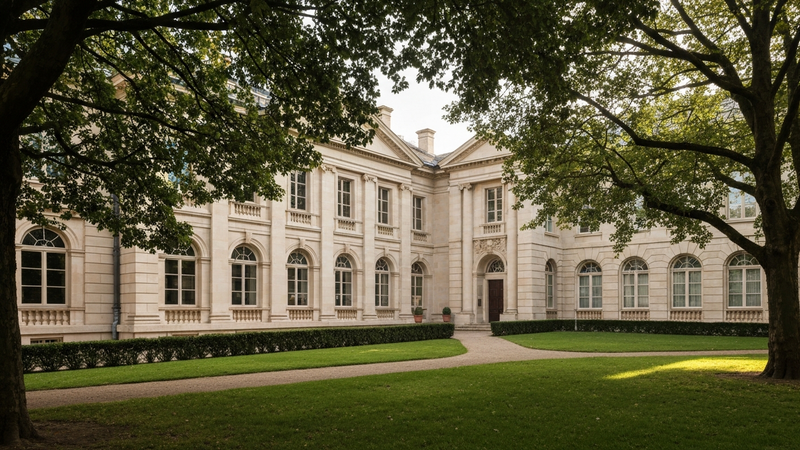
A Stern building on the north side of the park, with residences alongside a hotel operation. The material language is the same one Stern used uptown — masonry and proportion rather than curtain wall — applied to a much smaller and older square.
Gramercy is one of the few parts of Manhattan that reads as a planned residential district rather than as a stretch of grid. The square sets the character and the surrounding buildings have largely preserved it.
The hotel alongside means service infrastructure exists within the complex, on the same logic as any branded residence: a building already staffed at hotel depth can extend that to a small number of apartments.
| Attribute | Detail |
|---|---|
| Address | 50 Gramercy Park North, Manhattan |
| Architect | Robert A.M. Stern Architects |
| Setting | Facing Gramercy Park, Manhattan's only private park |
| Uses | Residences alongside a hotel operation |
| Ownership | Condominium |
| Park access | By key, attaching to qualifying lots — confirm for the unit |
Building facts. Park access, charges and tax must be confirmed in writing for the specific residence.
The location is on Google Maps here.
2. What a Private Park Actually Is
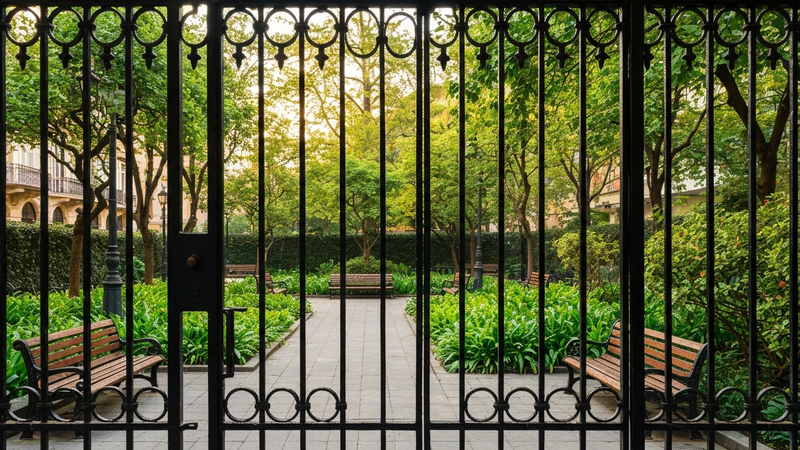
Two acres of fenced garden that the public cannot enter. Keys are issued to qualifying owners around the square and are not transferable in the ordinary sense; they attach to the property rather than to the person.
That produces something no other Manhattan address offers: a garden outside your building that is quiet because almost nobody is entitled to be in it.
It also produces a specific diligence item. Whether a particular apartment carries access is a question for your attorney and the managing agent, answered in writing, before an offer rather than after.
Do not accept a verbal assurance on this point. It is the single attribute that distinguishes this location from any other in the city, and it should be documented as such.
3. The Diligence a Mixed Building Requires

The ordinary review first: audited financial statements, the reserve balance in dollars, assessment history and two years of board minutes. Those four describe the next decade better than any tour.
Then the boundary with the hotel. Which entrances and lifts serve residents, how deliveries and event traffic are handled, and precisely which costs the residential condominium bears.
Those allocations sit in documents rather than in conversation and determine a meaningful share of the monthly figure.
Our building diligence guide and branded residences guide cover both layers.
4. Buying Here as an Overseas Purchaser

Straightforward as a condominium: no board approval vote, non-resident and entity ownership accepted, subletting governed by written building rules. Most of the older buildings around this square are cooperative, so the condominium options here are few.
Mansion tax applies from $1 million on the whole price, reaching 2.25% between $5 and $10 million and 3.25% above $10 million, paid by the buyer at closing.
Settle ownership structure before contract; US estate tax reaches non-resident owners above a $60,000 exemption on US-situs assets. See our estate tax guide and condo versus co-op guide.
Does park access transfer with an entity purchase?
This is worth asking specifically where the apartment will be held through a company or trust, because access arrangements written in the nineteenth century did not contemplate modern ownership structures.
Have your attorney confirm how the arrangement treats an entity owner before the structure is settled. It is a small question that is awkward to fix afterwards.
Gramercy as a district
The neighbourhood is quiet by Manhattan standards, largely low-rise, and within walking distance of Union Square, the Flatiron district and the East Village.
It functions as a residential area rather than as a commercial one, which for a household living here full time is the practical argument. Building heights around the square are protected by designation in much of the district.
Comparables around a small square
Very few apartments front the park directly, so the comparable set within the immediate area is thin and heavily weighted toward cooperative sales that a non-resident could not have bought anyway.
Extend the comparison to other small-square and park-adjacent condominiums in Manhattan, adjusting for access rights, floor and outlook. Our negotiation guide covers the method.
Final Thoughts: Buy the Key, Verify the Key
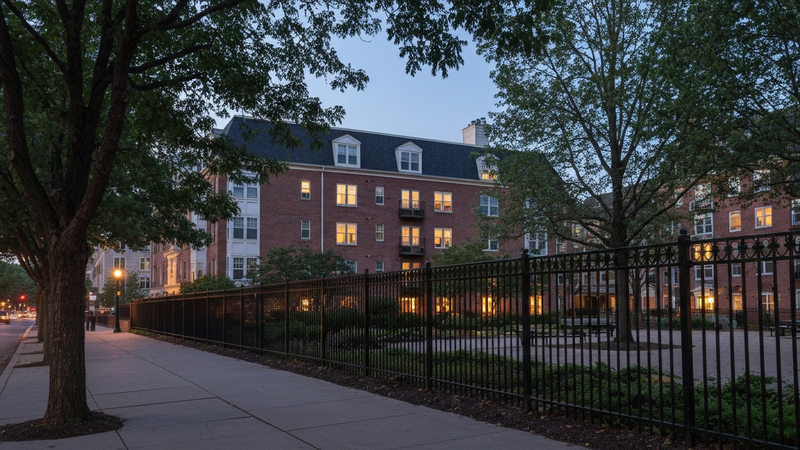
The park is the reason this address exists as a category of its own, and everything else about the building is ordinary good practice by comparison. Confirm access in writing for the specific residence, read how the hotel and residential sides divide their costs, and the rest of the purchase is a conventional condominium transaction with one genuinely unique attribute attached.
We cover Gramercy and downtown Manhattan on Satoshi Onodera's YouTube channel and on Instagram. If a residence here is in view, talk to our team and we will confirm the access position and the financials first. Real estate brokerage services are provided through licensed professionals.
A note on financing for a buyer abroad. Foreign national mortgages require a larger deposit and a longer underwriting period than domestic ones, and lenders assess buildings with a hotel component more carefully than purely residential ones.
Confirm early that your lender is comfortable with the structure itself. That question takes a day to answer in advance and weeks to resolve after a contract has been signed.
One last point on scarcity. Manhattan has exactly one private park, and the number of apartments entitled to enter it is fixed permanently. That is a narrower kind of scarcity than park frontage and, for the buyer who wants it, a more absolute one.
A final point on the district's inventory. Very few condominium apartments exist around this square, and the ones that do rarely come to market at the same time.
That argues for establishing your position early — structure settled, financing confirmed, attorney retained — rather than beginning the work when something appears.
One point that applies to every purchase of this kind from another country. The document work — financial statements, reserve balance, assessment history, board minutes and the governing agreements — can all be completed before anyone travels, and it is the part of the process that actually determines whether a building is sound.
The physical inspection is the part that requires presence, and even that can be run as a live walkthrough with measurements taken on camera. Buyers who reverse the order, travelling first and reading afterwards, routinely lose weeks and occasionally lose deposits.
Reinvent NY provides business consulting, operational support, and coordination services. Legal advice and immigration filings are handled by independent licensed attorneys. Real estate services are provided through licensed professionals and applicable brokerage relationships. This article is for informational purposes only and does not constitute legal or investment advice.
More buildings worth knowing: 100 Eleventh Avenue, 111 West 57th Street, 130 William. The full set is indexed under New York building profiles.

Satoshi Onodera
Founder & CEO, Reinvent NY Inc.
Founded Reinvent NY in 2024. Providing relocation support from all over the world to America.
Ready to Get Started?
Our team in New York is ready to help with your visa, real estate, or relocation needs.
Schedule a ConsultationFrequently Asked Questions
Where is 50 Gramercy Park North?
On the north side of Gramercy Park at Lexington Avenue, in Manhattan. The location is on [Google Maps](https://maps.google.com/?q=50+Gramercy+Park+North+New+York).
What is Gramercy Park?
The only private park in Manhattan. It is fenced and locked, and access is by key granted to owners of the surrounding lots rather than to the general public.
Does buying here include a key?
Key access attaches to certain buildings fronting the park rather than to individuals. Confirm in writing whether it applies to the specific residence before making an offer.
Who designed the building?
Robert A.M. Stern Architects, the practice also responsible for 15 Central Park West and 220 Central Park South.
Is it a condominium?
Yes. There is no board approval vote, and non-resident and entity ownership are generally accepted.
Is there a hotel in the building?
The residences sit alongside a hotel operation, so service infrastructure exists within the complex. Establish the cost allocation between the two.
What should I confirm first?
Park key access for the unit, how residential and hotel costs are allocated, the reserve balance, assessment history, and the actual monthly charges.
Real Estate Guides & Data
Related Articles
443 Greenwich: The Building Built for Privacy
443 Greenwich converted an 1880s Tribeca warehouse with a covered motor court and underground parking. What discretion is worth, and what to confirm.
Great Kills Staten Island Real Estate Guide 2026
What Great Kills on Staten Island costs in 2026: the housing stock, sale and rent ranges, how residents commute, and what a buyer should check before offering.
Todt Hill Staten Island Real Estate Guide 2026
Our 2026 guide to Todt Hill, Staten Island covers estate homes, prices, transit, and schools for international buyers considering this exclusive enclave.
St. George Staten Island Real Estate Guide 2026
What St. George on Staten Island costs in 2026: the housing stock, sale and rent ranges, the ferry commute to Manhattan, and what a buyer should check first.