The Eldorado: Art Deco Twin Towers on the Park
The Eldorado finished the Central Park West skyline. Completed in 1931 at 90th Street, it is the northernmost of the avenue's twin-towered buildings and the only one whose crowns are Art Deco rather than classical — stepped and finned rather than columned.
It is also a cooperative, which for most international buyers settles the question before it is asked. Let's take both parts.
1. What the Building Is
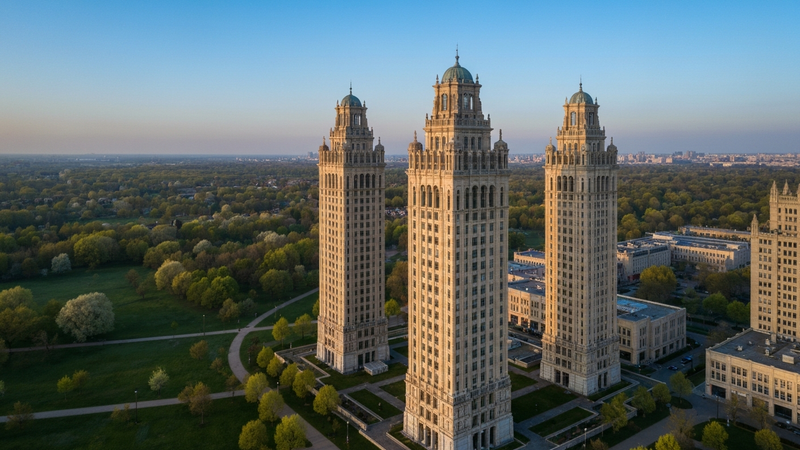
A 1931 building using the same zoning allowance that produced the San Remo and the Beresford, resolved in a different architectural language. Where Roth reached for classical temples, this building reached for Art Deco, and the result reads as the last word in a conversation the avenue had with itself.
It sits within the Central Park West historic district, so the exterior is protected and the surrounding streetscape is unlikely to change.
The park frontage is the durable asset. The park cannot be built on, the number of buildings facing it is fixed, and no development anywhere in the city adds to that supply.
| Attribute | Detail |
|---|---|
| Address | 300 Central Park West, Manhattan |
| Completed | 1931 |
| Form | Twin towers above a shared base |
| Style | Art Deco |
| Status | Designated landmark district |
| Ownership form | Cooperative |
Building facts. Cooperative requirements are set by the board and are not published; establish them through your attorney and broker.
The location is on Google Maps here.
2. The Tower Apartments
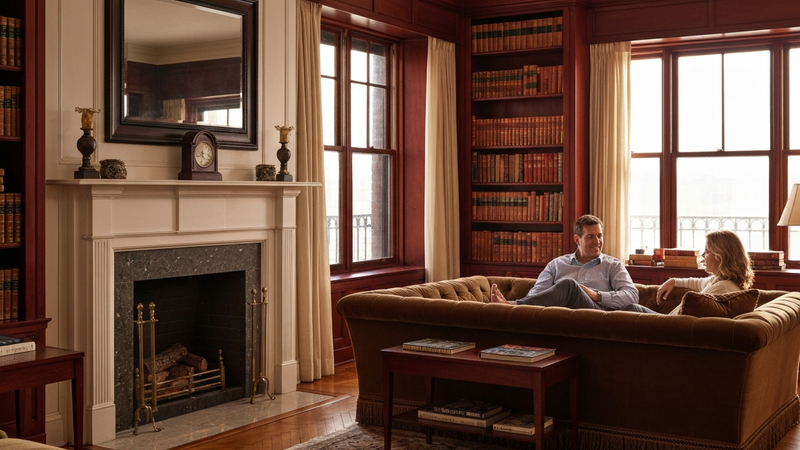
Twin-tower buildings produce two quite different products under one address. The tower apartments above the base sit on small floor plates with exposure on several sides, which is rare in Manhattan at any period.
The base apartments are the conventional prewar product: larger, arranged around a court, with the room sequences and service spaces that 1931 assumed a household required.
They are priced differently and behave differently at resale, so a comparable in one part of the building says very little about the other.
Our remote viewing guide covers how to establish what a specific apartment actually is when you cannot walk it yourself.
3. What the Cooperative Form Requires

A purchaser buys shares in a corporation and receives a proprietary lease. The board approves every purchaser and may decline without stating a reason, provided the decision is not made on a basis prohibited by fair housing law.
Boards typically require full financial disclosure, verified liquidity after closing, reference letters and an interview. Many restrict financing to a proportion of the price and limit or prohibit ownership through entities and trusts.
Subletting is usually restricted, which makes an apartment difficult to use as a part-year residence with letting between stays.
Our board package guide sets out what an application contains, and our foreign buyer guide covers why the documentary standard is the obstacle.
4. The Condominium Route on the Park
For a buyer whose finances sit abroad, condominium is the practical form. No board approval vote, non-resident and entity ownership accepted, and written rules rather than discretion governing use.
15 Central Park West and One Central Park West both face the park in condominium form, and 220 Central Park South sits at its southern edge.
Mansion tax applies from $1 million on the whole price in either form. Settle ownership structure before contract; US estate tax reaches non-resident owners above a $60,000 exemption — see our estate tax guide.
Reading maintenance in a prewar cooperative
Maintenance includes the shareholder's proportion of the building's property tax and of any mortgage on the building itself, which is why the figure looks high beside a condominium's common charges.
Add property tax to the condominium figure and ask for the cooperative's underlying mortgage balance and term. Only then are the two numbers describing the same obligation.
Capital work in a 1931 building
Facade, lift and mechanical systems in a building of this age have known replacement cycles, and the assessment history shows how the board has handled them.
A prewar building that assesses regularly and spends is in better condition than one that has not assessed in twenty years. Read the pattern rather than the absolute figure.
The northern end of the avenue
This stretch of Central Park West sits further from the transport and commercial concentration around Columbus Circle, which is why prices here have historically been lower than at the southern end.
The park is identical; the walk to a subway and to Midtown is not. For a household living here full time that difference is worth establishing on the ground rather than on a map.
Final Thoughts: The Last of the Twin Towers
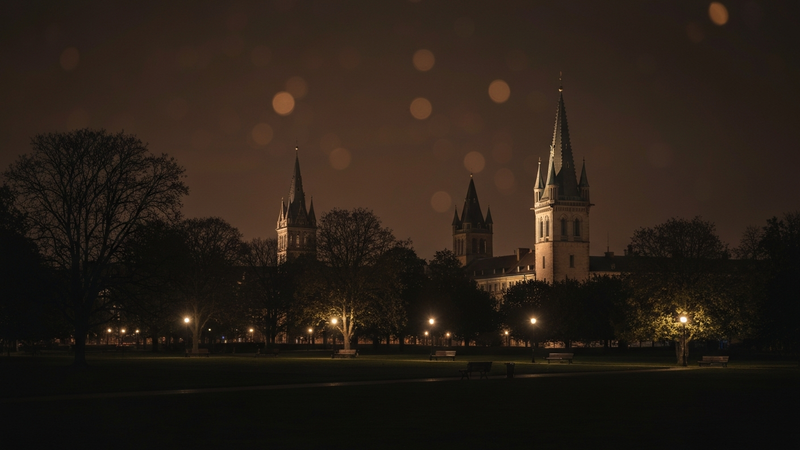
The avenue's twin-towered buildings were all completed within about two years and none has been built since. For a buyer able to satisfy a cooperative board, this is the Art Deco entry in that set at the lowest entry point of the three. For a buyer whose assets sit abroad, it is one more illustration of why the search should begin with ownership form rather than with architecture.
We cover Central Park West on Satoshi Onodera's YouTube channel and on Instagram. If you are buying from abroad, talk to our team and we will filter for buildings that will accept the purchase. Real estate brokerage services are provided through licensed professionals.
A practical note on timing. Cooperative purchases take six to ten weeks longer than condominium ones, because the board package and interview sit between contract and closing.
Where a move date is fixed by a school term or a lease expiry, that period alone is why many buyers who could satisfy a board choose not to attempt one.
One last point on how these apartments trade. In restrictive buildings a meaningful share of sales never reaches a portal, because sellers prefer a controlled process. Our off-market guide covers how that inventory is actually reached.
One point applies to every purchase of this kind made from another country. The document work — financial statements, reserve balance, assessment history, board minutes and the governing agreements — can be completed in full before anyone travels, and it is what actually determines whether a building is sound.
The physical inspection is the only part that requires presence, and even that can be run as a live walkthrough with dimensions and light conditions recorded on camera. Buyers who reverse the order, travelling first and reading afterwards, routinely lose weeks and occasionally lose a deposit on a building the documents would have ruled out in an afternoon.
One final consideration for a buyer holding US assets who could satisfy a board. Prewar cooperatives on this avenue trade at a meaningful discount to comparable condominiums, and the discount is a function of the restrictions rather than of the buildings themselves.
Reinvent NY provides business consulting, operational support, and coordination services. Legal advice and immigration filings are handled by independent licensed attorneys. Real estate services are provided through licensed professionals and applicable brokerage relationships. This article is for informational purposes only and does not constitute legal or investment advice.
More buildings worth knowing: 100 Eleventh Avenue, 111 West 57th Street, 130 William. The full set is indexed under New York building profiles.

Satoshi Onodera
Founder & CEO, Reinvent NY Inc.
Founded Reinvent NY in 2024. Providing relocation support from all over the world to America.
Ready to Get Started?
Our team in New York is ready to help with your visa, real estate, or relocation needs.
Schedule a ConsultationFrequently Asked Questions
Where is the Eldorado?
300 Central Park West, between 90th and 91st Streets. The location is on [Google Maps](https://maps.google.com/?q=300+Central+Park+West+New+York).
When was it built?
It was completed in 1931 and stands within the Central Park West historic district as a designated landmark.
How does it differ from the San Remo?
The San Remo's towers are crowned with classical temples; the Eldorado's are Art Deco, with stepped and finned crowns rather than columns.
Is it a co-op or a condominium?
It is a cooperative. Purchasers buy shares in a corporation and receive a proprietary lease rather than a deed.
Can a non-resident buy here?
In practice it is very difficult. Boards require verified financial disclosure, frequently restrict entity and trust ownership, and may decline without giving a reason.
What is the position worth?
Direct Central Park frontage, which cannot be extended because the park cannot be built on. That is the most durable attribute in Manhattan residential property.
What should an overseas buyer look at instead?
Condominium buildings on or near the park, where there is no board approval vote and non-resident and entity ownership are generally accepted.
Real Estate Guides & Data
More guides
- The Owner's Document Glossary: Every Paper, Explained
- FIRPTA Withholding: Selling US Property as a Foreign Person
- Gifting US Property: Moving Real Estate Between Family
- Home Inspections in the US: Finds and Misses
- Property Insurance Claims: Getting Paid, Properly
- Air Rights and Lot-Line Windows: The Sky Next Door
Related Articles
Las Vegas Real Estate Market 2026: Prices, Rents, Yields
Las Vegas home values in 2026: a $425,535 typical value after a 3.1% dip, $1,722 rents, a 4.86% gross yield, and how Henderson and Reno compare for investors.
River House: The 1931 Building at the End of 52nd Street
River House was built in 1931 with a private courtyard on the East River. What the building is, and why an overseas buyer will not get in.
Atlanta Real Estate Market 2026: Prices, Yields and Suburbs
Atlanta home values in 2026: a $387,146 typical value, $1,911 rents and a 5.92% gross yield — plus how Marietta, Lawrenceville and Savannah compare for buyers.
Denver Real Estate Market 2026: Prices, Rents and Yields
Denver home values in 2026: a $538,992 typical value after a 3.4% annual decline, $1,877 rents, a 4.18% gross yield, and how Colorado's other cities compare.