River House: The 1931 Building at the End of 52nd Street
River House sits at the end of a street that goes nowhere else. Completed in 1931 at the eastern end of 52nd Street, it faces the East River across a private courtyard, with no through traffic and no avenue frontage — a degree of separation that almost no Manhattan building has.
It is also among the most selective cooperatives in New York. Let's explain what that means, because the reason is instructive well beyond this address.
1. What the Building Is

A 1931 building from the last years of the great prewar era, entered through a private courtyard rather than directly from the pavement. The cul-de-sac position is the defining attribute — there is no reason to walk down this street unless you live on it.
Apartments here follow prewar planning at its most accomplished: formal room sequences, generous proportions and service arrangements designed for households that ran on staff.
The river frontage adds a second quality. Water cannot be developed, so the outlook east is fixed in a way an inland view never is, though what stands on the far bank can change over time.
| Attribute | Detail |
|---|---|
| Address | 435 East 52nd Street, Manhattan |
| Completed | 1931 |
| Position | End of a cul-de-sac on the East River |
| Entry | Through a private courtyard |
| Ownership form | Cooperative |
| Board approval | Full application and interview |
Building facts. Cooperative requirements are set by the board and are not published; establish them through your attorney and broker.
The location is on Google Maps here.
2. Why the Board Is the Whole Story
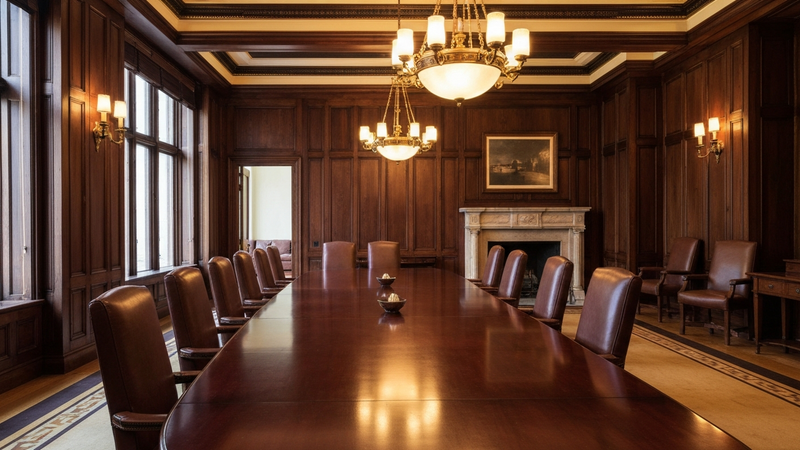
In a cooperative the corporation owns the building and the purchaser owns shares. The board approves every purchaser and may decline without giving a reason, provided the decision is not made on a basis prohibited by fair housing law.
Buildings at this level commonly go further: limits on how much of the price may be financed, requirements for liquid assets remaining after closing, restrictions on entity and trust ownership, and constraints on subletting.
None of that targets foreign purchasers as such. It describes a set of requirements that a buyer whose assets and income sit in another jurisdiction usually cannot document in the form the board expects.
Our board package guide sets out what an application contains and why the documentary standard rather than the interview is the real obstacle.
3. What Separation Is Worth
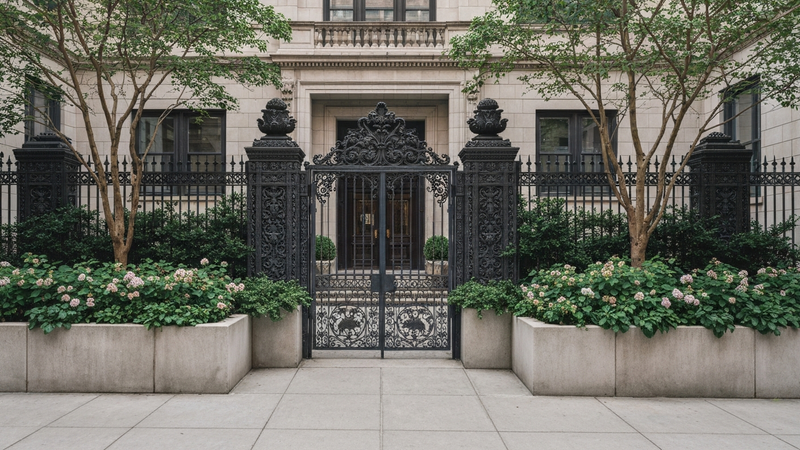
Privacy in Manhattan is usually bought through staffing — a doorman, a service entrance, a discreet lobby. Here it is bought through geography, because the street simply does not lead anywhere.
That is structural rather than operational, and it cannot be replicated by a building on an avenue however well it is run. Sites of this kind were used up long ago.
For the small group of purchasers who treat privacy as a requirement rather than a preference, that puts this building in a category with very few members.
Where those buyers can transact, they generally do so in condominium buildings that solve the same problem structurally — 443 Greenwich being the clearest example.
4. Where an International Buyer Should Look

Condominium, unless you hold a US tax residence and US-documented assets. No board approval vote, non-resident and entity ownership accepted, subletting governed by written rules rather than by discretion.
Mansion tax reaches 2.25% between $5 and $10 million, 3.25% above $10 million and 3.9% above $25 million, on the whole price and paid by the buyer at closing.
Settle ownership structure before contract; US estate tax reaches non-resident owners above a $60,000 exemption on US-situs assets. See our estate tax guide and luxury purchase guide.
Maintenance is not comparable to common charges
Cooperative maintenance includes the shareholder's proportion of the building's property tax and of any mortgage on the building itself, which is why the monthly figure looks high beside a condominium's.
Add property tax to the condominium figure and ask for the cooperative's underlying mortgage balance and term. Only then do the two numbers describe the same thing.
If you do hold US assets
A cooperative application becomes realistic once income, assets and tax filings are US-documented. Expect the process to add six to ten weeks and a package running to hundreds of pages.
Buyers in that position succeed regularly, and the price advantage over a comparable condominium is real. The obstacle was always documentary rather than personal.
The East River outlook
Water cannot be built on, which makes the outlook east more durable than most. What stands on the far bank in Queens can and does change, so the middle distance is not fixed in the same way.
Confirm what a specific apartment sees and at what height. Within a building of this kind the difference between a river line and an inland one is substantial and correctly priced.
Final Thoughts: A Site That Cannot Be Assembled Again
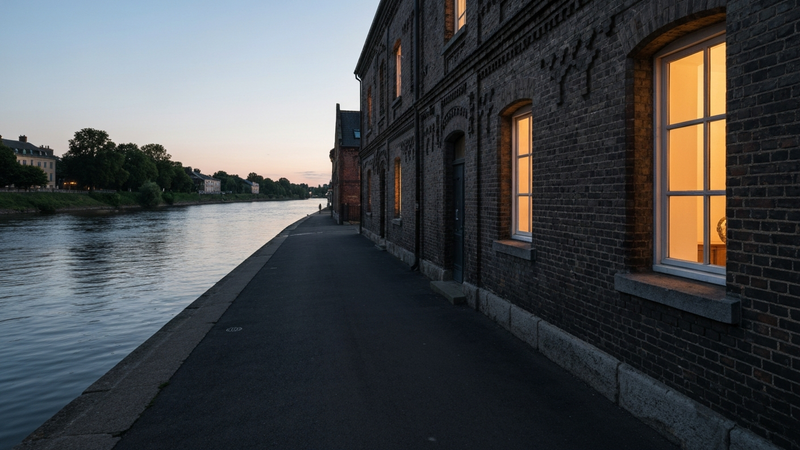
What makes this building unrepeatable is not the architecture, good as it is, but the site: a cul-de-sac on the water with no through traffic, secured in 1931 when such land was still available. For a buyer able to satisfy a board, that is as close to permanent privacy as Manhattan offers. For everyone else it is a useful lesson in why the ownership form, not the building, decides where a search can end.
We cover Midtown East and the river on Satoshi Onodera's YouTube channel and on Instagram. If you are buying from abroad, talk to our team and we will filter for buildings that will accept the purchase. Real estate brokerage services are provided through licensed professionals.
One practical note on how these apartments reach the market. At this level a significant share of sales never appears publicly, because sellers in restrictive buildings prefer a controlled process and purchasers arrive introduced rather than through an advertisement.
A buyer relying on portals therefore sees a fraction of what trades and concludes wrongly that nothing is available. Our off-market guide covers how that access actually works.
One point applies to every purchase of this kind made from another country. The document work — financial statements, reserve balance, assessment history, board minutes and the governing agreements — can be completed in full before anyone travels, and it is what actually determines whether a building is sound.
The physical inspection is the only part that requires presence, and even that can be run as a live walkthrough with dimensions and light conditions recorded on camera. Buyers who reverse the order, travelling first and reading afterwards, routinely lose weeks and occasionally lose a deposit on a building the documents would have ruled out in an afternoon.
Reinvent NY provides business consulting, operational support, and coordination services. Legal advice and immigration filings are handled by independent licensed attorneys. Real estate services are provided through licensed professionals and applicable brokerage relationships. This article is for informational purposes only and does not constitute legal or investment advice.
More buildings worth knowing: 100 Eleventh Avenue, 111 West 57th Street, 130 William. The full set is indexed under New York building profiles.

Satoshi Onodera
Founder & CEO, Reinvent NY Inc.
Founded Reinvent NY in 2024. Providing relocation support from all over the world to America.
Ready to Get Started?
Our team in New York is ready to help with your visa, real estate, or relocation needs.
Schedule a ConsultationFrequently Asked Questions
Where is River House?
435 East 52nd Street, at the eastern end of the street on the East River. The location is on [Google Maps](https://maps.google.com/?q=435+East+52nd+Street+New+York).
When was it built?
It was completed in 1931, at the end of the era that produced Manhattan's great prewar apartment buildings.
What is unusual about the site?
It stands at the end of a cul-de-sac on the river, entered through a private courtyard, which gives it a degree of separation no avenue address has.
Is it a co-op or a condominium?
It is a cooperative, and among the most selective in the city.
Can an overseas buyer purchase here?
Realistically, no. Boards of this type require extensive verified financial disclosure, commonly restrict entity and trust ownership, and may decline without stating a reason.
Does the river view change?
The East River itself cannot be built on, though what stands on the far bank in Queens can change. Establish what a specific apartment sees and at what height.
What should an international buyer look at instead?
Condominium buildings, where there is no board approval vote and non-resident and entity ownership are generally accepted.
Real Estate Guides & Data
More guides
- Moving to New York: The Order to Do Things In
- Renting Before Buying: The Test Year Strategy
- Seller Financing and Creative Deal Structures
- Small-Scale Development: From Owner to Builder
- Tenant Screening in NYC: Choosing Within the Rules
- Opening a US Bank Account: What a Non-Resident Needs
Related Articles
35 Hudson Yards: Limestone in a District of Glass
35 Hudson Yards is the limestone tower in a glass district, with residences above a hotel and offices. What it offers, and what to confirm first.
Las Vegas Real Estate Market 2026: Prices, Rents, Yields
Las Vegas home values in 2026: a $425,535 typical value after a 3.1% dip, $1,722 rents, a 4.86% gross yield, and how Henderson and Reno compare for investors.
The Eldorado: Art Deco Twin Towers on the Park
The Eldorado closed the Central Park West skyline in 1931 with Art Deco twin towers. What the building is, and how an overseas buyer should read it.
Atlanta Real Estate Market 2026: Prices, Yields and Suburbs
Atlanta home values in 2026: a $387,146 typical value, $1,911 rents and a 5.92% gross yield — plus how Marietta, Lawrenceville and Savannah compare for buyers.