The Beresford: Three Towers Above the Museum
The Beresford has three towers because it faces two open spaces. Emery Roth's 1929 building sits at 81st Street with Central Park to the east and the Museum of Natural History and its square to the west, and the plan addresses both rather than choosing one.
That double frontage is the building's real distinction, and it has consequences a buyer should understand. Let's take them.
1. What the Building Is
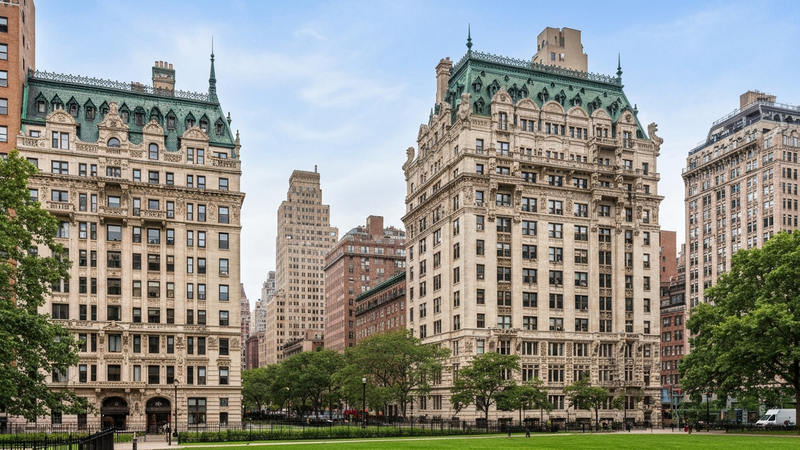
A corner building with towers at three corners rather than a single crown. Roth used the same 1929 zoning allowance that produced the San Remo's twin towers, but applied it to a site with two open frontages instead of one.
The consequence is that apartments here look east over the park or west over the museum square, and both outlooks are protected — the park cannot be built on and the museum is not going to be replaced.
Inside, it is prewar planning at its most conventional and most accomplished: formal room sequences, generous proportions and service areas designed for a household with staff.
| Attribute | Detail |
|---|---|
| Address | 211 Central Park West, Manhattan |
| Completed | 1929 |
| Architect | Emery Roth |
| Form | Three corner towers above a shared base |
| Frontages | Central Park and the museum square |
| Ownership form | Cooperative |
Building facts. Cooperative requirements are set by the board and are not published; establish them through your attorney and broker.
The location is on Google Maps here.
2. Two Protected Outlooks

Most buildings have one durable view and several that depend on a neighbour's decision not to build. This one has two that are fixed by land use rather than by luck, which is unusual anywhere in Manhattan.
Park-facing apartments carry the premium the market always assigns to that frontage. Museum-facing apartments carry a smaller premium for an outlook that is equally permanent, which makes them the more interesting proposition on price.
Confirm what a specific apartment sees, from which rooms and at what floor. Within a building of this size the difference between frontages is substantial and correctly priced.
Our remote viewing guide covers how to verify an outlook properly when you cannot stand in the room yourself.
3. What the Cooperative Form Requires

A purchaser buys shares in a corporation and receives a proprietary lease. The board approves every purchaser and may decline without stating a reason, provided the decision is not made on a basis prohibited by fair housing law.
Boards typically require full financial disclosure, verified liquidity after closing, reference letters and an interview. Many restrict financing to a proportion of the price and limit or prohibit ownership through entities and trusts.
Subletting is usually restricted, which makes an apartment difficult to use as a part-year residence with letting between stays — precisely the pattern most international owners want.
Our board package guide explains what an application contains, and our foreign buyer guide covers why the documentary standard is the obstacle.
4. The Condominium Alternative

For a buyer whose finances sit outside the United States, condominium is the workable form. No board approval vote, non-resident and entity ownership accepted, and written rules rather than discretion governing how the apartment may be used.
15 Central Park West and One Central Park West both face the park in condominium form within a short walk of here.
Mansion tax applies from $1 million on the whole price. Settle ownership structure before contract; US estate tax reaches non-resident owners above a $60,000 exemption on US-situs assets — see our estate tax guide.
The Upper West Side as a place to live
The district is residential in a way that Midtown is not, with schools, food shops, the park on one side and the river on the other, and building heights that stay moderate away from the avenue.
For a household living in New York full time rather than visiting, that combination is the practical argument for the neighbourhood, and it is why prices here have held through cycles that moved other districts more sharply.
Reading maintenance in a prewar cooperative
Maintenance includes the shareholder's proportion of the building's property tax and of any mortgage on the building itself, which is why the figure looks high beside a condominium's common charges.
Add property tax to the condominium figure and ask for the cooperative's underlying mortgage balance and term before comparing. Only then are the two numbers describing the same obligation.
Capital work in a 1929 building
Facade, lift and mechanical systems in a building of this age have known replacement cycles, and the reserve or assessment history will show how the board has handled them.
A prewar building that assesses regularly and spends is in better condition than one that has not assessed in twenty years. Read the pattern rather than the absolute figure.
Final Thoughts: The Second Frontage Is the Point
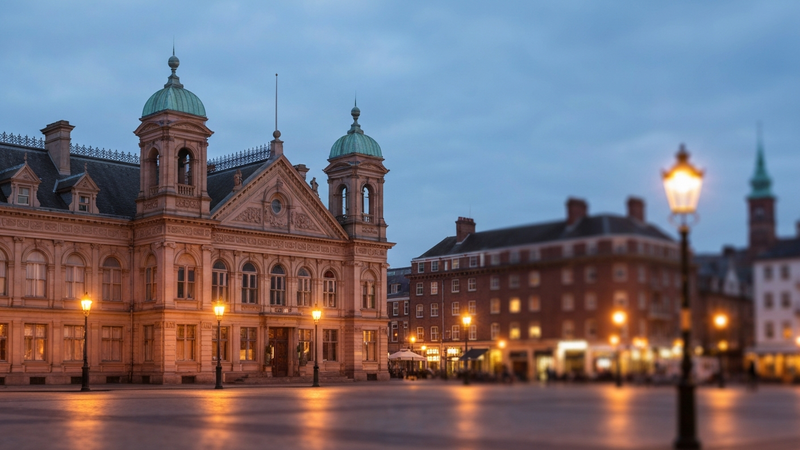
Roth built for the park and got the museum square as well, which gave this building two permanent outlooks in a city where most are provisional. For a buyer who can satisfy a cooperative board, the museum-facing apartments are the most underpriced durable view on Central Park West. For a buyer whose assets sit abroad, the same apartments are a study in why the search should begin with ownership form rather than with the building.
We cover the Upper West Side on Satoshi Onodera's YouTube channel and on Instagram. If you are buying from abroad, talk to our team and we will filter for buildings that will accept the purchase. Real estate brokerage services are provided through licensed professionals.
One practical note on how buyers waste time. Portals rarely make the cooperative distinction prominent, and international purchasers routinely spend weeks on apartments they were never eligible to buy, then conclude the market is impenetrable.
It is not impenetrable; it is filtered. Set the filter correctly at the start and the same search produces a shortlist of purchasable apartments within days rather than months.
One further consideration for a buyer holding US assets who could satisfy a board. Prewar cooperatives on this avenue trade at a meaningful discount to comparable condominiums, and the discount is a direct function of the restrictions rather than of the buildings themselves.
For an owner who intends to live in the apartment for decades, capturing that discount is rational. For one who may need to sell to an international purchaser within a few years, it is not, because the same restrictions will narrow the pool at exactly the wrong moment.
Reinvent NY provides business consulting, operational support, and coordination services. Legal advice and immigration filings are handled by independent licensed attorneys. Real estate services are provided through licensed professionals and applicable brokerage relationships. This article is for informational purposes only and does not constitute legal or investment advice.
More buildings worth knowing: 100 Eleventh Avenue, 111 West 57th Street, 130 William. The full set is indexed under New York building profiles.

Satoshi Onodera
Founder & CEO, Reinvent NY Inc.
Founded Reinvent NY in 2024. Providing relocation support from all over the world to America.
Ready to Get Started?
Our team in New York is ready to help with your visa, real estate, or relocation needs.
Schedule a ConsultationFrequently Asked Questions
Where is the Beresford?
211 Central Park West at 81st Street, beside the Museum of Natural History. The location is on [Google Maps](https://maps.google.com/?q=211+Central+Park+West+New+York).
When was it built?
It was completed in 1929 to the design of Emery Roth, the architect also responsible for the San Remo.
Why does it have three towers?
The building occupies a corner site facing both the park and the museum square, and Roth placed towers to address both frontages rather than only one.
Is it a co-op or a condominium?
It is a cooperative. Purchasers buy shares in a corporation and receive a proprietary lease rather than a deed.
Can a non-resident buy here?
In practice it is very difficult. Boards require verified financial disclosure, frequently restrict entity and trust ownership, and may decline an application without giving a reason.
What is the museum frontage worth?
It gives a second protected outlook. The museum and its square are not going to be redeveloped, so apartments facing that side have a durable view as well as those facing the park.
What should an overseas buyer look at instead?
Condominium buildings, where there is no board approval vote and non-resident and entity ownership are generally accepted.
Real Estate Guides & Data
More guides
- LLCs for Rental Property: Liability, Cost, Disclosure
- Miami vs New York: Two US Strategies Compared
- Moving Purchase Funds to the US: Timing and Source of Funds
- New Development Walk-Throughs: The Snag List That Pays
- NYC Transfer Taxes for Sellers: The Exit's First Bill
- NYC Parking and Storage: Deeded Spaces as Assets
Related Articles
Little Neck Queens Real Estate Guide 2026
An expert 2026 guide to Little Neck, Queens real estate: housing stock, prices, transit, and schools for international buyers and renters.
College Point Queens: 2026 Real Estate Guide
A concrete 2026 guide to College Point, Queens — housing stock, prices, rents, transit, and schools for international buyers.
Corona Queens Real Estate Guide 2026
An expert 2026 guide to buying and renting in Corona, Queens: housing stock, prices, transit, and who this neighborhood suits. By Reinvent NY.
740 Park Avenue: The Hardest Building to Buy Into
740 Park Avenue is Rosario Candela's 1930 cooperative and the most selective address in New York. What it is, and why an overseas buyer will not get in.