College Point Queens: 2026 Real Estate Guide
What College Point Actually Is
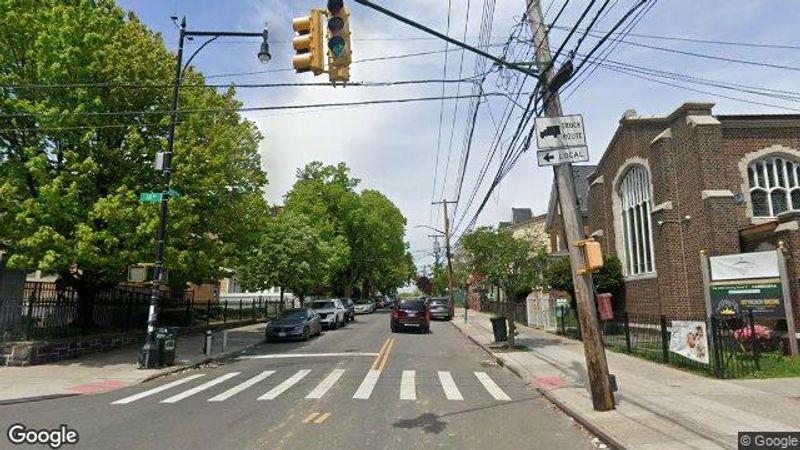
College Point sits on a peninsula in northeastern Queens, bounded by the East River and Flushing Bay, distinct from Flushing to its south and Whitestone to its east. It developed as a 19th-century industrial and immigrant enclave, built around rubber and textile factories, and still reads as a self-contained, low-density community rather than a dense urban grid.
The neighborhood's character is suburban-in-the-city: single-family homes on quiet blocks, waterfront industrial parcels, and a commercial spine along College Point Boulevard. Large-format retail centers, including a major shopping complex near the Whitestone Expressway, give it a different rhythm than most of Queens, closer to a car-oriented suburb than a subway-first borough neighborhood.
Our team in New York frequently describes College Point to overseas clients as Queens' hidden low-rise pocket — ethnically diverse, largely Asian and Latino, with strong homeownership rates and minimal high-rise development. It suits buyers who want space, quiet, and a genuine residential community over dense apartment-tower living.
The Housing Stock
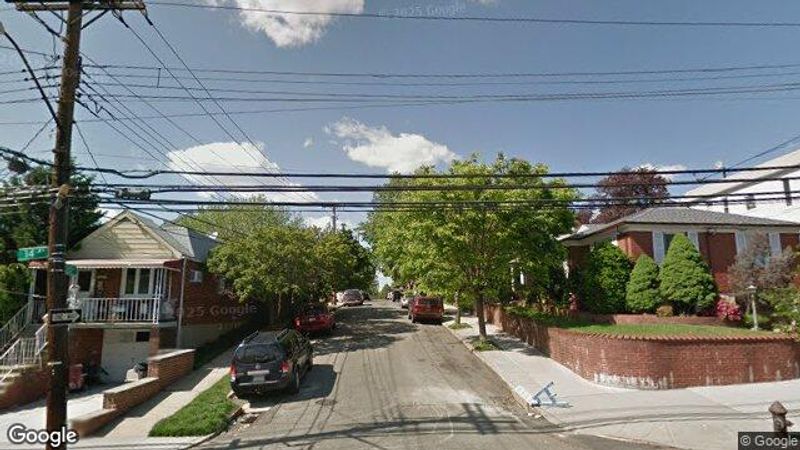
College Point's stock is dominated by detached and semi-detached single-family and two-family houses, many dating from the 1920s-1950s, alongside postwar brick homes near 14th Avenue and 20th Avenue. Architectural styles run from modest Cape Cods and colonials to larger custom-built homes constructed in the 1990s and 2000s on subdivided lots near the waterfront.
Multi-family product is limited but present: low-rise garden apartment complexes and small condominium developments have appeared along College Point Boulevard and near Poppenhusen Avenue over the past two decades, typically two- to four-story buildings with off-street parking rather than named architectural landmarks. There is no significant prewar luxury co-op tradition here as in Manhattan.
For international buyers, the appeal is land and structure rather than pedigree: larger lot sizes, private driveways, and multi-family houses offering rental income potential. Our licensed brokerage network sources both single-family opportunities and smaller new-construction condo units, but supply of the latter remains genuinely thin compared with western Queens.
Prices and Rents
College Point pricing reflects its suburban housing stock rather than transit-adjacent apartment towers. Detached single-family homes typically trade between $700,000 and $1.1 million, two-family houses often reach $950,000 to $1.4 million, and newer condo units run roughly $450,000 to $700,000, all figures approximate and subject to market conditions in 2026.
Rental demand is steady but modest compared with nearby Flushing. A one-bedroom condo or apartment unit generally rents for $1,900 to $2,400 monthly, while a full house rental can range from $3,200 to $4,500, depending on size, parking, and proximity to College Point Boulevard's retail corridor.
| Property Type | Purchase Price (USD) | Monthly Rent (USD) | Typical Size |
|---|---|---|---|
| Detached single-family home | $700,000 – $1.1M | $3,200 – $4,000 | 1,200–2,200 sq ft |
| Two-family house | $950,000 – $1.4M | $3,800 – $4,500 (whole house) | 1,800–3,000 sq ft |
| Condo, 1-bedroom | $450,000 – $550,000 | $1,900 – $2,200 | 600–750 sq ft |
| Condo, 2-bedroom | $550,000 – $700,000 | $2,300 – $2,700 | 850–1,100 sq ft |
| Garden apartment rental | N/A | $1,900 – $2,400 | 550–800 sq ft |
College Point approximate price and rent ranges, 2026 (subject to market conditions)
By comparison, similar single-family stock in Whitestone commands a premium of roughly 10-15%, while Flushing condos of comparable size often price higher due to subway access. Our team in New York positions College Point as a value entry point into northeastern Queens for buyers prioritizing space over immediate transit proximity.
Daily Life and Transit
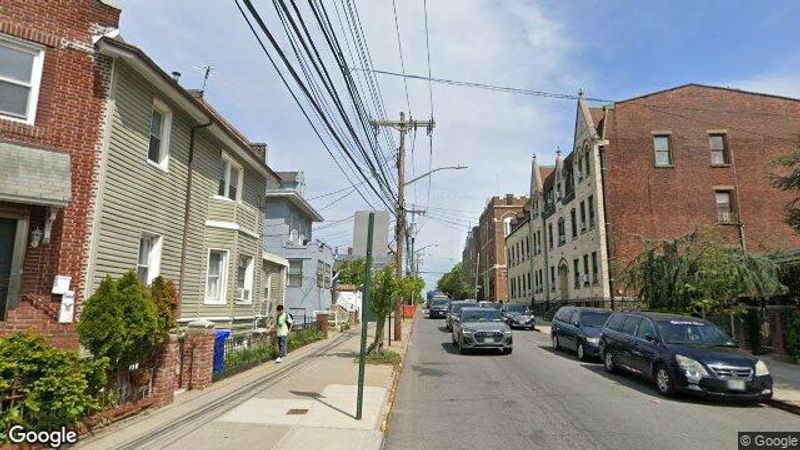
College Point has no subway line running directly through it, which is the neighborhood's defining trade-off. Residents typically drive or take the Q65 and Q20A/B buses to the 7 train at Main Street–Flushing, a ride of about 15-20 minutes, or use express buses (QM2, QM32) into Manhattan for a roughly 45-60 minute commute.
Daily needs are well served locally: the Whitestone Shopping Center and stores along College Point Boulevard cover groceries and retail, while MacNeil Park offers waterfront green space along the East River. Public schools include P.S. 129 and P.S. 173, and families also look toward parochial options within the neighborhood.
| Category | Option | Approx. Time/Distance | Notes |
|---|---|---|---|
| Subway access | 7 train at Main St–Flushing | 15–20 min via bus | Nearest subway connection |
| Express bus | QM2 / QM32 to Manhattan | 45–60 min | Peak-hour commuter service |
| Local bus | Q65, Q20A/B | 10–15 min to Flushing | Connects to LIRR and subway |
| Green space | MacNeil Park | On-site waterfront | Views of Bronx and Whitestone Bridge |
| Shopping | Whitestone Shopping Center | 5–10 min drive | Big-box retail and dining |
College Point transit and lifestyle access points
This is a car-dependent neighborhood by New York standards, and clients should plan accordingly. Our team in New York advises buyers who need daily Manhattan access to weigh commute realities carefully, while those working locally or driving regularly will find College Point's self-sufficiency and low congestion genuinely appealing.
Final Thoughts
College Point suits buyers who want a quiet, house-driven neighborhood with real yard space, off-street parking, and a strong sense of residential community, at prices meaningfully below comparable stock in Whitestone or Flushing. It rewards a long-term ownership mindset rather than a quick flip or pure rental-yield play.
It does not suit buyers requiring immediate subway access, dense walkable retail, or the liquidity of a high-turnover condo market. Inventory of new-construction units is limited, and resale pools are smaller than in transit-rich Queens neighborhoods, which can extend marketing timelines for both buyers and future sellers.
Our team in New York works with international clients weighing College Point against Whitestone, Bayside, and Flushing, and we coordinate viewings and due diligence through our licensed brokerage network. For the right buyer, this remains one of the more genuinely residential, value-oriented corners of Queens in 2026.
Reinvent NY provides business consulting, operational support, and coordination services. Real estate services are provided through licensed professionals and applicable brokerage relationships. This article is for informational purposes only and does not constitute legal or investment advice.
Nearby neighbourhoods: Astoria, Bayside, Corona. The full set is indexed under New York neighbourhood guides.

Satoshi Onodera
Founder & CEO, Reinvent NY Inc.
Founded Reinvent NY in 2019. Providing relocation support from all over the world to America.
Ready to Get Started?
Our team in New York is ready to help with your visa, real estate, or relocation needs.
Schedule a ConsultationFrequently Asked Questions
Is College Point a good investment for rental income?
Two-family houses offer reasonable rental income potential given lower purchase prices relative to Flushing or Whitestone, though yields depend heavily on tenant demand tied to local employment and school access rather than subway proximity.
Does College Point have subway access?
No subway line runs directly through College Point. Residents reach the 7 train at Main Street–Flushing via local bus, typically a 15-20 minute ride, or use express buses for direct Manhattan service.
What type of housing dominates College Point?
Detached and semi-detached single-family and two-family houses from the 1920s through 2000s dominate, with limited low-rise condo and garden apartment development concentrated along College Point Boulevard and Poppenhusen Avenue.
How do College Point prices compare to Whitestone?
College Point typically prices 10-15% below comparable Whitestone single-family homes, making it an attractive value alternative for buyers wanting similar suburban character within northeastern Queens.
Are there condos available for international buyers?
Yes, though supply is limited. Newer low-rise condo buildings near College Point Boulevard offer one- and two-bedroom units, generally priced between $450,000 and $700,000, subject to market conditions.
What schools serve the College Point area?
Public elementary options include P.S. 129 and P.S. 173, with several parochial schools also serving local families. Families often evaluate zoning carefully before purchasing, as school assignment affects specific streets.
Is College Point walkable?
It is only moderately walkable. Daily retail and groceries cluster along College Point Boulevard and the Whitestone Shopping Center, but most residents rely on cars or buses for errands, commuting, and reaching the subway.
Real Estate Guides & Data
More guides
- Tax Treaties and US Property: Avoiding Double Taxation
- Trusts and US Property: The Structures Behind the Names
- US Real Estate Investing: Yields, Taxes and How to Buy
- Walk-Up vs Doorman Buildings: The Service Premium
- 1031 Exchanging Into NYC: Trading Up to Manhattan
- Assessed vs Market Value: Why the City's Number Differs
Related Articles
The Apthorp: A 1908 Courtyard Block, Now Condominium
The Apthorp fills a full city block around a courtyard and converted to condominium. Prewar rooms without a co-op board — what to confirm before buying.
Little Neck Queens Real Estate Guide 2026
An expert 2026 guide to Little Neck, Queens real estate: housing stock, prices, transit, and schools for international buyers and renters.
The Beresford: Three Towers Above the Museum
Emery Roth's Beresford stands over the Museum of Natural History with three corner towers. What the building is, and how an overseas buyer should read it.
Corona Queens Real Estate Guide 2026
An expert 2026 guide to buying and renting in Corona, Queens: housing stock, prices, transit, and who this neighborhood suits. By Reinvent NY.