The Greenwich Lane: A Village Block, Rebuilt
The Greenwich Lane replaced a hospital with a neighbourhood. St Vincent's closed in 2010, and the site became several residential buildings and townhouses arranged around shared landscaped space in the middle of Greenwich Village.
It is one of the very few modern condominium developments of scale in a district that otherwise has almost none. Let's look at what that produces.
1. What the Development Is
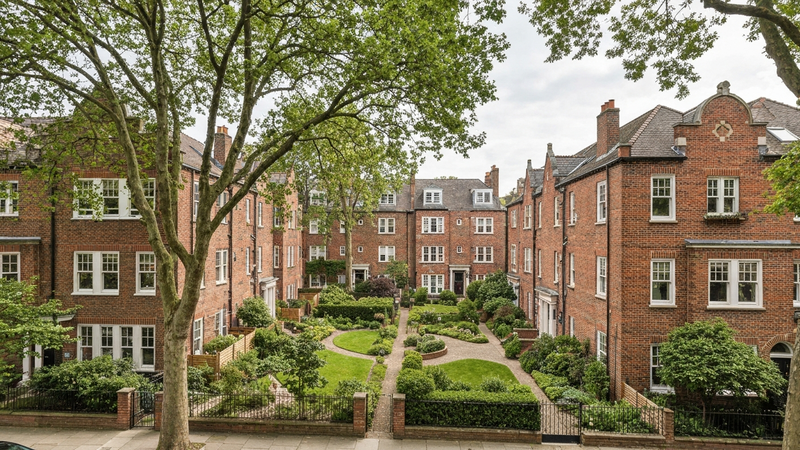
Not a tower. Several buildings and townhouses around shared planted space, at heights that match the district rather than rising above it, which was both a planning requirement and the right architectural answer.
Greenwich Village is largely low-rise, largely landmarked, and largely made up of nineteenth-century houses and small apartment buildings. A development of this scale within it is unusual and will not be repeated, because there are no comparable sites left.
The shared landscaped space is the organising idea, and it is also a permanent cost. Planting, maintenance and security are funded through common charges rather than by the city.
| Attribute | Detail |
|---|---|
| Location | West 11th and 12th Streets, Greenwich Village |
| Previous use | St Vincent's Hospital, closed 2010 |
| Form | Several buildings plus townhouses around shared gardens |
| Scale | Low-rise, matching the district |
| Ownership | Condominium |
| Board approval | Right of first refusal only |
Building facts. Unit-level figures - size, exposure, charges, tax - must be obtained for the specific residence.
The location is on Google Maps here.
2. Why Condominium Matters Here Specifically
Greenwich Village housing is overwhelmingly cooperative or small walk-up. Cooperative boards approve every purchaser, require verified financial disclosure and frequently restrict entity and trust ownership.
For an international buyer that closes most of the district. A modern condominium here therefore serves a purchaser that the neighbourhood's existing stock largely cannot, which is a durable resale position rather than a temporary one.
It is the same argument as the Apthorp on the Upper West Side and Manhattan House on the East Side: an established district, in a form that accepts a non-resident buyer.
Our foreign buyer guide explains why ownership form usually decides an international search before price is discussed.
3. Shared Space and Shared Costs

The ordinary review first: audited financial statements, the reserve balance in dollars, assessment history and two years of board minutes.
Then the questions specific to a multi-building development. How shared gardens, amenities and services are funded, whether all buildings contribute on the same basis, and how the townhouses participate.
Developments with several structures and one amenity set need clear allocation rules, and those rules are in the documents rather than in the marketing material.
Our building diligence guide sets out the full list and what each document reveals.
4. Buying Here as an Overseas Purchaser

Straightforward as a condominium: no board approval vote, non-resident and entity ownership accepted, subletting governed by written building rules rather than by discretion.
Mansion tax applies from $1 million on the whole price, reaching 2.25% between $5 and $10 million and 3.25% above $10 million, paid by the buyer at closing.
Settle ownership structure before contract; US estate tax reaches non-resident owners above a $60,000 exemption on US-situs assets. See our estate tax guide and buying from overseas guide.
Townhouses within a condominium
A townhouse inside a larger development is a different product from an apartment, with its own access, its own outdoor space and frequently its own share of shared costs.
Confirm the ownership form, the maintenance obligations and what the household is responsible for as against the condominium. Those answers differ from building to building and should never be assumed.
The Village as a place to live
The district is low-rise, largely landmarked and organised on a street pattern that predates the grid, which is why it feels unlike the rest of Manhattan and why that character is unlikely to change.
For a household living here full time rather than visiting, the practical arguments are the scale, the walkability and the transport in every direction from Union Square and the West Side.
Comparables in a development of several buildings
Closed sale prices are public record in New York, and a multi-building development produces a useful series — but the buildings within it are not equivalent to each other.
Ask for sales by building and by exposure rather than for the development as a whole. Our negotiation guide covers how to adjust for floor, outlook and condition.
Final Thoughts: A Site That Will Not Recur
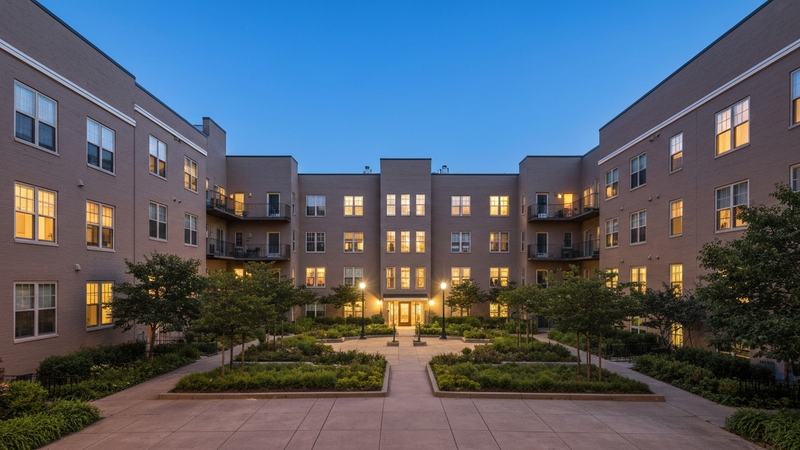
A hospital closing released a block of Greenwich Village at a scale no assemblage could reproduce, and what replaced it is the district's only modern condominium inventory of any size. For an international buyer that combination — established neighbourhood, contemporary construction, no board interview — exists in very few places in Manhattan, and this is the largest of them below 14th Street.
We cover Greenwich Village and downtown on Satoshi Onodera's YouTube channel and on Instagram. If a residence here is in view, talk to our team and we will obtain the financials and the shared-cost allocation first. Real estate brokerage services are provided through licensed professionals.
A note on financing for a buyer abroad. Foreign national mortgages require a larger deposit and a longer underwriting period than domestic ones, and lenders assess multi-building developments with attention to how the shared costs are structured.
Begin that conversation before an apartment is identified rather than after an offer is accepted. It is the single most common source of avoidable delay in a cross-border purchase.
One last point on scarcity. The Village will not release another site of this size, because the land is already built and largely protected. Whatever this development is worth today, the supply of anything comparable is fixed at zero.
One further point for a buyer comparing districts. The Village offers scale and character that Midtown does not, and Midtown offers transport and new construction that the Village does not.
Walk both at the hour you would actually be living there. That single exercise settles more decisions than any amount of comparison on paper.
One point that applies to every purchase of this kind from another country. The document work — financial statements, reserve balance, assessment history, board minutes and the governing agreements — can all be completed before anyone travels, and it is the part of the process that actually determines whether a building is sound.
The physical inspection is the part that requires presence, and even that can be run as a live walkthrough with measurements taken on camera. Buyers who reverse the order, travelling first and reading afterwards, routinely lose weeks and occasionally lose deposits.
Reinvent NY provides business consulting, operational support, and coordination services. Legal advice and immigration filings are handled by independent licensed attorneys. Real estate services are provided through licensed professionals and applicable brokerage relationships. This article is for informational purposes only and does not constitute legal or investment advice.
More buildings worth knowing: 100 Eleventh Avenue, 111 West 57th Street, 130 William. The full set is indexed under New York building profiles.

Satoshi Onodera
Founder & CEO, Reinvent NY Inc.
Founded Reinvent NY in 2024. Providing relocation support from all over the world to America.
Ready to Get Started?
Our team in New York is ready to help with your visa, real estate, or relocation needs.
Schedule a ConsultationFrequently Asked Questions
Where is the Greenwich Lane?
Around West 11th and West 12th Streets between Sixth and Seventh Avenues in Greenwich Village. The location is on [Google Maps](https://maps.google.com/?q=The+Greenwich+Lane+New+York).
What was on the site before?
St Vincent's Hospital, which closed in 2010. The development replaced the hospital buildings with residential ones.
How is it arranged?
As several buildings plus townhouses around shared landscaped space, rather than as a single tower — a form that suits the low-rise character of the district.
Is it a condominium?
Yes. There is no board approval vote, and non-resident and entity ownership are generally accepted.
Why does that matter in the Village?
Most of Greenwich Village's older buildings are cooperative or small walk-ups, so modern condominium inventory in the district is genuinely scarce.
Are the townhouses separate?
They form part of the same development. Confirm the ownership form, shared costs and access rights for a townhouse specifically, as they differ from an apartment.
What should I confirm first?
The reserve balance, assessment history, board minutes, how shared landscaped space and amenities are funded, and the actual charges for the specific residence.
Real Estate Guides & Data
More guides
- Energy Grades and Green Buildings: Efficiency as Value
- Long-Stay Options in NYC: Beyond the Hotel Bill
- ITINs and US Tax IDs: The Number Every Owner Needs
- Making an Offer on a New York Property: What Wins
- How US Mortgages Work: Rates, Points, Escrow
- Repair Credits: Negotiating What Inspections Find
Related Articles
The Sherry-Netherland: An Apartment Hotel Since 1927
The Sherry-Netherland has stood at Fifth Avenue and 59th Street since 1927 as a cooperative apartment hotel. What it is, and how a buyer should read it.
Boston Real Estate Market 2026: Prices, Rents and Yields
Where Boston home values stand in 2026: a $788,881 typical value, $3,469 median asking rents, a 5.28% gross yield, and how the metro compares for investors.
Stapleton, Staten Island Real Estate Guide 2026
An authoritative 2026 guide to buying and renting in Stapleton, Staten Island, covering housing stock, prices, transit, and lifestyle for global buyers.
111 Murray: The Flared Glass Tower in Tribeca
111 Murray Street flares outward as it rises, giving upper floors curved glass over the Hudson. What the building offers, and what to confirm first.