The Sherry-Netherland: An Apartment Hotel Since 1927
The Sherry-Netherland invented the branded residence before anyone used the term. The 1927 tower at Fifth Avenue and 59th Street combines a hotel operation with permanent private residences, which is precisely the model that Aman, Mandarin Oriental and Four Seasons now sell as an innovation.
It sits at the corner of Central Park with a spire visible across the whole southern end of the park. Let's look at what it is and how a buyer should read it.
1. What the Building Is

A designated landmark from 1927 by Schultze and Weaver with Buchman and Kahn, crowned with a steep spire that is one of the more recognisable silhouettes on the Fifth Avenue skyline.
The apartment hotel was a 1920s New York type: hotel service, restaurant, staff and housekeeping available to permanent residents who owned their apartments. It went out of fashion for decades and has now returned under a different name.
The position is among the best in the city — the park to the north, Fifth Avenue below, and Midtown a short walk south.
| Attribute | Detail |
|---|---|
| Address | 781 Fifth Avenue, Manhattan |
| Opened | 1927 |
| Architects | Schultze and Weaver with Buchman and Kahn |
| Type | Cooperative apartment hotel |
| Status | Designated landmark |
| Position | South-east corner of Central Park |
Building facts. Cooperative requirements are set by the board and are not published; establish them through your attorney and broker.
The location is on Google Maps here.
2. The Apartment Hotel Model
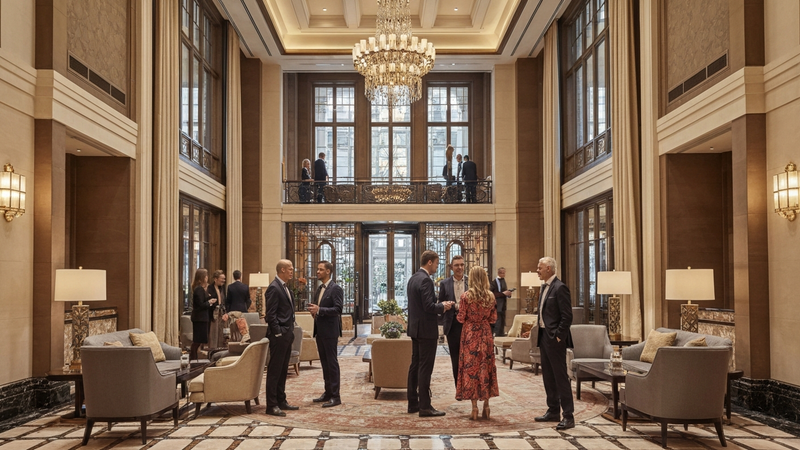
Service depth funded by an operation that runs continuously. A hotel must staff a building around the clock, and residents draw on that infrastructure — which is exactly the argument every modern branded residence makes.
The difference is that here the arrangement has run for nearly a century rather than resting on an agreement with a term. There is no licence to expire and no brand that can withdraw.
That is a genuine advantage over the modern model, and it is worth understanding when comparing this with a new branded tower a few blocks west.
Our branded residences guide covers how the contemporary version is structured and what a licence term means for a purchaser.
3. What the Cooperative Form Requires

A purchaser buys shares in a corporation and receives a proprietary lease rather than a deed. The board approves every purchaser and may decline without stating a reason, provided the decision is not made on a basis prohibited by fair housing law.
Boards typically require full financial disclosure, verified liquidity after closing, reference letters and an interview, and many restrict ownership through entities or trusts and limit subletting.
For a buyer whose assets and income sit in another jurisdiction, the obstacle is documentary rather than personal — the disclosure format assumes a domestic applicant.
Our board package guide sets out what an application contains, and our foreign buyer guide explains why the form usually decides the search.
4. Reading the Numbers in an Apartment Hotel

Monthly maintenance here is not comparable to a condominium's common charges. It includes the shareholder's proportion of the building's property tax and of any mortgage on the building, plus a service model deeper than most residential buildings run.
To compare properly, add property tax to any condominium figure you are weighing it against, and ask for the cooperative's underlying mortgage balance and term.
Then establish how hotel and residential costs are allocated between the two operations. In a building that has combined both since 1927 the arrangement is settled, but it should still be read rather than assumed.
The condominium alternative nearby
For a buyer whose finances sit abroad, the practical route is condominium. The Plaza Residences sits two blocks west in a comparable landmark, and the 57th Street towers are condominium without exception.
Those buildings accept non-resident and entity ownership without a board vote, which is the difference between a search that can complete and one that cannot.
What a century of operation is worth
A building that has run the same model since 1927 has an operating record that no new development can offer, and the assessment and capital history is readable in full.
Read the assessment pattern in particular. A landmark that assesses periodically and spends is in better condition than one that has not assessed in twenty years, whatever today's reserve shows.
Prewar rooms above the park
Apartments here follow a 1927 structure, so ceiling heights, window positions and room proportions vary between units far more than in a purpose-built modern tower.
The park outlook, where an apartment has it, is fixed permanently — the park cannot be built on and the number of buildings facing it is finite.
Final Thoughts: The Original of the Modern Idea
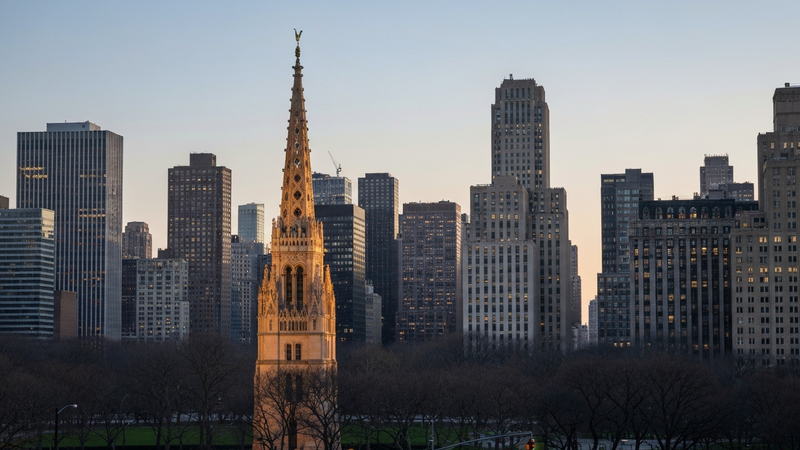
Every branded residence marketed today is a version of what this building has done since 1927, with a licence agreement standing in for a century of continuous operation. For a buyer who can satisfy a cooperative board, that is the more solid version of the same product. For one whose assets sit abroad, it is the clearest illustration of why ownership form, not building quality, decides a New York search.
We cover Fifth Avenue and the park on Satoshi Onodera's YouTube channel and on Instagram. If you are buying from abroad, talk to our team and we will filter for buildings that will accept the purchase. Real estate brokerage services are provided through licensed professionals.
One practical note on how apartments here reach the market. In restrictive buildings a meaningful share of sales never appears on a portal, because sellers prefer a controlled process and purchasers arrive introduced rather than through an advertisement.
A buyer relying on public listings therefore sees a fraction of what trades. Our off-market guide covers how that inventory is actually reached.
One final consideration for a buyer holding US assets who could satisfy a board. Cooperatives at this level trade at a meaningful discount to comparable condominiums, and the discount is a function of the restrictions rather than of the buildings.
Capturing that discount is rational for an owner intending to stay for decades and unwise for one who may need to sell quickly, because the same approval process will apply to your buyer at exactly the wrong moment.
One point that applies to every purchase of this kind from another country. The document work — financial statements, reserve balance, assessment history, board minutes and the governing agreements — can all be completed before anyone travels, and it is the part of the process that actually determines whether a building is sound.
The physical inspection is the part that requires presence, and even that can be run as a live walkthrough with measurements taken on camera. Buyers who reverse the order, travelling first and reading afterwards, routinely lose weeks and occasionally lose deposits.
Reinvent NY provides business consulting, operational support, and coordination services. Legal advice and immigration filings are handled by independent licensed attorneys. Real estate services are provided through licensed professionals and applicable brokerage relationships. This article is for informational purposes only and does not constitute legal or investment advice.
More buildings worth knowing: 100 Eleventh Avenue, 111 West 57th Street, 130 William. The full set is indexed under New York building profiles.

Satoshi Onodera
Founder & CEO, Reinvent NY Inc.
Founded Reinvent NY in 2024. Providing relocation support from all over the world to America.
Ready to Get Started?
Our team in New York is ready to help with your visa, real estate, or relocation needs.
Schedule a ConsultationFrequently Asked Questions
Where is the Sherry-Netherland?
781 Fifth Avenue at 59th Street, at the south-east corner of Central Park. The location is on [Google Maps](https://maps.google.com/?q=781+Fifth+Avenue+New+York).
When was it built?
It opened in 1927, designed by Schultze and Weaver with Buchman and Kahn, and is a designated landmark.
What is an apartment hotel?
A building combining hotel operation with permanent private residences, a form popular in 1920s New York and rare in new construction today.
Is it a co-op or a condominium?
It is a cooperative. Purchasers buy shares in a corporation and receive a proprietary lease rather than a deed.
Can an overseas buyer purchase here?
In practice it is difficult. Cooperative boards require verified financial disclosure, frequently restrict entity ownership, and may decline without giving a reason.
What does the hotel operation provide residents?
Service depth that a purely residential building of the same size could not fund — the same logic as a modern branded residence, a century earlier.
What should a buyer confirm?
The ownership form and board requirements, how hotel and residential costs are allocated, the building's underlying mortgage, assessment history and the monthly maintenance.
Real Estate Guides & Data
More guides
- Bidding Wars in NYC: Winning Without Overpaying
- Building Staff and Holiday Tipping: The Unwritten Rules
- Buying Your Office: Commercial Condos for Founders
- The US Closing Timeline: Attorney States vs Escrow States
- NYC Contract Deposits: The 10% Between Offer and Close
- When a Property Owner Dies: The Family's First Steps
Related Articles
The Puck Building: Penthouses on an 1885 Landmark
The Puck Building carried penthouses added above an 1885 Romanesque landmark in Nolita. What that produces for a buyer, and what to confirm first.
Seattle Real Estate Market 2026: Prices, Rents and Yields
Seattle home values in 2026: an $856,052 typical value, $2,224 rents and a 3.12% gross yield, plus where Tacoma, Spokane and Vancouver WA offer better numbers.
Boston Real Estate Market 2026: Prices, Rents and Yields
Where Boston home values stand in 2026: a $788,881 typical value, $3,469 median asking rents, a 5.28% gross yield, and how the metro compares for investors.
The Greenwich Lane: A Village Block, Rebuilt
The Greenwich Lane replaced a hospital site with five buildings and townhouses in Greenwich Village. What it offers a buyer, and what to confirm first.