The Puck Building: Penthouses on an 1885 Landmark
The Puck Building is a printing works from 1885 with houses on the roof. Albert Wagner's Romanesque Revival landmark at Lafayette and Houston, with its gilded statue still at the corner, carries residential penthouses added above and set back so the historic facade reads unchanged from the street.
Very few designated buildings in New York carry additions like this. Let's take what that means for a buyer.
1. What the Building Is
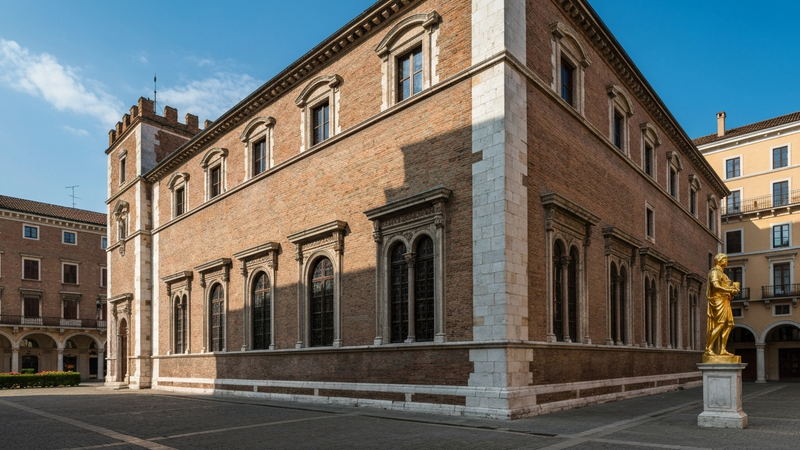
A designated landmark in red brick with arched windows and heavy masonry, built for printing and publishing at a time when the district was industrial. The lower floors remain in commercial use; the residences sit above.
The additions were designed to be invisible from the pavement, which is the usual requirement when building above a landmark. From the street the building looks exactly as it did.
For a resident that produces an unusual combination: a nineteenth-century industrial building below and contemporary residential construction above, with the terraces and light that only a rooftop position offers.
| Attribute | Detail |
|---|---|
| Address | 295 Lafayette Street, Manhattan |
| Built | 1885-1886 |
| Architect | Albert Wagner |
| Style | Romanesque Revival |
| Status | Designated landmark |
| Residences | Penthouses added above, set back from the facade |
Building facts. Ownership form and unit-level figures - size, terrace, charges, tax - must be confirmed for the specific residence.
The location is on Google Maps here.
2. Living Above a Landmark
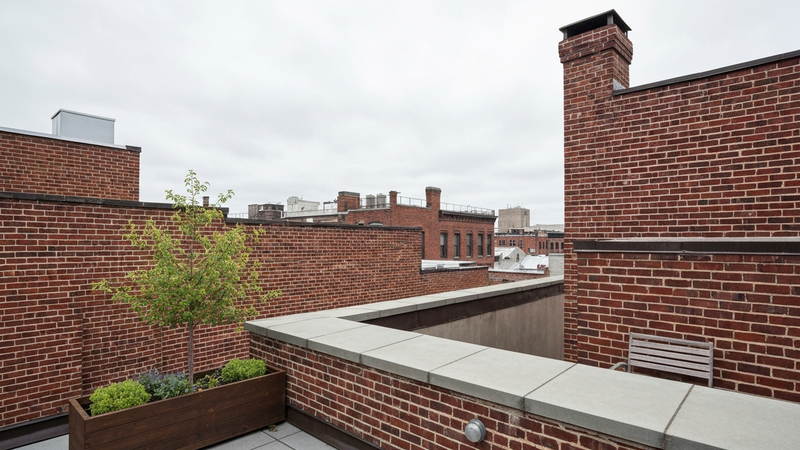
Two things that are individually scarce and rarely combined. Substantial private outdoor space at roof level, and a historic building beneath it that cannot be altered or replaced.
The terraces are the reason these apartments exist as a category. In a district of low buildings, a rooftop position produces light and outlook that no floor below it can offer.
The corresponding obligation is maintenance. Terraces, drainage and the interface between new construction and an 1885 masonry structure all require attention, and the condominium funds it.
Ask what the reserve study says about the roof, the terraces and the facade. Our building diligence guide covers how to read it.
3. The Diligence a Landmark Addition Requires

Three items beyond the ordinary condominium review. What is designated and what obligations that creates, since exterior work on a landmark carries approval processes the building funds.
How commercial and residential costs are allocated, since the lower floors remain in commercial use and the two share a structure.
And the capital plan for an 1885 building. Masonry, roof and systems have replacement cycles, and a well-run building states them rather than leaving them to be discovered.
Then the ordinary review: audited financial statements, the reserve balance in dollars, assessment history and two years of board minutes.
4. Buying Here as an Overseas Purchaser

Where the ownership is condominium, straightforward: no board approval vote, non-resident and entity ownership accepted, subletting governed by written building rules.
Mansion tax applies from $1 million on the whole price, reaching 2.25% between $5 and $10 million, 3.25% above $10 million and 3.9% above $25 million, paid by the buyer at closing.
Settle ownership structure before contract; US estate tax reaches non-resident owners above a $60,000 exemption on US-situs assets. See our estate tax guide and buying from overseas guide.
Nolita and SoHo as a district
The area is low-rise, largely nineteenth-century, and protected in much of its extent by historic designation. That means the context a purchaser buys into is unlikely to change materially.
It is also a commercial district at street level, with retail and restaurant activity that a purely residential block does not generate. Walk it at a busy hour before deciding, rather than on a quiet morning.
Terraces and what they cost
Private outdoor space at roof level is among the most valuable attributes in Manhattan and among the most demanding to maintain. Waterproofing, drainage and planting all have cycles.
Confirm what the owner is responsible for as against the condominium, and what the reserve study anticipates. The answer is in the documents rather than in the brochure.
Comparables for a handful of apartments
Where a building holds only a few residences, the comparable set within it barely exists, and the units are not equivalent to one another in any case.
Extend the comparison to other landmark conversions and terraced apartments downtown, adjusting for outdoor space, floor and condition. Our negotiation guide covers the method.
Final Thoughts: A Roof Nobody Else Can Build
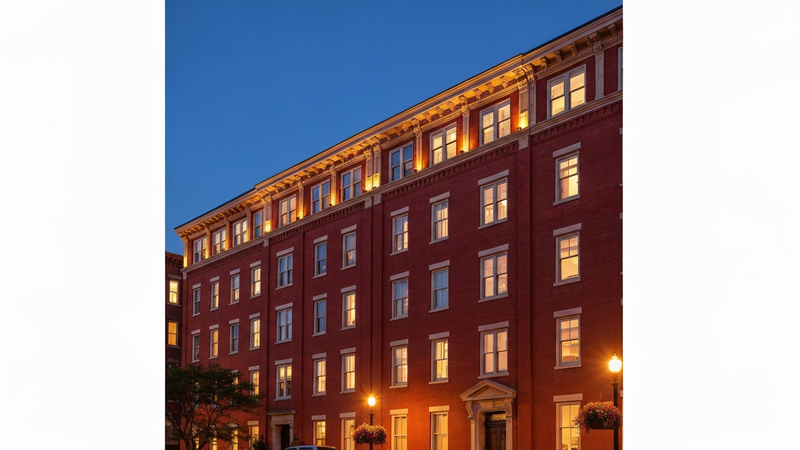
Building above a designated landmark in New York is difficult enough that it almost never happens, which makes these apartments a fixed and very small supply. What a buyer takes on is the diligence a nineteenth-century structure and a mixed-use building require together — a longer document list than a new tower, and an entirely answerable one.
We cover SoHo, Nolita and downtown on Satoshi Onodera's YouTube channel and on Instagram. If a residence here is in view, talk to our team and we will obtain the landmark obligations and the financials first. Real estate brokerage services are provided through licensed professionals.
A note on financing for a buyer abroad. Foreign national mortgages require a larger deposit and a longer underwriting period than domestic ones, and lenders assess landmark buildings with mixed commercial use more carefully than standard residential ones.
Confirm early that your lender is comfortable with the building itself. Where the residential component is small, some lenders decline on that basis alone, and it is far cheaper to learn that before a contract than after one.
One further consideration for part-year owners. New York prohibits entire-unit stays under thirty days with the owner absent, so any letting arrangement must be a conventional lease regardless of what a building's amenities suggest.
Read the house rules for the minimum term before assuming an income plan works. Our pied-a-terre guide covers the practical arrangements for an apartment that sits empty for months.
One point that applies to every purchase of this kind from another country. The document work — financial statements, reserve balance, assessment history, board minutes and the governing agreements — can all be completed before anyone travels, and it is the part of the process that actually determines whether a building is sound.
The physical inspection is the part that requires presence, and even that can be run as a live walkthrough with measurements taken on camera. Buyers who reverse the order, travelling first and reading afterwards, routinely lose weeks and occasionally lose deposits.
One last point on the district's inventory. Nolita and SoHo hold very few apartments with substantial private outdoor space, because the buildings were designed for manufacturing rather than for living and their roofs are rarely usable. A rooftop residence here competes against a handful of others rather than against a market.
Reinvent NY provides business consulting, operational support, and coordination services. Legal advice and immigration filings are handled by independent licensed attorneys. Real estate services are provided through licensed professionals and applicable brokerage relationships. This article is for informational purposes only and does not constitute legal or investment advice.
More buildings worth knowing: 100 Eleventh Avenue, 111 West 57th Street, 130 William. The full set is indexed under New York building profiles.

Satoshi Onodera
Founder & CEO, Reinvent NY Inc.
Founded Reinvent NY in 2024. Providing relocation support from all over the world to America.
Ready to Get Started?
Our team in New York is ready to help with your visa, real estate, or relocation needs.
Schedule a ConsultationFrequently Asked Questions
Where is the Puck Building?
295 Lafayette Street at Houston Street, on the edge of Nolita and SoHo. The location is on [Google Maps](https://maps.google.com/?q=295+Lafayette+Street+New+York).
When was it built?
In 1885 and 1886 to the design of Albert Wagner, in Romanesque Revival style. It is a designated landmark.
What was it originally?
A printing and publishing building, home to the humour magazine that gave it its name, with the gilded statue at the corner still in place.
What are the penthouses?
Residences added above the historic structure, set back so that the landmark facade reads unchanged from the street.
Is it a condominium?
The residential portion is condominium. Confirm the ownership form and the documents for the specific unit.
Why are they unusual?
Very few landmarks in New York carry modern residential additions, because the approval process for building above a designated structure is demanding.
What should I confirm first?
Landmark obligations and how they are funded, how residential and commercial costs are allocated, the reserve balance, assessment history, and the actual charges.
Real Estate Guides & Data
More guides
- Buying Short Sales: Discounts on the Lender's Clock
- Tax Treaties and US Property: Avoiding Double Taxation
- Trusts and US Property: The Structures Behind the Names
- US Real Estate Investing: Yields, Taxes and How to Buy
- Walk-Up vs Doorman Buildings: The Service Premium
- 1031 Exchanging Into NYC: Trading Up to Manhattan
Related Articles
The Ansonia: A 1904 Beaux-Arts Hotel, Now Condominium
The Ansonia's 1904 Beaux-Arts pile on Broadway converted to condominium. Thick walls, turrets and no board vote — what to confirm before buying.
The Belnord: A 1908 Courtyard Block on the West Side
The Belnord wraps a full block around a private courtyard and is condominium. Prewar rooms without a board vote, and what to confirm before buying.
Seattle Real Estate Market 2026: Prices, Rents and Yields
Seattle home values in 2026: an $856,052 typical value, $2,224 rents and a 3.12% gross yield, plus where Tacoma, Spokane and Vancouver WA offer better numbers.
The Sherry-Netherland: An Apartment Hotel Since 1927
The Sherry-Netherland has stood at Fifth Avenue and 59th Street since 1927 as a cooperative apartment hotel. What it is, and how a buyer should read it.