The Dakota: New York's First Luxury Apartment House
The Dakota was built in 1884, when wealthy New Yorkers still lived in houses. Henry Janeway Hardenbergh's building at 72nd Street and Central Park West was among the first luxury apartment houses in the city, and it made the apartment a respectable address rather than a compromise.
It is also, for almost every buyer reading this from another country, a building to admire rather than to purchase. Let's explain why, because the reason applies to a great deal of Manhattan.
1. What the Building Is
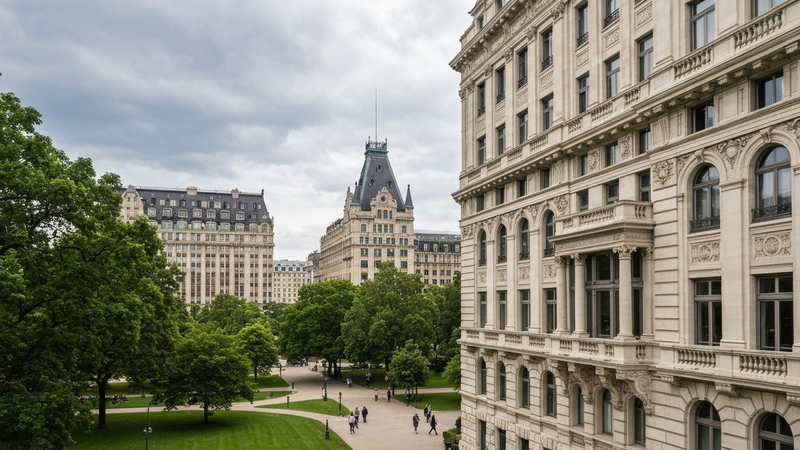
A designated landmark with gables, dormers and a courtyard entrance, built on what was then the edge of the developed city. The proportions are domestic rather than institutional — rooms sized for households that had previously occupied whole houses.
Those apartments are unlike anything built since. Ceiling heights, room sequences and service arrangements come from a period with entirely different assumptions about how a large household lived.
The building faces Central Park directly, on a frontage that cannot be extended because the park cannot be built on. That scarcity is permanent in a way height never is.
| Attribute | Detail |
|---|---|
| Address | 1 West 72nd Street, Manhattan |
| Completed | 1884 |
| Architect | Henry Janeway Hardenbergh |
| Status | Designated landmark |
| Ownership form | Cooperative |
| Board approval | Full application and interview |
Building facts. Cooperative requirements are set by the board and are not published; they must be established through your attorney and broker.
The location is on Google Maps here.
2. What a Cooperative Actually Is

Not real property in the ordinary sense. A purchaser buys shares in a corporation that owns the building, and receives a proprietary lease granting the right to occupy a particular apartment.
The practical consequences are substantial. The corporation's board approves every purchaser, may decline an application without stating a reason, and sets rules on financing, subletting, renovation and occupancy that a condominium board cannot impose.
Roughly three quarters of Manhattan's pre-1980 apartment stock is cooperative. That single fact shapes what an international buyer can realistically pursue more than price does.
Our condo versus co-op guide sets out the differences in full, and our guide for foreign buyers covers why the distinction usually decides the search.
3. Why Overseas Buyers Rarely Succeed Here
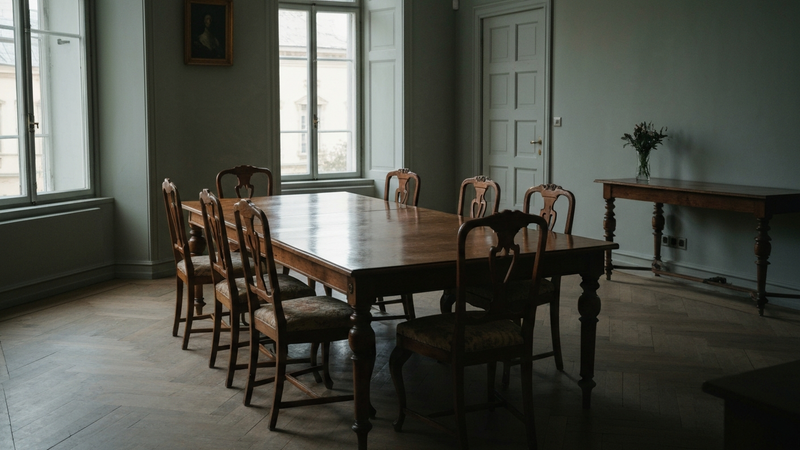
Three reasons, none of which are about the individual applicant. Boards require extensive financial disclosure — assets, income, liquidity after closing — verified in a form they recognise, and documents from a foreign jurisdiction frequently do not fit that form.
Many buildings limit or prohibit purchases by entities and trusts, which are precisely the structures an international buyer uses for estate and liability planning. And subletting is usually restricted, which makes an apartment unusable as a part-year residence with periods of letting.
A board may also decline without giving a reason, provided it does not do so on a basis prohibited by fair housing law. There is no appeal from a decision that was never explained.
That is why we generally direct international purchasers to condominiums from the outset — not because cooperatives are worse buildings, but because the process is not designed for a buyer whose financial life sits in another country.
4. What to Buy Instead

Condominiums, where there is no board approval vote — only a right of first refusal that is almost never exercised — and where non-resident and entity ownership are generally accepted.
Several sit within a short walk of here. 15 Central Park West and One Central Park West both face the park in condominium form, and the newer towers on 57th Street are condominium without exception.
Mansion tax applies from $1 million on the whole price in either form. Settle ownership structure before contract; US estate tax reaches non-resident owners above a $60,000 exemption on US-situs assets — see our estate tax guide.
When a cooperative is worth attempting
If you hold a US tax residence, US-sourced income and US-held liquid assets, a cooperative application becomes realistic. The obstacle is documentary rather than personal, and buyers whose finances are already documented domestically clear it regularly.
In that case, expect the process to take longer than a condominium purchase and to require a board package running to hundreds of pages. Our board package guide sets out what goes into it.
What the price difference reflects
Cooperative apartments generally trade below comparable condominiums on a per square foot basis, and the discount is a direct function of the restrictions: a smaller eligible buyer pool, limits on letting, and a sale that requires approval.
That discount is real value for a buyer who can satisfy a board and intends to live in the apartment. It is a trap for one who may need to sell quickly to an international purchaser, because the same restrictions will apply to your buyer.
Prewar rooms and what they are worth
Buildings of this era have proportions that new construction rarely reproduces. Rooms are frequently better shaped and worse serviced than their modern equivalents, and the variation between apartments within a single building is wide.
Where a condominium in a prewar building is available — they exist, though they are uncommon — it combines both advantages, and those apartments are correspondingly sought after.
Final Thoughts: Admire It, Then Look Next Door

The Dakota invented the New York apartment, and the buildings that followed it — including the ones an international buyer can actually purchase — exist because it worked. Knowing why this one is closed is worth more than a list of what is open, because it explains three quarters of the city's older housing stock in a single sentence.
We cover Central Park West on Satoshi Onodera's YouTube channel and on Instagram. If you are searching from abroad, talk to our team and we will filter for buildings that will actually accept your purchase. Real estate brokerage services are provided through licensed professionals.
One practical note on how to search. Most portals do not distinguish clearly between cooperative and condominium listings, and buyers abroad routinely spend weeks on apartments they were never eligible to buy.
Filter for condominium at the outset. The inventory is smaller, but every apartment in it is one you can actually purchase, which makes the search shorter rather than narrower in any meaningful sense.
A final note on how these buildings actually trade. In restrictive cooperatives a meaningful share of sales never appears publicly, because sellers prefer a controlled process and purchasers arrive introduced rather than through an advertisement.
A buyer relying on public listings therefore sees a fraction of what actually trades in buildings of this type, and concludes wrongly that nothing is available. Our off-market guide covers how that inventory is reached and why access runs through relationships rather than through search.
Reinvent NY provides business consulting, operational support, and coordination services. Legal advice and immigration filings are handled by independent licensed attorneys. Real estate services are provided through licensed professionals and applicable brokerage relationships. This article is for informational purposes only and does not constitute legal or investment advice.
More buildings worth knowing: The XI, Waldorf Astoria Residences, Woolworth Tower Residences. The full set is indexed under New York building profiles.

Satoshi Onodera
Founder & CEO, Reinvent NY Inc.
Founded Reinvent NY in 2024. Providing relocation support from all over the world to America.
Ready to Get Started?
Our team in New York is ready to help with your visa, real estate, or relocation needs.
Schedule a ConsultationFrequently Asked Questions
Where is the Dakota?
1 West 72nd Street at Central Park West, on the Upper West Side. The location is on [Google Maps](https://maps.google.com/?q=1+West+72nd+Street+New+York).
When was it built?
It was completed in 1884 to the design of Henry Janeway Hardenbergh, and is a designated landmark.
Why is it historically important?
It was among the first luxury apartment houses in New York, built when wealthy households lived in private houses rather than in apartments, and it established the model the city followed.
Is it a co-op or a condominium?
It is a cooperative. Purchasers buy shares in a corporation and receive a proprietary lease rather than a deed to real property.
Can a non-resident buy here?
In practice it is extremely difficult. Cooperative boards interview applicants, require extensive financial disclosure, may decline without giving a reason, and many restrict purchases by non-resident buyers or by entities.
What is the alternative for an overseas buyer?
Condominium buildings, where there is no board approval vote and non-resident and entity ownership are generally accepted. Several sit within a few blocks of here.
Can a co-op apartment be let out?
Subletting in cooperatives is typically restricted by the board and often limited in duration, which is a significant constraint for an owner living abroad.
Real Estate Guides & Data
More guides
- Renovation Budgets in NYC: Real Numbers, Real Buffers
- Real Estate Scams and Red Flags: The Fraud Field Guide
- Selling a US Property: Timeline, Costs, Net
- Square Footage in NYC: Why the Number Lies
- Timing the NYC Market: Cycles, Seasons, and Honesty
- US Estate Tax for Non-Residents: The $60,000 Exemption
Related Articles
Maspeth Queens Real Estate Guide
What Maspeth in Queens costs in 2026: the boundaries, the housing stock, sale and rent ranges, how residents commute, and what a buyer should check first.
Ridgewood Queens Real Estate Guide 2026
A concrete 2026 guide to buying and renting in Ridgewood, Queens: prices, buildings, transit, and honest advice from our team on the ground in New York.
Whitestone Queens Real Estate Guide 2026
An authoritative 2026 guide to Whitestone, Queens: housing stock, prices, rents, transit, and schools for international buyers and renters.
15 Hudson Yards: The Tower Beside the Shed
15 Hudson Yards rises from a square base into a curved four-lobed tower beside the Shed. What the building offers a buyer, and what to confirm first.