The XI: Bjarke Ingels' Twisting Towers on the Hudson
The XI is two towers that twist so neither blocks the other. Bjarke Ingels Group's scheme at 76 Eleventh Avenue places a pair of volumes of differing height between the High Line and the Hudson, their forms rotating as they rise so that both keep an outlook.
The geometry is not decorative; it is what allows the site to hold two towers at all. Let's look at what that produces for a buyer.
1. What the Building Is
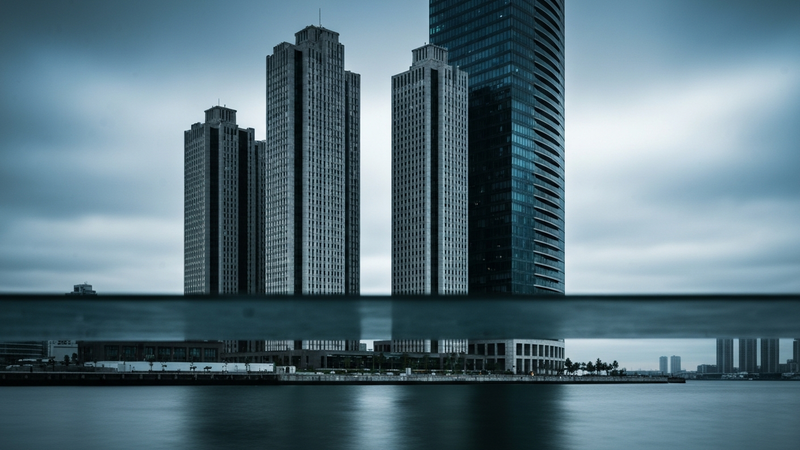
A paired scheme rather than a single building. The two volumes differ in height and rotate as they rise, which is the mechanism by which each retains river and park views past the other.
That form has a practical consequence for buyers. Floor plates change shape as the towers turn, so apartments differ from level to level rather than repeating — the opposite of a conventional stacked tower.
The development also includes a hotel component, which means service infrastructure exists within the complex and shared costs are allocated between uses in documents rather than by custom.
| Attribute | Detail |
|---|---|
| Address | 76 Eleventh Avenue, Manhattan |
| District | West Chelsea, between the High Line and the Hudson |
| Architect | Bjarke Ingels Group |
| Form | Two twisting towers of differing height |
| Uses | Residences with a hotel component |
| Ownership | Condominium |
Building facts. Unit-level figures - size, exposure, charges, tax - must be obtained for the specific residence.
The location is on Google Maps here.
2. Two Towers, Two Products
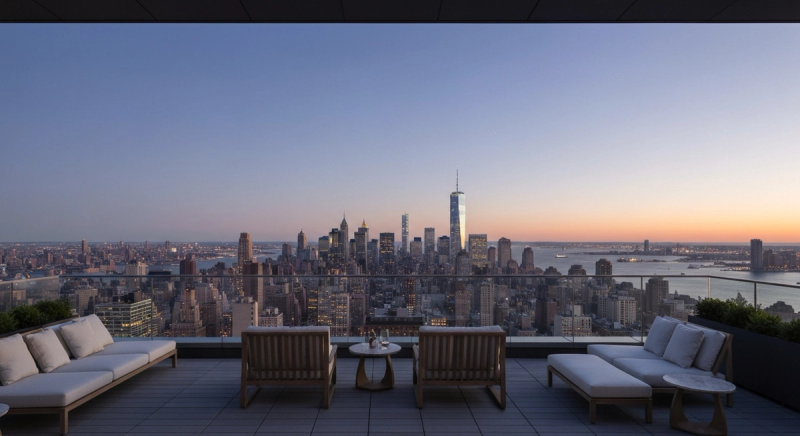
Because the volumes differ in height and orientation, the apartments in them are not interchangeable. One tower's outlook, floor shape and light condition differ from the other's, and so should the price per square foot.
Within each tower the twist means the plan changes as you rise. A comparable sale three floors up is a guide rather than an equivalent, which is the same problem that arises in any geometrically complex building.
The practical response is to ask for closed sales by tower and by line rather than for the building as a whole, and to compare only apartments with the same orientation.
Our negotiation guide covers how to build a comparable set when the units within a single building are not equivalent to each other.
3. The Hotel Component and Shared Costs
Where a residential building shares a site with a hotel, the boundary matters. Establish which entrances and lifts serve residents, how deliveries and service access are handled, and how shared costs are allocated between the two operations.
Those allocations sit in documents rather than in conversation and determine a meaningful share of the monthly bill. Ask your attorney to identify exactly what the residential condominium bears.
Then the ordinary review: audited financial statements, the reserve balance in dollars, assessment history and two years of board minutes.
Our building diligence guide sets out the full list, and our branded residences guide covers how service arrangements are structured where a hotel operator is involved.
4. Buying Here as an Overseas Purchaser
Straightforward as a condominium: no board approval vote, non-resident and entity ownership accepted, subletting governed by building rules rather than a board's discretion.
Mansion tax applies from $1 million on the whole price, reaching 2.25% between $5 and $10 million and 3.25% above $10 million. Where units remain with the sponsor, the New York City and State transfer taxes are customarily shifted to the purchaser, roughly a further 1.8 to 2.0%.
Settle ownership structure before contract; US estate tax reaches non-resident owners above a $60,000 exemption on US-situs assets. See our estate tax guide and new development guide.
Sponsor position and board control
In a recent development this is the question that most affects the next few years of ownership. While a significant block of units remains unsold the sponsor controls the board, sets the budget and reserve contributions, and can dispose of units in bulk.
A bulk disposal at a discount resets the comparables under your own resale, which is why the answer belongs in your diligence file rather than in a footnote. Ask what proportion has closed and when control transfers.
Complex geometry and maintenance
A twisting facade is more expensive to clean, seal and repair than a flat one, because access is harder and components are less standard. That cost is funded permanently through common charges and reserves.
Ask what the reserve study anticipates for facade work over the next decade and how it is funded. In architecturally ambitious buildings this is the line item most often underestimated in a first-year budget.
The West Chelsea waterfront
The Hudson frontage here is protected by the highway and the waterfront park, so the river outlook is fixed by land use rather than by the absence of a developer. That is a materially more durable view than one over a low building.
The district's stock is also heavily condominium rather than cooperative, which for a non-resident buyer widens the purchasable inventory far beyond what the older uptown neighbourhoods offer.
Final Thoughts: Geometry With a Purpose
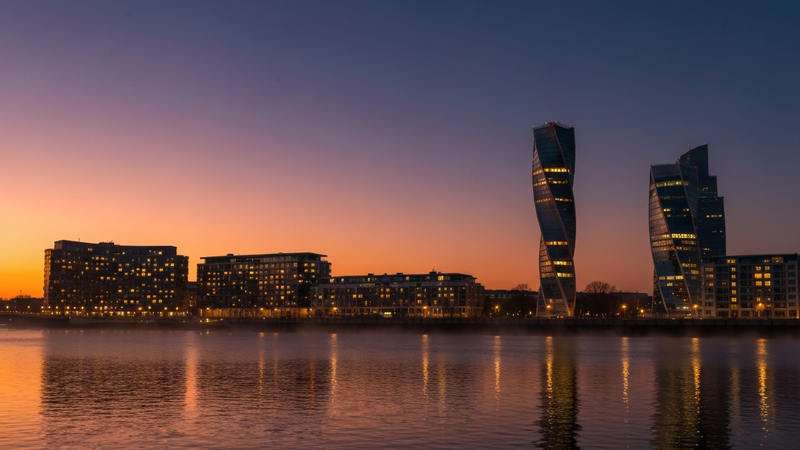
Sculptural buildings are usually sculptural at the buyer's expense. Here the form does a job — it lets two towers occupy one site without either surrendering its outlook — and that makes the architecture defensible on practical grounds rather than only aesthetic ones. What it costs is a facade that will never be cheap to maintain, and that is a reserve question rather than a design one.
We cover West Chelsea and the waterfront on Satoshi Onodera's YouTube channel and on Instagram. If a residence here is in view, talk to our team and we will obtain the financials and the cost allocation first. Real estate brokerage services are provided through licensed professionals.
One practical note for a buyer approaching this from abroad. In a two-tower scheme the marketing treats the development as one building and the market does not. Insist on seeing the two priced separately before forming a view about value.
That distinction is invisible in a brochure and obvious in the closed sales record, which is public in New York and available to anyone who asks for it properly.
A note on financing for an overseas buyer. Foreign national mortgages require a larger deposit and a longer underwriting period, and lenders will look at the development's sponsor position as closely as at the borrower. Begin the process early rather than once an apartment has been identified.
One last consideration for part-year owners. Buildings with a hotel component often appear to offer flexible letting arrangements, but New York prohibits entire-unit stays under thirty days with the owner absent. Confirm what the house rules actually permit before assuming any income plan is available.
Reinvent NY provides business consulting, operational support, and coordination services. Legal advice and immigration filings are handled by independent licensed attorneys. Real estate services are provided through licensed professionals and applicable brokerage relationships. This article is for informational purposes only and does not constitute legal or investment advice.
More buildings worth knowing: 130 William, 30 Park Place, 432 Park Avenue. The full set is indexed under New York building profiles.
Satoshi Onodera
Founder & CEO, Reinvent NY Inc.
Founded Reinvent NY in 2024. Providing relocation support from all over the world to America.
Ready to Get Started?
Our team in New York is ready to help with your visa, real estate, or relocation needs.
Schedule a ConsultationFrequently Asked Questions
Where is The XI?
76 Eleventh Avenue at West 18th Street in West Chelsea, between the High Line and the Hudson. The location is on [Google Maps](https://maps.google.com/?q=76+Eleventh+Avenue+New+York).
Who designed it?
Bjarke Ingels Group. The scheme is two towers of differing height whose forms twist as they rise so that each preserves views past the other.
Why do the towers twist?
The geometry allows both volumes to face the river and the park without one blocking the other, which is the practical reason behind the sculptural form.
Is there a hotel?
The development includes a hotel component alongside the residences, so service infrastructure exists within the complex.
Is it a condominium?
Yes. There is no board approval vote, and non-resident and entity ownership are generally accepted.
What is the outlook?
River to the west and the elevated park to the east. Confirm what the specific apartment sees and at what floor, since orientation varies substantially between the two towers.
What should I confirm first?
The reserve balance, assessment history, sponsor position and board control, how residential and hotel costs are allocated, and the actual charges for the specific residence.
Real Estate Guides & Data
More guides
- US Estate Tax for Non-Residents: The $60,000 Exemption
- Vacation Homes Beyond NYC: Hamptons, Hudson, and the Math
- Real Estate Attorneys in NY: What Counsel Actually Does
- Apartment Handover: The First 72 Hours of Ownership
- Heating and Cooling in NYC Buildings
- NYC Foreclosure Auctions: Deep Discounts, Real Traps
Related Articles
Douglaston Queens Real Estate Guide 2026
An authoritative 2026 guide to buying and renting in Douglaston, Queens: housing stock, prices, transit, schools, and who this neighborhood truly suits.
Bayside Queens Real Estate Guide 2026
An authoritative 2026 guide to Bayside, Queens real estate: housing stock, prices, rents, transit, and schools for international buyers and renters.
Flushing Queens Real Estate Guide 2026
An authoritative 2026 guide to buying and renting in Flushing, Queens — housing stock, prices, transit, and who this neighborhood suits.
Rent vs Buy in NYC: The 2026 Math
Rent vs buy in NYC for 2026: price-to-rent ratios, mansion tax and closing costs, a worked $1.5M example, and the breakeven horizon that decides the answer.