15 Hudson Yards: The Tower Beside the Shed
15 Hudson Yards changes shape as it rises. The tower by Diller Scofidio and Renfro with Rockwell Group, completed in 2019, begins on a square base and transitions into a rounded four-lobed plan higher up, sitting directly beside the Shed at the western edge of Manhattan.
That transition is the building's defining decision and it determines what the apartments are. Let's take it in order.
1. What the Building Is
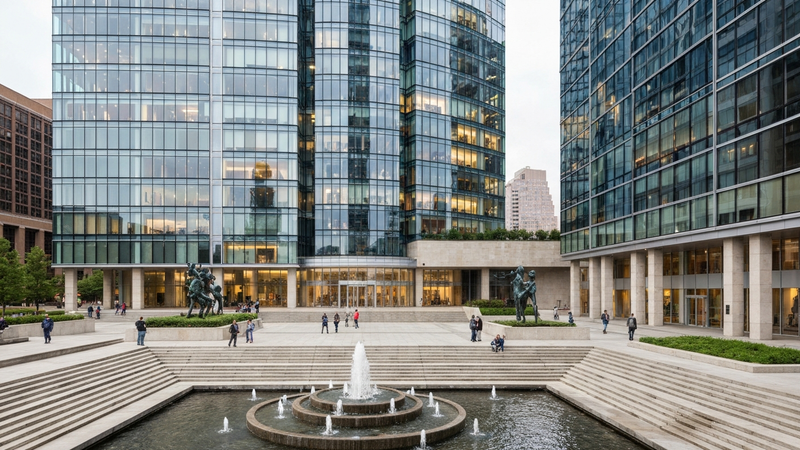
A tower with two geometries. The lower portion is square in plan; the upper portion resolves into four curved lobes, which produces bowed glass and corner-free rooms in the higher apartments.
The practical effect is that apartments differ substantially between the lower and upper sections of the same building. A comparable ten floors below may be a different product entirely rather than the same one at a lower elevation.
At its base sits the Shed, a cultural building with a movable outer shell. That gives the address a public programme immediately outside, which is unusual for a residential tower and cuts both ways depending on the floor.
| Attribute | Detail |
|---|---|
| Address | 15 Hudson Yards, Manhattan |
| Completed | 2019 |
| Architect | Diller Scofidio and Renfro with Rockwell Group |
| Form | Square base transitioning to a four-lobed curved plan |
| Context | Adjacent to the Shed and the High Line |
| Ownership | Condominium |
Building facts. Unit-level figures - size, exposure, charges, tax, abatement status - must be obtained for the specific residence.
The location is on Google Maps here.
2. Curved Glass and What It Does to a Room
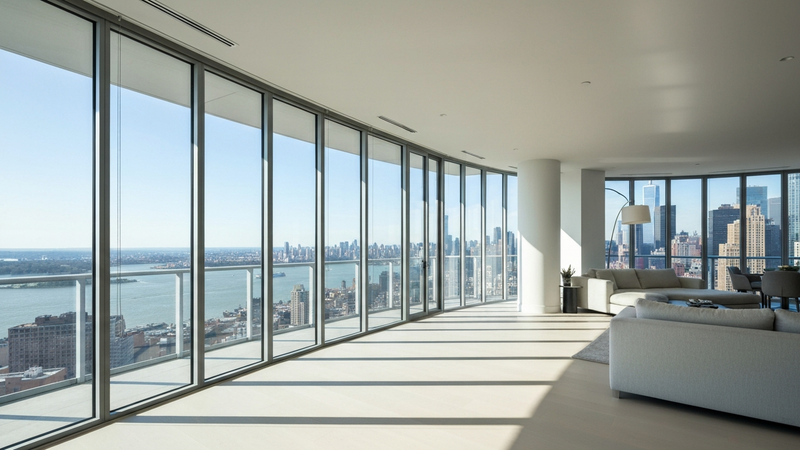
A lobed plan removes corners, which changes how a room is furnished and how the view arrives. The glass bows outward rather than meeting at an angle, so the outlook is continuous across the width of the room.
Buyers respond to this strongly in both directions. Some find it the most compelling thing about the building; others find curved walls awkward for furniture, joinery and hanging art, which are ordinary domestic concerns rather than trivial ones.
It is a question that resolves in ten minutes standing in the apartment and never resolves from a floor plan, which is why the walkthrough matters more here than in a rectilinear tower.
Our remote viewing guide covers how to run that inspection properly from another country.
3. The District and the Tax Question

Hudson Yards was master-planned and built largely at once, which means contemporary systems and planned infrastructure without the accumulated texture of an older neighbourhood. That is a genuine trade rather than a marketing point.
The item that most affects cost of ownership is tax. Buildings in newer districts frequently carry abatements that step down on a published schedule, and on a condominium the owner pays that tax directly.
Establish which programme applies, the remaining term, the step-down schedule and the estimated unabated tax for the specific unit. Then model the monthly cost at full expiry rather than at today's figure.
Our tax abatements guide explains the mechanics, and our Hudson Yards article covers the district as a whole.
4. Buying Here as an Overseas Purchaser
Straightforward as a condominium: no board approval vote, non-resident and entity ownership accepted, subletting governed by building rules. Newly built districts skew heavily condominium, which is why they appear disproportionately on international shortlists.
Mansion tax applies from $1 million on the whole price, reaching 2.25% between $5 and $10 million and 3.25% above $10 million. Where units remain with the sponsor, transfer taxes are customarily shifted to the purchaser, roughly a further 1.8 to 2.0%.
Settle ownership structure before contract; US estate tax reaches non-resident owners above a $60,000 exemption on US-situs assets. See our estate tax guide and buying from overseas guide.
Living beside a cultural venue
A public programme at the base of a residential building brings activity, deliveries and event traffic that a quiet residential block does not generate. On upper floors that is invisible; on lower ones it is part of daily life.
Ask how residential access is separated from the venue, and arrange a walkthrough at an hour when something is actually happening rather than on a quiet weekday morning.
Amenity cost in a large tower
Deep amenity provision is funded permanently through common charges. Pools, lounges and staffed facilities consume heat, insurance, cleaning and payroll whether or not any individual owner uses them.
Compare the charge per square foot against operating buildings of similar scale rather than accepting a projection. Manhattan condominium operating expense runs a median $15.52 per square foot a year as a reference.
The western edge position
The river outlook to the west is protected by the highway and the waterfront park rather than by luck, which makes it considerably more durable than a view over a low building that can be replaced.
Confirm what the specific apartment sees, from which rooms and at what floor. Within a single tower the difference between a river line and an inland one is substantial and correctly priced.
Final Thoughts: Two Buildings in One Tower
The square base and the lobed top are different products at the same address, and treating them as one building is the most common error a buyer makes here. Establish which section an apartment sits in, model the tax at full expiry, and stand in the curved room before deciding whether the geometry is the attraction or the obstacle.
We cover the West Side on Satoshi Onodera's YouTube channel and on Instagram. If a residence here is in view, talk to our team and we will obtain the abatement schedule and the financials first. Real estate brokerage services are provided through licensed professionals.
For an overseas buyer the district has one underrated advantage: everything about it is documented, current and comparable. There is no century of deferred maintenance to interpret and the comparables within each building are numerous.
That makes it easier to underwrite confidently from another country than almost anywhere else in Manhattan, which is a practical argument rather than an aesthetic one and frequently the deciding one.
A note on financing. Lenders treat new-district condominiums as a distinct category and will want to see the building's own position as well as the borrower's, particularly where a sponsor still holds a meaningful block of units. Confirm early that your lender is comfortable with the building itself.
One further consideration for part-year owners. Large condominium buildings generally permit letting subject to house rules, but New York prohibits entire-unit stays under thirty days with the owner absent, so any arrangement must be a conventional lease. Read the house rules before assuming a plan works.
Reinvent NY provides business consulting, operational support, and coordination services. Legal advice and immigration filings are handled by independent licensed attorneys. Real estate services are provided through licensed professionals and applicable brokerage relationships. This article is for informational purposes only and does not constitute legal or investment advice.
More buildings worth knowing: 30 Park Place, 432 Park Avenue, 520 West 28th. The full set is indexed under New York building profiles.

Satoshi Onodera
Founder & CEO, Reinvent NY Inc.
Founded Reinvent NY in 2024. Providing relocation support from all over the world to America.
Ready to Get Started?
Our team in New York is ready to help with your visa, real estate, or relocation needs.
Schedule a ConsultationFrequently Asked Questions
Where is 15 Hudson Yards?
On the western edge of Manhattan at the Hudson Yards development, beside the Shed and the High Line. The location is on [Google Maps](https://maps.google.com/?q=15+Hudson+Yards+New+York).
Who designed it?
Diller Scofidio and Renfro with Rockwell Group. The tower was completed in 2019.
Why does the shape change as it rises?
The plan transitions from a square base to a rounded four-lobed form higher up, which gives upper apartments curved glass and a wider outlook.
What is the Shed?
The cultural building at the tower's base, with a movable outer shell that extends over the adjacent plaza.
Is it a condominium?
Yes. There is no board approval vote, and non-resident and entity ownership are generally accepted.
Are there tax abatements in the district?
Some buildings in newer districts carry abatements that step down over time. Establish which programme applies to the specific building and the unabated tax before an offer.
What should I confirm first?
The abatement status and unabated tax, reserve balance, assessment history, sponsor position, and the actual charges for the specific residence.
Real Estate Guides & Data
More guides
- NYC vs the Suburbs: Where the Same Money Goes
- Buying a Penthouse: The Top Floor's Own Rules
- US Home Price History: Ten Years, Five Years, and Last Year
- Buying in Queens: The Value Borough's Logic
- Viewing an Apartment From Abroad: The Checklist
- US Property in Retirement Planning: The Long Hold's End
Related Articles
The Dakota: New York's First Luxury Apartment House
The Dakota opened in 1884 and set the template for Manhattan apartment living. What the building is, and why an overseas buyer rarely gets in.
Whitestone Queens Real Estate Guide 2026
An authoritative 2026 guide to Whitestone, Queens: housing stock, prices, rents, transit, and schools for international buyers and renters.
Douglaston Queens Real Estate Guide 2026
An authoritative 2026 guide to buying and renting in Douglaston, Queens: housing stock, prices, transit, schools, and who this neighborhood truly suits.
Bayside Queens Real Estate Guide 2026
An authoritative 2026 guide to Bayside, Queens real estate: housing stock, prices, rents, transit, and schools for international buyers and renters.