Ridgewood Queens Real Estate Guide 2026
What Ridgewood Actually Is
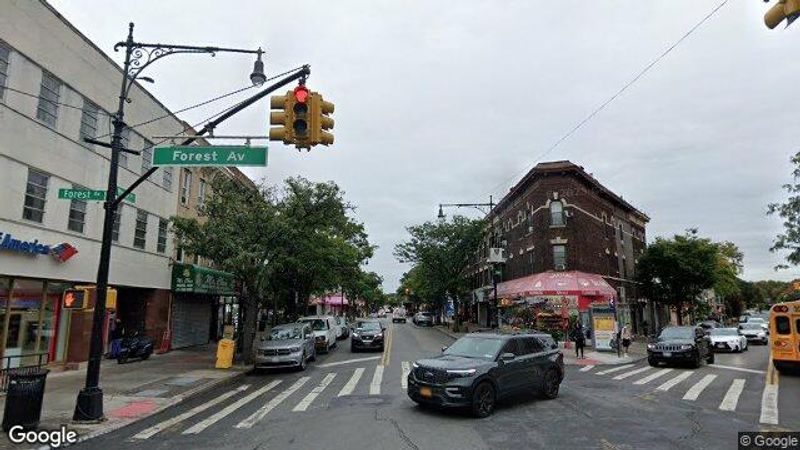
Ridgewood sits on the Brooklyn-Queens border, bounded roughly by Metropolitan Avenue, the Newtown Creek watershed, and the elevated M line tracks. It was historically a German and Italian working-class enclave built around breweries and small factories, distinct from the glossier neighborhoods further into Queens.
The neighborhood's character comes from its unbroken rows of turn-of-the-century brick housing, a rarity in New York. Much of it survived because Ridgewood was never targeted for large-scale postwar demolition, leaving a dense, walkable grid that reads more like a European industrial district than a typical Queens residential area.
Since the mid-2010s, Ridgewood has absorbed overflow demand from Bushwick and East Williamsburg, pulling in younger professionals and, more recently, international buyers seeking value near Manhattan. Our team in New York treats it as a distinct submarket, not a Brooklyn extension, with its own pricing logic and building stock.
The Housing Stock
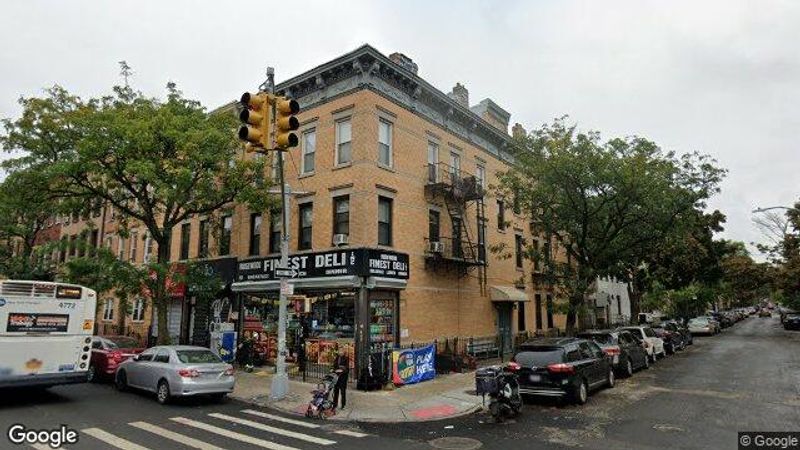
Ridgewood's defining asset is the Matthews Model flats, brick two-family and multi-family rowhouses built by developer Gustave Mathews in the 1900s-1910s, featuring pressed-tin cornices and terracotta detailing. Streets like Woodward Avenue, Onderdonk Avenue, and Linden Street contain some of the best-preserved blocks, several within the Ridgewood North Historic District.
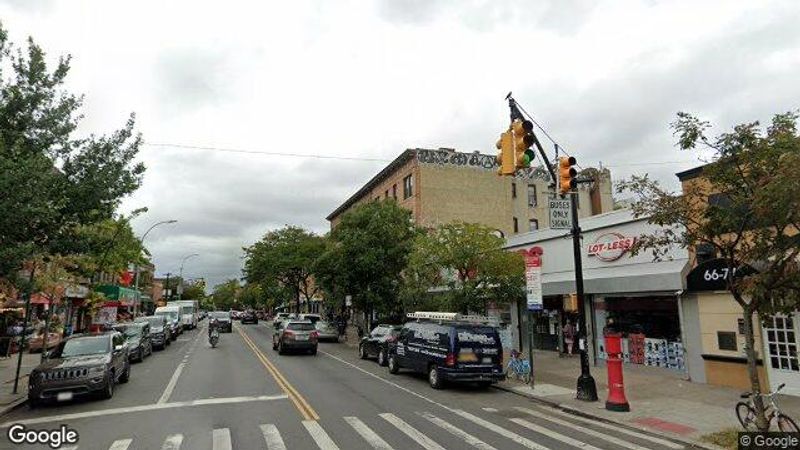
Beyond the rowhouses, the market includes prewar walk-up apartment buildings, typically four to six units, along Myrtle Avenue and Forest Avenue, plus a growing number of new-construction condominiums near the Fresh Pond Road corridor. Loft-style conversions of former factory buildings near the Brooklyn border round out the inventory for buyers wanting larger floor plates.
Unit types skew toward one- and two-bedroom apartments in walk-ups, with the rowhouses offering owner-occupant duplex configurations plus a rental unit. Genuine luxury full-service condos are still rare here, so buyers seeking doorman buildings and amenity packages should treat Ridgewood as a value and character play rather than a trophy-asset market.
Prices and Rents
As of early 2026, condominium prices in Ridgewood run approximately $650 to $950 per square foot, meaningfully below comparable product in Bushwick or Williamsburg. A one-bedroom condo typically trades between $475,000 and $650,000, while two-bedrooms range from $650,000 to $900,000, figures that remain approximate and subject to market conditions.
Multi-family rowhouses, the backbone of the neighborhood, list from roughly $950,000 to $1.6 million depending on block, condition, and historic-district status. Rental yields on these owner-occupant-plus-rental configurations remain attractive relative to Manhattan, which is why our licensed brokerage network sees steady interest from overseas buyers prioritizing income alongside occupancy.
| Property Type | Typical Price Range | Price per Sq Ft |
|---|---|---|
| One-bedroom condo | $475,000 - $650,000 | $650 - $950 |
| Two-bedroom condo | $650,000 - $900,000 | $650 - $950 |
| Multi-family rowhouse | $950,000 - $1.6 million | Varies by block |
| Bushwick comparable condo | Higher basis | $1,000+ |
Compared with Bushwick, where equivalent condos push past $1,000 per square foot, Ridgewood remains one of the last relative-value pockets within a 30-minute train ride of Manhattan. We advise clients to expect continued appreciation but not overnight gains; this is a steady-hold market, not a speculative one.
Daily Life and Transit
The M train runs elevated through Ridgewood with stops at Forest Avenue, Seneca Avenue, and Myrtle-Wyckoff Avenues, reaching Midtown in roughly 35-40 minutes. The Myrtle-Wyckoff station also connects to the L train, giving residents a second route into Manhattan and easy access to Williamsburg and Bushwick nightlife corridors.
Grocery and daily needs are well covered by Fresh Pond Road's commercial strip, a Key Food supermarket, and numerous Latin American and Balkan grocers reflecting the neighborhood's immigrant layers. Rosemary's Playground and the larger Highland Park, straddling the Brooklyn line with its reservoir and ballfields, serve as the primary green spaces for families and dog owners.
| Transit Line | Key Stops | Approx. Commute to Manhattan |
|---|---|---|
| M train | Forest Ave, Seneca Ave, Myrtle-Wyckoff | 35-40 minutes |
| L train | Myrtle-Wyckoff | 30-35 minutes |
Public schools in the area are mixed in quality, so many families with resources look to private options in adjacent Forest Hills or Brooklyn, while younger professionals and couples find Ridgewood's walkability and low-key bar and cafe scene, concentrated along Woodward and Onderdonk Avenues, to be the neighborhood's real daily-life draw.
Final Thoughts
Ridgewood suits buyers who value architectural authenticity, relative affordability, and a genuine mixed-income, mixed-generation community over polished amenity buildings. It is particularly well-suited to those purchasing a rowhouse for combined personal use and rental income, or to buyers priced out of Bushwick seeking comparable energy at a lower basis.
It is not the right fit for clients who require full-service doorman condominiums, top-tier public schools, or an established luxury retail environment. Those priorities are better served in Long Island City, western Manhattan, or parts of Brooklyn Heights, where our licensed brokerage network can point to more conventional trophy inventory.
Our team in New York views Ridgewood as a considered, medium-term hold: a neighborhood still working through gentrification rather than one that has completed it. Clients comfortable with that trajectory, and drawn to its brick streetscapes and transit access, tend to be the ones who do well here over a five- to ten-year horizon.
Reinvent NY provides business consulting, operational support, and coordination services. Real estate services are provided through licensed professionals and applicable brokerage relationships. This article is for informational purposes only and does not constitute legal or investment advice.
Nearby neighbourhoods: Rockaway Beach, Sunnyside, Whitestone. All Queens guides are indexed under New York neighbourhood guides.

Satoshi Onodera
Founder & CEO, Reinvent NY Inc.
Founded Reinvent NY in 2024. Providing relocation support from all over the world to America.
Ready to Get Started?
Our team in New York is ready to help with your visa, real estate, or relocation needs.
Schedule a ConsultationFrequently Asked Questions
Is Ridgewood considered part of Brooklyn or Queens?
Ridgewood is entirely within Queens, though it borders Brooklyn's Bushwick and East Williamsburg. Its street grid, brick rowhouse architecture, and shared cultural history with Bushwick often cause confusion, but it is administratively and politically part of Queens.
What is the Matthews Model housing style?
**Matthews Model flats** are brick two- and three-family rowhouses built by developer Gustave Mathews in the early 1900s, featuring pressed-tin cornices and terracotta ornament. They define much of Ridgewood's streetscape and are protected in parts of the Ridgewood North Historic District.
How long is the subway commute from Ridgewood to Manhattan?
The M train from stations like Forest Avenue or Myrtle-Wyckoff reaches Midtown Manhattan in approximately 35-40 minutes. The L train from Myrtle-Wyckoff offers a comparable alternative into Union Square and Williamsburg, generally 30-35 minutes.
Are there luxury condominiums in Ridgewood?
Ridgewood has a limited but growing supply of new-construction condominiums, mainly near Fresh Pond Road, but it lacks the full-service, amenity-heavy luxury towers found in Long Island City or Manhattan. Buyers seeking those features should look elsewhere.
Is Ridgewood a good area for rental income?
Yes. Multi-family rowhouses offering owner-occupant plus rental configurations are common and provide steady income relative to purchase price. Our licensed brokerage network sees consistent demand from investors valuing this income potential alongside personal use.
What are typical condo prices in Ridgewood in 2026?
Approximate, market-condition-dependent pricing runs $650-$950 per square foot. A one-bedroom condo typically trades between $475,000 and $650,000, while two-bedroom units range from roughly $650,000 to $900,000.
What green spaces are near Ridgewood?
**Highland Park**, which straddles the Brooklyn-Queens border, offers a reservoir, ballfields, and walking paths. Smaller local spaces like Rosemary's Playground serve daily neighborhood recreation needs for families and residents with pets.
Real Estate Guides & Data
More guides
- Buyer Agency Agreements: The Paper Behind Your Agent
- Capital Assessments: When the Building Sends a Bill
- Roommate Law and Shared Housing: Who May Live There
- Office-to-Residential Conversions: The New Old Buildings
- Wills for US Property: The Cross-Border Estate Documents
- Buying Estate Sale Apartments: Probate, Price, Patience
Related Articles
The San Remo: Emery Roth's Twin Towers on the Park
The San Remo gave Central Park West its twin-tower silhouette in 1930. What Emery Roth built, and what an overseas buyer needs to know about it.
Maspeth Queens Real Estate Guide
What Maspeth in Queens costs in 2026: the boundaries, the housing stock, sale and rent ranges, how residents commute, and what a buyer should check first.
The Dakota: New York's First Luxury Apartment House
The Dakota opened in 1884 and set the template for Manhattan apartment living. What the building is, and why an overseas buyer rarely gets in.
Whitestone Queens Real Estate Guide 2026
An authoritative 2026 guide to Whitestone, Queens: housing stock, prices, rents, transit, and schools for international buyers and renters.