Ohio Real Estate 2026: Cleveland 14%, Columbus 7%
Ohio contains the widest yield spread of any state in our data. Cleveland prints 14.13% gross on a $121,435 typical home value, while Columbus — ninety minutes away and the state capital — prints 6.96% on twice the price.
Both figures are real, and they describe genuinely different investments. Let's work through what each one asks of an owner.
1. Where Ohio Prices Stand in 2026

The state is up 3.5% year over year at $251,502, with five-year growth of 30.4% and a decade gain of 91.0%. Ohio has appreciated more than most people assume, and it did so from a base low enough that the yields survived.
Inside the state the divergence is stark. Toledo is up 5.3% on the year and 32.9% over five, Akron up 3.5% and 31.0%. Cleveland is down 2.0% and has added only 15.6% in five years — half the state's rate.
| City | Typical value | 1-yr | 5-yr | Gross yield |
|---|---|---|---|---|
| Cleveland | $121,435 | -2.0% | +15.6% | 14.13% |
| Toledo | $135,476 | +5.3% | +32.9% | 9.97% |
| Akron | $144,687 | +3.5% | +31.0% | 9.37% |
| Columbus | $251,291 | -0.9% | +23.1% | 6.96% |
| Cincinnati | $254,955 | +1.1% | +22.1% | 6.94% |
Zillow ZHVI and ZORI, mid-2026. Gross yield is annualized rent divided by typical value, before all costs.
Note that Toledo and Akron combine yields near 10% with five-year growth above 31% — an unusual pairing. Full state detail sits on our Ohio market page.
2. Cleveland: What 14% Actually Becomes

A $121,435 house at $1,430 a month grosses $17,160 a year — the 14.13%. Now pay for what makes it cheap: housing stock largely built before 1960, higher turnover than newer markets, property tax, insurance, and management that has to be genuinely local.
A realistic stack — tax, insurance, management at 10%, maintenance reserves reflecting the age of the stock, and two months of combined vacancy and turnover — commonly leaves an unlevered net of 6-8%.
Six to eight percent unlevered is excellent, roughly double a coastal metro. The point is that the number is reached by subtraction, and the subtraction here is among the largest in the country. Our rental yield guide sets out the sequence.
3. Columbus: Half the Yield, Different Asset
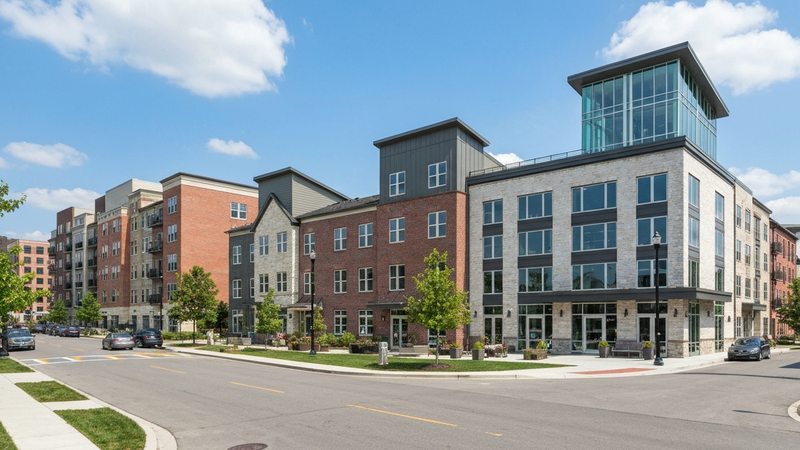
Columbus at $251,291 and 6.96% gross is a different proposition. The city has added 23.1% over five years on the back of state government, a large university and an expanding logistics and technology employment base — including significant recent industrial investment in central Ohio.
Newer housing stock means lower maintenance reserves and easier tenant placement. The net after the same deductions typically lands near 4.5-5.5% — lower than Cleveland, with a demand story that does not depend on the current price staying low.
Both cities clear DSCR underwriting comfortably, which is not true of coastal markets at these rate levels — see our DSCR guide for what the ratio requires.
4. The Counterargument: Buying a Declining City

The bear case against Cleveland is demographic and it is not new. The city's population peaked in 1950, the housing stock was built for a city twice its current size, and a market priced at $121,435 is a market pricing in weak future demand. An investor buying that yield is disagreeing with the forecast.
The rebuttal is that you do not have to disagree with it. A portfolio netting 6-8% unlevered compounds without requiring any market to rise, and the price already assumes it will not. The risk is not that Cleveland declines — it is that an investor bought it expecting Columbus-style growth and feels cheated by a return that was fully disclosed. Choose the city that matches the objective, as our market selection guide sets out.
For the cross-market view, see where these cities rank in our highest-yield cities analysis.
Where Toledo and Akron fit
The two cities that look most interesting on the data are the ones least discussed. Toledo combines a 9.97% gross yield with 32.9% five-year growth from a $135,476 base, and Akron 9.37% with 31.0% from $144,687. Both are positive on the year while Cleveland and Columbus are not.
That pairing of high yield and real appreciation is rare, and it usually indicates a market recovering from a low base rather than one that was always cheap. Whether it persists is the open question; the entry prices mean an investor is not paying much for the possibility.
Property tax and the county question
Ohio property tax is levied by county, municipality and school district, and the effective rate varies considerably between adjacent jurisdictions. A house two streets away can carry a materially different bill because it sits in a different school district.
Never model from a state average here. Obtain the parcel's actual bill from the county auditor before making an offer, and check whether any recent reappraisal is pending — Ohio counties reassess on a cycle that can move a bill sharply in a single year.
Final Thoughts: One State, Two Decisions

Ohio is not one market. Cleveland, Toledo and Akron are operational income plays that reward a tested manager and honest reserves. Columbus and Cincinnati are balanced markets with real employment growth and yields that still beat most of the country. Pick the one that matches what the capital is for.
We underwrite specific properties on net rather than gross assumptions and assess management before purchase, with brokerage services provided through licensed professionals. Talk to our team before you buy in a high-yield market.
What we watch from here: whether Toledo and Akron sustain the growth they have shown, how central Ohio's industrial investment converts into occupied housing around Columbus, and county reappraisal cycles, which are the most likely source of an unwelcome surprise in an otherwise predictable market.
For an overseas buyer, Ohio has one underrated advantage: the entry prices are low enough that a first US purchase can be made without concentrating a large share of capital in a market you have never visited. Buying a $135,000 house to learn how American management, tax filing and tenant law actually work is a materially cheaper education than learning the same lessons on a million-dollar coastal property.
That is the argument for starting here rather than the argument for staying. Investors who understand the operation after a year or two are then equipped to decide whether to add depth in Ohio or to take the knowledge somewhere with a different risk profile.
Either way the sequence holds. Test the manager, obtain the parcel tax bill, underwrite on net rather than gross, and treat the inspection on a pre-1960 house as the most important money spent before closing.
Reinvent NY provides business consulting, operational support, and coordination services. Legal advice and immigration filings are handled by independent licensed attorneys. Real estate services are provided through licensed professionals and applicable brokerage relationships. This article is for informational purposes only and does not constitute legal or investment advice.
More market reports: San Diego Real Estate Market 2026, Highest Rental Yield US Cities 2026, Austin Real Estate Market 2026. The full set is indexed under market data for all 51 states.

Satoshi Onodera
Founder & CEO, Reinvent NY Inc.
Founded Reinvent NY in 2024. Providing relocation support from all over the world to America.
Ready to Get Started?
Our team in New York is ready to help with your visa, real estate, or relocation needs.
Schedule a ConsultationFrequently Asked Questions
How much does a home cost in Ohio in 2026?
Zillow's typical home value statewide is $251,502 as of mid-2026, up 3.5% over the past year — one of the stronger state-level gains in the country.
Which Ohio city has the highest yield?
Cleveland, at roughly 14.13% gross — a $121,435 typical value against $1,430 median rent. Toledo follows at 9.97% and Akron at 9.37%.
Why is Cleveland so cheap?
The city's population peaked in 1950 and its housing stock was built for a far larger city. Abundant supply against reduced demand keeps prices low while rents track local incomes.
Is Columbus a better market than Cleveland?
It depends on the objective. Columbus offers 6.96% gross with 23.1% five-year growth and a growing employment base. Cleveland offers double the yield with a third of the growth.
Can a non-US resident buy in Ohio?
Yes. Ohio imposes no citizenship or residency requirement. The rent-to-price ratios here clear DSCR underwriting comfortably at typical 25-30% down.
What is the main risk?
Operational rather than legal. Older housing stock, higher turnover and management quality consume more of the gross yield here than in newer markets.
Are Ohio prices rising?
Statewide yes, at 3.5% on the year and 30.4% over five years. Within the state, Toledo and Akron are up sharply while Cleveland and Columbus are slightly down.
Real Estate Guides & Data
More guides
- Real Estate Scams and Red Flags: The Fraud Field Guide
- Selling a US Property: Timeline, Costs, Net
- Square Footage in NYC: Why the Number Lies
- Timing the NYC Market: Cycles, Seasons, and Honesty
- US Estate Tax for Non-Residents: The $60,000 Exemption
- Vacation Homes Beyond NYC: Hamptons, Hudson, and the Math
Related Articles
Midwest Rental Markets 2026: Where Yield Meets Growth
Indiana, Missouri and Ohio in 2026: state gains of 3-3.5% on the year with yields of 5.75-6.61%, and the secondary cities quietly outperforming the metros.
Baltimore Real Estate 2026: An 11.2% Yield Beside DC
Baltimore in 2026: a $192,669 typical value, $1,799 rents and an 11.2% gross yield — the highest on the Northeast corridor, and what the price is telling you.
North Carolina Real Estate 2026: Charlotte, Raleigh, Triad
North Carolina in 2026: a $340,430 state median, 27.5% five-year growth and a 5.92% gross yield, with Charlotte.
Memphis Real Estate 2026: A 10.5% Yield and Its Price
Memphis in 2026: a $146,746 typical home value, $1,280 rents and a 10.46% gross yield in a no-income-tax state.