Memphis Real Estate 2026: A 10.5% Yield and Its Price
Memphis prints one of the highest gross rental yields in the United States: 10.46%, from a $146,746 typical home value collecting $1,280 a month — in a state with no personal income tax. On a screen it looks like the best risk-adjusted return in the country.
It is not a screen error, and it is not free. The gap between 10.46% gross and what an owner actually keeps is the widest in this analysis. Let's work through it.
1. Where Memphis Prices Stand in 2026
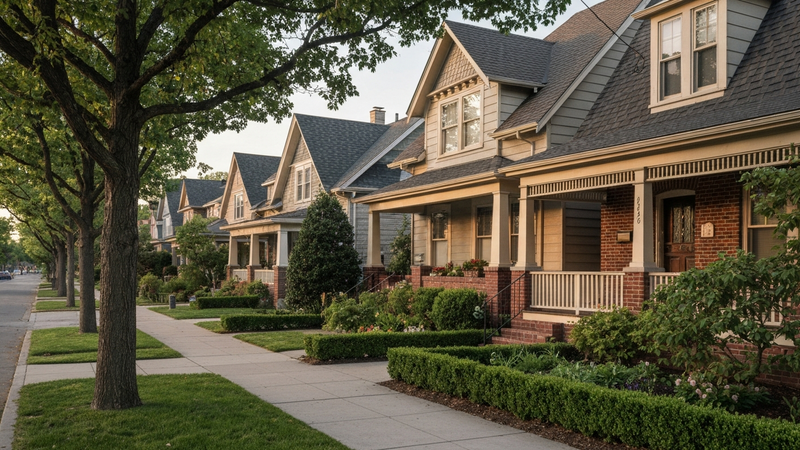
The city is down 3.0% year over year at $146,746, with five-year growth of 9.7% — far behind Tennessee's statewide 29.5% and a fraction of the state's decade gain of 102.2%. Memphis has not participated in Tennessee's boom.
Nashville tells the opposite story at $436,603 and 20.9% five-year growth, though it too is down 3.3% on the year. Knoxville leads the state on five-year growth at 47.6%.
| City | Typical value | 1-yr | 5-yr | Gross yield |
|---|---|---|---|---|
| Memphis | $146,746 | -3.0% | +9.7% | 10.46% |
| Knoxville | $376,648 | +1.0% | +47.6% | 5.53% |
| Nashville | $436,603 | -3.3% | +20.9% | 5.02% |
| Clarksville | $322,202 | -0.2% | +29.4% | 5.12% |
| Murfreesboro | $430,236 | -0.3% | +27.6% | 4.70% |
Zillow ZHVI and ZORI, mid-2026. Gross yield is annualized rent divided by typical value, before all costs.
The pattern is consistent with what we see nationally: the highest yields sit where prices grew least. Full state detail is on our Tennessee market page.
2. From 10.5% Gross to What You Keep

A $146,746 house at $1,280 a month grosses $15,360 a year. Now pay for what makes it cheap: older housing stock with real capital needs, higher turnover than newer markets, property tax, insurance, and management that has to be genuinely local and genuinely competent.
A realistic stack — tax, insurance, management at 10% because the work is harder here, maintenance reserves reflecting a pre-1970 house, and two months of combined vacancy and turnover — commonly leaves an unlevered net of 5-7%.
Five to seven percent unlevered is genuinely strong, roughly double a coastal metro. The point is that the number is reached by subtraction, and the subtraction here is larger than almost anywhere. Tennessee's absence of state income tax then improves the after-tax figure further.
3. Why Management Is the Whole Investment

At a $146,746 entry price, a single month of vacancy costs 8% of annual gross. A turnover requiring $4,000 of work costs a quarter of it. The variance between a good manager and a poor one in this market is larger than the variance between markets.
So the sequence for an overseas buyer inverts the usual order: find and test the manager first, then buy the property. Ask for their actual delinquency rate, average days to lease, and turnover cost per unit on comparable houses. A manager who answers in numbers is running a business.
Financing works well here — DSCR lenders underwrite comfortably when rent covers debt service by this margin — which makes the operational question, not the capital question, the binding one. Our property management guide covers what the fee should buy.
4. The Counterargument: Is the Yield Compensation Enough?
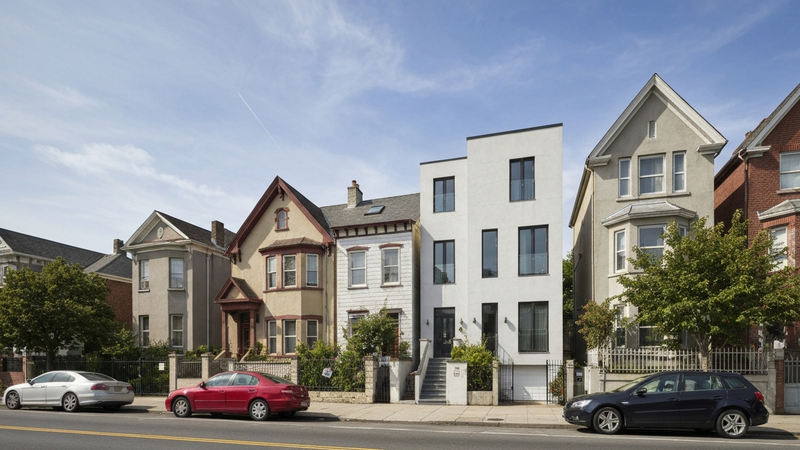
The bear case is straightforward. Prices down 3% on the year and up under 10% in five, an economy concentrated in logistics and distribution, older housing with genuine capital needs, and thin resale liquidity when an owner wants out. A market priced this cheaply is priced cheaply for reasons.
The rebuttal is that income and appreciation are separate products. A portfolio netting 5-7% unlevered compounds without requiring any market to rise, which is exactly what an owner drawing income needs. The honest risk is not that Memphis fails — it is that it does precisely what its price predicts, and an investor who expected Nashville's growth feels cheated by a return that was fully disclosed.
Compare it against the other high-income markets in our highest-yield cities analysis before deciding where the trade suits you.
What the housing stock demands
Much of Memphis's rental inventory predates 1970, which changes the maintenance profile rather than merely raising it. Roofs, sewer laterals, electrical panels and HVAC systems reach replacement on a schedule, and none of them are emergencies until they are.
Budget a materially larger annual reserve than a newer Sun Belt property would require, and treat the inspection as the most important money spent before closing. Investors who model Memphis on Phoenix maintenance assumptions are the ones whose returns disappoint.
Insurance and weather exposure
Tennessee sits in a region exposed to severe storms, and insurance pricing has moved accordingly across the middle of the country. As with any market, obtain a quote for the specific address rather than working from a regional assumption.
Roof age is the single variable that most affects both premium and insurability on an older house. Establish it at inspection, because a policy priced on a fifteen-year-old roof is a different number from one priced on a five-year-old roof.
Final Thoughts: Buy the Operation, Not the Screen

Memphis rewards investors who treat it as an operating business rather than a spreadsheet entry. Test the manager before the property, underwrite the expense stack honestly, and expect 5-7% net rather than 10.5% gross. On those terms it is one of the strongest income markets in the country.
We underwrite specific properties on net rather than gross assumptions and assess management before purchase, with brokerage services provided through licensed professionals. Talk to our team before you buy in a high-yield market.
A reasonable way to enter this market is to buy one property, hold it for a full year, and measure what the operation actually produced against what the spreadsheet promised. If the gap is small, the manager is good and the model can be scaled. If the gap is large, the lesson cost one property rather than five.
That patience is unglamorous and it is what separates investors who compound in high-yield markets from those who exit after two difficult years. The yield is real. It is paid to whoever is willing to run the operation properly, and it is quietly taken back from whoever is not.
What we watch from here: logistics employment, which anchors the tenant base more than any other sector here; the pace at which institutional owners add or shed single-family inventory; and turnover costs, which are the clearest early signal that a management relationship is deteriorating before the income statement shows it.
For an overseas owner specifically, Memphis is best approached as the second or third property rather than the first. The operational demands reward an owner who already understands how US management relationships work, and who has a manager elsewhere to compare against. Entering the American market here, with no prior experience of it, puts a great deal of weight on a relationship you have no basis to evaluate.
Reinvent NY provides business consulting, operational support, and coordination services. Legal advice and immigration filings are handled by independent licensed attorneys. Real estate services are provided through licensed professionals and applicable brokerage relationships. This article is for informational purposes only and does not constitute legal or investment advice.
More market reports: San Diego Real Estate Market 2026, Highest Rental Yield US Cities 2026, Austin Real Estate Market 2026. The full set is indexed under market data for all 51 states.

Satoshi Onodera
Founder & CEO, Reinvent NY Inc.
Founded Reinvent NY in 2019. Providing relocation support from all over the world to America.
Ready to Get Started?
Our team in New York is ready to help with your visa, real estate, or relocation needs.
Schedule a ConsultationFrequently Asked Questions
How much does a home cost in Memphis in 2026?
Zillow's typical home value for Memphis is $146,746 as of mid-2026, down 3.0% over the past year. Tennessee statewide sits at $338,769, up 0.5%.
What is the rental yield in Memphis?
About 10.46% gross — $1,280 median asking rent against a $146,746 typical value, before taxes, insurance, management and maintenance. It is among the highest in the country.
Does Tennessee have a state income tax?
No. Tennessee levies no personal state income tax, which improves after-tax rental income. Property is taxed locally — confirm the parcel's rate with the county assessor.
Why is Memphis so much cheaper than Nashville?
Nashville at $436,603 has grown 20.9% over five years on in-migration and a broad service economy. Memphis has added 9.7% from a much lower base, with an economy weighted toward logistics and distribution.
Is a 10.5% gross yield achievable in practice?
The gross figure is real; the net is materially lower. Older housing stock, higher turnover and management costs typically reduce it to somewhere in the 5-7% range before financing.
Can an overseas investor buy in Memphis?
Yes, with no citizenship requirement. The practical prerequisite is a property manager you have tested, because at this price point management quality determines the return more than the property does.
What is the main risk?
Operational rather than legal. Vacancy, turnover and deferred capital work on older houses consume more of the gross yield here than in newer markets, and a remote owner cannot supervise any of it personally.
Real Estate Guides & Data
More guides
- Buying Estate Sale Apartments: Probate, Price, Patience
- The Owner's US Tax Calendar: Deadlines by Month
- NYC Ground Lease Buildings: The Land Under the Price
- Hotel Condos and Serviced Apartments
- Reading a US Lease: The Clauses That Cost You
- Managing a US Rental From Abroad: Choosing the Manager
Related Articles
Ohio Real Estate 2026: Cleveland 14%, Columbus 7%
Ohio in 2026: a $251,502 state median up 3.5% on the year, with Cleveland at a 14.13% gross yield and Columbus at 6.96% — and what separates the two.
North Carolina Real Estate 2026: Charlotte, Raleigh, Triad
North Carolina in 2026: a $340,430 state median, 27.5% five-year growth and a 5.92% gross yield, with Charlotte.
San Diego Real Estate Market 2026: Prices, Rents, Yields
San Diego home values in 2026: a $1,002,065 typical value, $3,038 rents and a 3.64% gross yield, plus how the rest of Southern California compares for buyers.
Building a US Property Portfolio From Outside the Country
How overseas owners scale beyond one US property: financing limits on non-residents, entity structure, management depth, and the order to add markets in.