North Carolina Real Estate 2026: Charlotte, Raleigh, Triad
North Carolina added 94.6% over ten years — among the strongest decade runs of any US state — and then stopped almost exactly flat in 2026. The statewide typical value of $340,430 is essentially unchanged on the year, with a gross yield of 5.92%.
That combination of a proven growth record and a current pause is what makes the state worth examining now rather than three years ago. Let's look at where the numbers actually sit.
1. Where North Carolina Prices Stand in 2026

The state is flat year over year at $340,430 after five-year growth of 27.5%. Within it the spread is wide and instructive: Raleigh is down 2.1% and Durham 3.2%, while Greensboro and Winston-Salem are marginally positive.
The pattern is familiar from other states in our data. The markets that ran hardest are correcting first, and the lower-priced secondary cities are holding better.
| City | Typical value | 1-yr | 5-yr | Gross yield |
|---|---|---|---|---|
| Raleigh | $436,056 | -2.1% | +23.3% | 4.35% |
| Durham | $400,564 | -3.2% | +24.4% | 5.09% |
| Charlotte | $399,434 | -1.1% | +25.2% | 5.24% |
| Winston-Salem | $267,668 | +0.6% | +29.3% | 6.89% |
| Greensboro | $266,364 | +0.4% | +27.4% | 6.37% |
Zillow ZHVI and ZORI, mid-2026. Gross yield is annualized rent divided by typical value, before all costs.
Full state detail sits on our North Carolina market page.
2. Charlotte, Raleigh and the Triad Compared

Charlotte is the state's financial and logistics centre, with the deepest tenant pool and the best liquidity at 5.24% gross. Raleigh and Durham trade on university and technology demand, which produces reliable tenants and the state's thinnest yields.
Winston-Salem and Greensboro are the income play: entry prices around $267,000 — roughly two thirds of Charlotte's — with yields near 6.4-6.9% and five-year growth that matched or exceeded the larger cities.
Work the arithmetic on the Triad. A $267,668 house at $1,537 rent grosses $18,444. Deduct North Carolina property tax, insurance, management at 8-10%, maintenance and a month of vacancy, and the unlevered net commonly lands near 4-4.8% — strong by national standards, using the sequence in our rental yield guide.
3. Financing and Structure for International Buyers

North Carolina places no restriction on foreign ownership, and the Triad in particular clears DSCR underwriting comfortably — the rent-to-price ratio covers debt service with room, which is not true of Raleigh at 4.35%.
The state closes through attorneys rather than escrow-only, and a financed purchase typically runs 30 to 45 days. Property tax is assessed by county and municipality; confirm the parcel's actual rate with the county rather than working from a state average.
Structure and estate exposure above the $60,000 non-resident exemption should be settled before contract — see our holding structures article.
The purchase timeline from abroad
North Carolina uses an attorney-supervised closing with a negotiated due diligence period. That period is distinctive: the buyer pays a due diligence fee to the seller for the right to walk away for any reason, and the fee is generally non-refundable but credited at closing.
For an overseas buyer this structure is useful, because it converts the inspection window into a clearly priced option rather than a contested negotiation. Every step works remotely — power of attorney or remote notarization, international wire, delegated walkthrough — as our buying without flying in guide describes.
4. The Counterargument: Supply Caps the Upside

The bear case is that North Carolina builds readily. There is no geographic constraint around Charlotte or the Triangle, developers have delivered substantial apartment inventory in both, and abundant supply caps rent growth structurally. A decade gain of 94.6% is unlikely to repeat from here.
The rebuttal is that abundant supply is exactly why the yields exist. Markets that constrain building deliver appreciation and thin yields; markets that build deliver income and moderate appreciation. North Carolina has never promised the former, and the in-migration that produced the last decade — corporate relocations, universities, a lower cost base than the Northeast — has not reversed. The honest expectation is steady rather than spectacular.
See where these cities rank against nineteen other markets in our metro comparison.
How the last decade set up 2026
North Carolina's 94.6% ten-year gain came from a genuine relocation wave: corporate headquarters moving south, universities expanding, and a cost base materially below the Northeast at a time when remote work made the comparison relevant to individual households as well as employers.
None of those drivers has reversed. What has changed is that the price advantage is smaller than it was — Charlotte at $399,434 is no longer a bargain against most of the country — so the next decade depends on continued employment growth rather than on arbitrage between regions.
What the flat year actually indicates
A state holding flat while its most expensive cities decline and its cheapest rise is a market rotating rather than falling. Capital is moving from Raleigh and Durham toward the Triad, which is what happens when the premium markets outrun local incomes.
For a buyer that rotation is useful information. It suggests the Triad's relative value is being recognised, and that the yield gap between it and the larger cities may narrow over time rather than persisting indefinitely.
Final Thoughts: Pick the City, Not the State
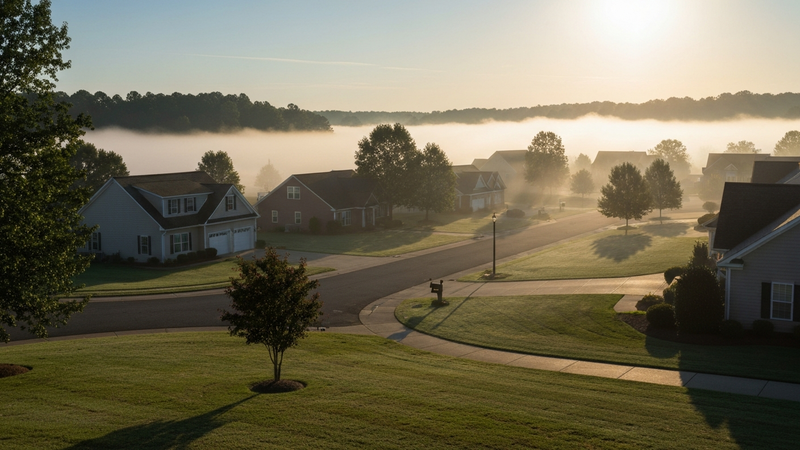
North Carolina's statewide figures conceal a genuine 2.5-point yield spread between Raleigh and Winston-Salem, and a matching difference in tenant profile and liquidity. Income-first buyers should start in the Triad; buyers who want depth and resale liquidity should start in Charlotte. Neither answer is wrong, and averaging them is.
We underwrite specific properties including the county tax rate and arrange financing for overseas buyers, with brokerage services provided through licensed professionals. Talk to our team before you commit.
What we watch from here: apartment deliveries in Charlotte and the Triangle against absorption, whether the Triad's yield advantage narrows as capital rotates toward it, and corporate relocation announcements, which have driven this state's decade more than any other single factor.
For an overseas buyer, North Carolina sits in a useful middle position. It offers better income than the coastal gateways and better liquidity than the deep-value Midwest markets, in a state with a demonstrated two-decade record of attracting employers. That combination is rarer than either extreme.
One practical note on the Triad for remote owners. Winston-Salem and Greensboro are smaller markets than Charlotte, which means fewer property managers competing for the work and a thinner pool of contractors. Test the management relationship before committing capital, because the operational depth that makes a large metro forgiving is not present here in the same measure.
That is not an argument against the yield. It is the reason the yield exists, and it is manageable for an owner who treats manager selection as part of the underwriting rather than as an afterthought once the property is already bought.
Reinvent NY provides business consulting, operational support, and coordination services. Legal advice and immigration filings are handled by independent licensed attorneys. Real estate services are provided through licensed professionals and applicable brokerage relationships. This article is for informational purposes only and does not constitute legal or investment advice.
More market reports: San Diego Real Estate Market 2026, Highest Rental Yield US Cities 2026, Austin Real Estate Market 2026. The full set is indexed under market data for all 51 states.

Satoshi Onodera
Founder & CEO, Reinvent NY Inc.
Founded Reinvent NY in 2019. Providing relocation support from all over the world to America.
Ready to Get Started?
Our team in New York is ready to help with your visa, real estate, or relocation needs.
Schedule a ConsultationFrequently Asked Questions
How much does a home cost in North Carolina in 2026?
Zillow's typical home value statewide is $340,430 as of mid-2026, essentially flat on the year. Charlotte sits at $399,434 and Raleigh at $436,056.
What rental yield does North Carolina offer?
About 5.92% gross statewide. Winston-Salem leads the major cities at 6.89% and Greensboro at 6.37%, while Raleigh is thinnest at 4.35%.
Has North Carolina stopped growing?
It has paused rather than reversed. The state is flat on the year after 27.5% over five years and 94.6% over ten, one of the strongest decade runs in the country.
Charlotte or Raleigh for an investor?
Charlotte offers a higher yield at 5.24% and a banking and logistics employment base. Raleigh at 4.35% trades on the research triangle's university and technology demand, with a more expensive entry.
Where are the best yields in the state?
The Triad — Winston-Salem at 6.89% and Greensboro at 6.37% — with entry prices around $267,000, roughly two thirds of Charlotte's.
Can a non-US resident buy in North Carolina?
Yes. There is no citizenship or residency requirement. Buyers without US credit typically use foreign national or DSCR loans at 25-30% down.
What is the main risk in this market?
Supply. North Carolina builds readily, which caps rent growth, and both Charlotte and Raleigh have delivered substantial new apartment inventory in recent years.
Real Estate Guides & Data
More guides
- US Rental Income Tax for Non-Residents: Gross or Net
- The Second Property: From Owner to Portfolio
- Buying Short Sales: Discounts on the Lender's Clock
- Tax Treaties and US Property: Avoiding Double Taxation
- Trusts and US Property: The Structures Behind the Names
- US Real Estate Investing: Yields, Taxes and How to Buy
Related Articles
Baltimore Real Estate 2026: An 11.2% Yield Beside DC
Baltimore in 2026: a $192,669 typical value, $1,799 rents and an 11.2% gross yield — the highest on the Northeast corridor, and what the price is telling you.
Ohio Real Estate 2026: Cleveland 14%, Columbus 7%
Ohio in 2026: a $251,502 state median up 3.5% on the year, with Cleveland at a 14.13% gross yield and Columbus at 6.96% — and what separates the two.
Memphis Real Estate 2026: A 10.5% Yield and Its Price
Memphis in 2026: a $146,746 typical home value, $1,280 rents and a 10.46% gross yield in a no-income-tax state.
San Diego Real Estate Market 2026: Prices, Rents, Yields
San Diego home values in 2026: a $1,002,065 typical value, $3,038 rents and a 3.64% gross yield, plus how the rest of Southern California compares for buyers.