Baltimore Real Estate 2026: An 11.2% Yield Beside DC
Baltimore sits forty miles from Washington and prints an 11.2% gross yield — a $192,669 typical home value collecting $1,799 a month. No other city on the Northeast corridor comes close, and the reason is visible in the same dataset: the price has barely moved in five years.
That combination is either an opportunity or a warning depending on what the capital is for. Let's work through both readings.
1. Where Baltimore Prices Stand in 2026
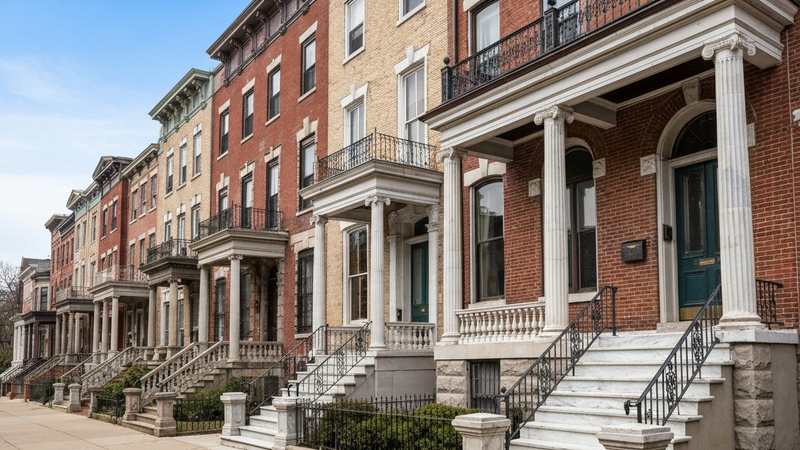
The city is down 2.3% year over year at $192,669, with five-year growth of 9.4% — well behind Maryland's 15.0% and a fraction of the state's decade gain of 51.0%.
Maryland's statewide average is doing something misleading here. It is lifted by the Washington suburbs: Rockville at $623,896, Silver Spring at $556,503, Laurel at $480,750. Those markets and Baltimore are in the same state and almost nothing else.
| City | Typical value | 1-yr | 5-yr | Gross yield |
|---|---|---|---|---|
| Baltimore | $192,669 | -2.3% | +9.4% | 11.20% |
| Frederick | $469,711 | -1.1% | +20.9% | 5.63% |
| Laurel | $480,750 | -0.6% | +13.9% | 4.70% |
| Rockville | $623,896 | -1.1% | +11.7% | 4.67% |
| Silver Spring | $556,503 | -1.1% | +8.1% | 4.24% |
Zillow ZHVI and ZORI, mid-2026. Gross yield is annualized rent divided by typical value, before all costs.
Frederick is the state's growth story at 20.9% over five years. Full detail sits on our Maryland market page.
2. What 11.2% Becomes After Costs

A $192,669 house at $1,799 a month grosses $21,588 a year. Deduct Baltimore property tax — the city's rate is materially above the surrounding counties — insurance, management at 10%, maintenance appropriate to pre-war rowhouse stock, and two months of combined vacancy and turnover.
The unlevered net commonly lands near 6-7.5%. Still among the strongest in the country, and roughly half the headline. Baltimore's city tax rate is the single line that most separates it from the counties around it, and it must come from the actual bill rather than a Maryland average.
Our rental yield guide sets out the full sequence, and the property tax guide explains why the state figure is useless here.
3. The Rowhouse Stock Is the Real Diligence
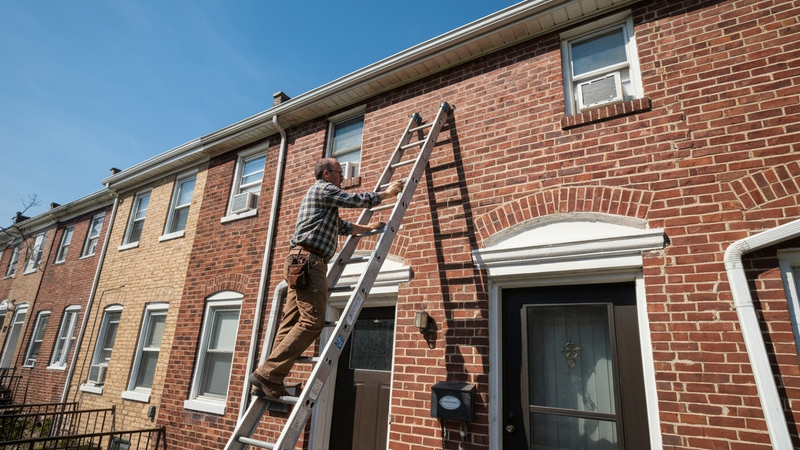
Baltimore is a rowhouse city and rowhouses fail differently from detached homes. Party walls mean a neighbour's roof or water problem becomes yours, basements in older stock take water, and systems in houses built before 1950 have usually been modified repeatedly rather than replaced cleanly.
Lead paint disclosure obligations apply to pre-1978 housing nationally, and Maryland maintains additional requirements for rental properties. Registration and inspection obligations for rentals are a city matter — confirm the current position before planning to lease.
Budget seriously for the inspection and for a capital reserve. The inspection guide covers what a standard US inspection includes, which is less than most overseas buyers assume.
4. The Counterargument: Is the Discount Permanent?
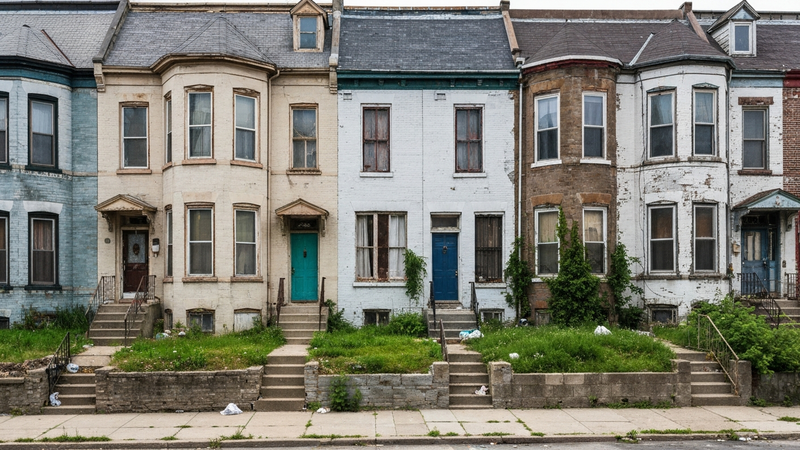
The bear case is demographic and long-standing. Baltimore has lost population for decades, vacancy is concentrated rather than evenly spread, and the city's tax rate sits well above the surrounding counties — which is a disincentive that compounds. A price this low is a forecast, not an anomaly.
The rebuttal is location. Baltimore is forty miles from Washington on a rail corridor, with a major port, an internationally significant medical and research employer base, and housing at a third of the price of the DC suburbs. If the pessimistic forecast proves wrong anywhere on the high-yield list, geography argues it is most likely to be wrong here — and an owner collecting 6-7.5% net is paid to hold the option.
Compare it against the other income markets in our highest-yield cities analysis before deciding.
The city rate against the county rate
Baltimore City is an independent jurisdiction rather than part of a surrounding county, and its property tax rate sits materially above neighbouring Baltimore County. A house a short distance across the city line can carry a substantially different annual bill on the same value.
For an investor comparing properties across that boundary, the tax line can be worth more than a difference in rent. Obtain the actual bill for each parcel from the relevant jurisdiction and compare net rather than gross — the ranking frequently changes.
What a capital reserve should cover here
For pre-war rowhouse stock the predictable consumers of reserves are flat or low-slope roofs on a replacement cycle, pointing and party-wall repairs, sewer laterals, and heating systems installed decades ago. None are emergencies until they are, and all are foreseeable at inspection.
Assume a materially larger annual reserve than a newer Sun Belt property would need. Investors who model Baltimore on Phoenix maintenance assumptions are the ones whose returns disappoint, and the shortfall arrives as capital events rather than as monthly leakage.
Final Thoughts: Buy the Block, Not the City

Citywide medians conceal more in Baltimore than in almost any market we track. Vacancy and condition vary street by street, and the 11.2% figure is a screening tool rather than an expectation for any specific purchase. Underwrite the block, the building and the actual signed rents nearby.
We underwrite specific properties on net rather than gross assumptions and assess management before purchase, with brokerage services provided through licensed professionals. Talk to our team before you buy in a high-yield market.
For an overseas buyer, Baltimore's low entry price has the same advantage as Ohio's: a first US purchase can be made without concentrating a large share of capital in a market you have never visited. Learning how American management, tax filing and tenant law work on a $190,000 rowhouse is a cheaper education than learning it on a coastal property.
What we watch from here: whether the city's population trend stabilises, how the medical and research employment base evolves, and whether the yield gap against Philadelphia and Washington narrows. The first is slow, the second is the anchor, and the third is the one that would confirm the discount was overdone.
One further practical note for a remote owner. Baltimore's rental market has a well-developed management industry serving out-of-state investors, which is not true of every high-yield city. That depth is worth something: it means you can compare several managers on real numbers rather than accepting the only one who answers the phone.
Use that. Ask three managers for their delinquency rate, average days to lease and turnover cost per unit, and treat the spread between their answers as information about the market as well as about them.
The honest summary is that Baltimore rewards a specific kind of buyer: one who will do street-level diligence rather than trusting a citywide median, who has tested a manager before wiring anything, and who wants income rather than a bet on the city's revival. On those terms the numbers are among the best in the country. On any other terms they are a trap dressed as an opportunity.
Reinvent NY provides business consulting, operational support, and coordination services. Legal advice and immigration filings are handled by independent licensed attorneys. Real estate services are provided through licensed professionals and applicable brokerage relationships. This article is for informational purposes only and does not constitute legal or investment advice.
More market reports: San Diego Real Estate Market 2026, Highest Rental Yield US Cities 2026, Austin Real Estate Market 2026. The full set is indexed under market data for all 51 states.

Satoshi Onodera
Founder & CEO, Reinvent NY Inc.
Founded Reinvent NY in 2024. Providing relocation support from all over the world to America.
Ready to Get Started?
Our team in New York is ready to help with your visa, real estate, or relocation needs.
Schedule a ConsultationFrequently Asked Questions
How much does a home cost in Baltimore in 2026?
Zillow's typical home value for Baltimore is $192,669 as of mid-2026, down 2.3% over the past year. Maryland statewide sits at $436,104, essentially flat.
What is the rental yield in Baltimore?
About 11.2% gross — $1,799 median asking rent against a $192,669 typical value, before taxes, insurance and management. It is the highest of any city on the Northeast corridor.
Why is Baltimore so much cheaper than the Maryland average?
Maryland's statewide figure is lifted by the Washington DC suburbs. Rockville sits at $623,896 and Silver Spring at $556,503, more than three times Baltimore's typical value.
Is Baltimore appreciating?
Barely. The city has added 9.4% over five years against Maryland's 15.0% and is down 2.3% on the year. The yield exists because the price has not moved.
Can a non-US resident buy in Baltimore?
Yes. Maryland imposes no citizenship or residency requirement. The rent-to-price ratio clears DSCR underwriting comfortably at typical 25-30% down.
What should investors know about the housing stock?
Baltimore is a rowhouse city, much of it pre-war. Party walls, older systems, basement water and lead paint disclosure obligations all mean inspection quality matters more here than in newer markets.
How does Baltimore compare with Philadelphia?
Both are Northeast corridor rowhouse cities with high yields and slow growth. Baltimore is cheaper at $192,669 against $237,459 and yields more at 11.2% against 9.17%.
Real Estate Guides & Data
More guides
- The Owner's Document Glossary: Every Paper, Explained
- FIRPTA Withholding: Selling US Property as a Foreign Person
- Gifting US Property: Moving Real Estate Between Family
- Home Inspections in the US: Finds and Misses
- Property Insurance Claims: Getting Paid, Properly
- Air Rights and Lot-Line Windows: The Sky Next Door
Related Articles
New York, California, Texas, Florida: 2026 Compared
The four states international buyers ask about most: New York up 5.2% on the year, California at a 4.22% yield, and what Texas and Florida really cost.
Midwest Rental Markets 2026: Where Yield Meets Growth
Indiana, Missouri and Ohio in 2026: state gains of 3-3.5% on the year with yields of 5.75-6.61%, and the secondary cities quietly outperforming the metros.
Ohio Real Estate 2026: Cleveland 14%, Columbus 7%
Ohio in 2026: a $251,502 state median up 3.5% on the year, with Cleveland at a 14.13% gross yield and Columbus at 6.96% — and what separates the two.
North Carolina Real Estate 2026: Charlotte, Raleigh, Triad
North Carolina in 2026: a $340,430 state median, 27.5% five-year growth and a 5.92% gross yield, with Charlotte.