Condo Special Assessments: What Buyers Must Know
The letter runs a page and a half on association letterhead. The board has approved a $4.2 million facade restoration, the reserve fund holds $600,000, and your unit's share of the difference is $31,000, payable in four quarterly installments beginning in ninety days.
A special assessment is what a condominium charges owners when a capital project costs more than the reserve holds. It is not a penalty and it is not unusual. It is the mechanism every association falls back on when spending outruns savings.
In this article, we'll examine what triggers assessments, how large they get, how to detect the exposure in a building's financials before you buy, and how the bill gets divided when one is pending at closing.
What a Special Assessment Is, and Why It Exists

A special assessment funds work the reserve cannot cover. Regular common charges pay for operations — payroll, insurance, utilities, service contracts. Reserves pay for capital. When capital spending outruns the reserve balance, the gap becomes an assessment.
The bill is almost never split evenly. Associations allocate it by the same common interest percentage used for monthly charges, so a 1,400-square-foot unit typically carries roughly twice the share of a 700-square-foot unit in the same line.
In most states a board can approve an assessment without a unit-owner vote, though many declarations require owner approval above a stated dollar threshold or a percentage of the annual budget. The governing documents control, and they vary building by building.
That authority is exactly why the exposure is worth underwriting before you own the unit. A board you have never met can add five figures to your carrying cost on a schedule you do not set. Our breakdown of what NYC common charges cover shows where the operating line ends and the capital line begins.
What Actually Triggers the Bill
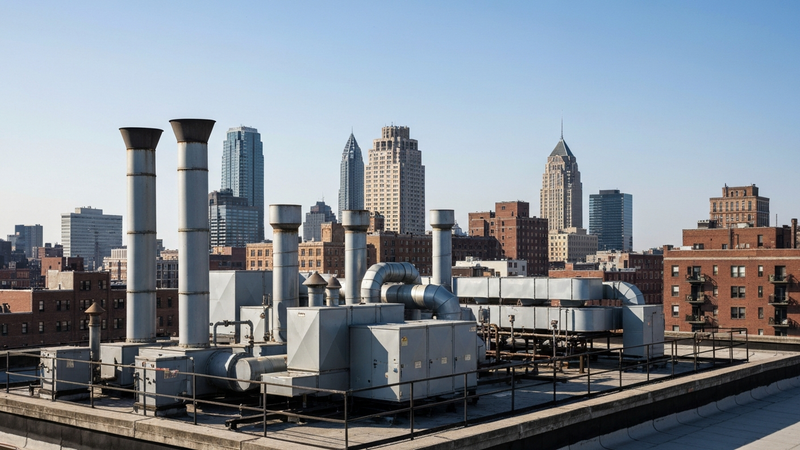
Four causes account for most assessments: a capital component reaching the end of its service life, an insurance renewal the budget did not anticipate, deferred maintenance compounding into a larger repair, and a legal mandate that forces work on a fixed calendar.
The physical items are predictable in kind and unpredictable in timing. Facades, roofs, elevators, boilers, and plumbing risers all wear out. A reserve study exists precisely to put dates and dollar figures against each of them.
| Trigger | Typical project cost | Per-unit share, 100-unit building |
|---|---|---|
| Facade restoration cycle | $1M to $5M+ | $10,000 to $50,000 |
| Elevator modernization | $150,000 to $400,000 per cab | $3,000 to $12,000 |
| Roof replacement | $300,000 to $1M | $3,000 to $10,000 |
| Boiler or HVAC plant replacement | $500,000 to $2M | $5,000 to $20,000 |
| Structural repair after inspection | $5M to $20M+ | $50,000 to $200,000+ |
| Insurance shortfall or large deductible | $100,000 to $1M | $1,000 to $10,000 |
Illustrative ranges only. Actual figures depend on building size, age, market, and scope — confirm against the association's own engineering estimates.
Insurance has become the fastest-moving line. Master policy premiums in coastal and high-loss markets have repriced sharply since 2022, and associations that budgeted a single-digit increase have assessed for the difference. Our guide to property insurance for US owners covers how master and unit policies fit together.
Law Is Now a Trigger in Its Own Right
The 2021 collapse of Champlain Towers South in Surfside, Florida changed the legal picture. Florida's Senate Bill 4-D, enacted in 2022, introduced milestone structural inspections for condominium buildings three stories or taller at roughly thirty years of age, plus a structural integrity reserve study that sharply limits a board's ability to waive reserve funding.
The statute has been amended more than once since, including changes to inspection timing and to how associations may fund the required reserves. Treat the specifics as a moving target and confirm the current rule with Florida counsel. The direction of travel — more inspection, less waiving — is the durable part.
New York arrives at the same place by a different route. Local Law 11 requires buildings taller than six stories to file a facade inspection every five years, and the repair scope those filings produce is one of the most routine assessment triggers in the city.
Local Law 97 caps building emissions, with limits tightening in 2030 and penalties set at $268 per metric ton of CO2 equivalent above the cap. Both regimes run through the NYC Department of Buildings, and both convert into capital work.
Spotting the Risk Before You Buy

Every assessment large enough to matter leaves a paper trail months before it is levied. The documents exist. Buyers simply have to ask for them inside the due diligence window and actually read them.
Start with the reserve study and the current reserve balance. A proper study lists each capital component, its remaining useful life, and its replacement cost. Compare the funding schedule it recommends against what the operating budget actually contributes each year.
| Red flag | Where you find it | What to ask |
|---|---|---|
| Reserve under 10% of annual budget | Year-end financial statements | What is the written capital plan and its funding source? |
| No reserve study in five years | Managing agent or board | When was the last engineering assessment, and what did it find? |
| Charges 30%+ below comparables | Listing sheets, offering plan | What has the annual increase been for five years? |
| Recent facade or engineering report | Board minutes, city filings | What scope was recommended, and what is budgeted? |
| Assessment debated in minutes | Last 24 months of board minutes | Has a resolution been drafted or a bid solicited? |
| Association carrying a bank loan | Financial statement footnotes | What was borrowed, at what rate, and until when? |
| Insurance renewal flagged as an issue | Board minutes and budget notes | What did the master policy cost this year versus last? |
None of these disqualifies a building on its own. Each is a question for the managing agent, not a verdict.
Two years of board minutes are the most useful document a seller's package rarely volunteers. Assessments are argued over for months before they are approved, and every one of those arguments is minuted.
However, some argue this level of diligence is theatre — that assessments are inherently unpredictable, that every older building eventually needs a facade cycle, and that no buyer can price what a future board will decide.
The timing is unpredictable. The exposure is not. A building with a funded reserve and a current engineering report turns a $40,000 surprise into a $12,000 scheduled contribution, and reading a building's financial statements is how you tell those two buildings apart before you sign.
Paying the Bill, and Deciding Who Owes It

Assessments are usually payable one of three ways: a lump sum due in thirty to ninety days, installments spread over one to five years, or a bank loan taken by the association and repaid through a temporary increase in common charges.
The loan route is increasingly common for large structural work, and it changes the buyer's math. The debt sits at the association level and appears in the financial statement footnotes rather than on any unit's balance sheet — but repayment still lands in your monthly bill.
Who Pays When an Assessment Is Pending at Closing
Contracts rarely settle this cleanly. New York contracts of sale commonly assign assessments noticed before closing to the seller and those noticed after to the buyer — but the operative word is noticed, and the fight is usually about a project everyone can see coming that has not been formally levied.
Three tools resolve it. A seller credit at closing for the full estimated amount, an escrow holdback funded from proceeds and released when the real bill arrives, or a straight price adjustment. Credits are cleanest when the number is known; holdbacks are better when it genuinely is not.
Lenders are the third party at the table. Underwriters review the association's budget, reserve level, pending litigation, and owner delinquency rate before approving a loan in any condominium project.
Fannie Mae and Freddie Mac are each reported to maintain internal lists of projects they will not finance, typically buildings with unresolved structural findings. Those lists are not public, so ask your lender to run the project early rather than at underwriting.
Final Thoughts
A special assessment is not evidence that a building is badly run. Buildings that assess after a reserve study, on a schedule, with a scope an engineer signed, are frequently the better-managed ones.
The buildings worth avoiding are the quiet ones — low charges, no study, no minutes worth reading, and a facade nobody has inspected in a decade. That building is not cheaper. It is simply earlier in the same cycle.
Four questions cover most of the exposure: what is the reserve balance today, what capital work is scheduled in the next five years, has an assessment been discussed by the board in the last two years, and what has the master insurance premium done since 2022?
Ask them before you go to contract, and price the answers into your offer. Buyers who compare buildings on carrying cost alone — the New York and Miami comparison is a useful illustration — usually find the honest building costs less over a ten-year hold than the cheap one. The component-level detail sits in our NYC HOA fee guide.
Reinvent NY provides business consulting, operational support, and coordination services. Legal advice and immigration filings are handled by independent licensed attorneys. Real estate services are provided through licensed professionals and applicable brokerage relationships. This article is for informational purposes only and does not constitute legal or investment advice.
More buying guides: Choosing a New York Property Advisor From Overseas, Financing a Branded Residence as a Foreign National, Buying a New York Condo as an International Buyer.

Satoshi Onodera
Founder & CEO, Reinvent NY Inc.
Founded Reinvent NY in 2019. Providing relocation support from all over the world to America.
Ready to Get Started?
Our team in New York is ready to help with your visa, real estate, or relocation needs.
Schedule a ConsultationFrequently Asked Questions
What is a condo special assessment?
A special assessment is a one-time or temporary charge levied on unit owners to fund a capital project or shortfall the reserve fund cannot cover — a facade restoration, an elevator modernization, a boiler replacement, or an insurance gap. It is billed on top of regular common charges and allocated by each unit's common interest percentage.
How much can a special assessment cost per unit?
The range is wide. Routine work such as a roof or a single elevator often lands in the low thousands per unit, while a full facade cycle can reach $10,000 to $50,000 and major structural repair has run into six figures per unit in the most serious cases. Confirm any figure against the association's own engineering estimates.
Can a condo board levy an assessment without owner approval?
In many states and many buildings, yes. Boards commonly hold budget authority to approve assessments, though a large number of declarations require unit-owner approval above a stated dollar amount or a percentage of the annual budget. The governing documents control, so read the declaration and bylaws during due diligence.
Who pays a special assessment when a condo is sold?
It depends on the contract. New York contracts of sale commonly assign assessments noticed before closing to the seller and those noticed after to the buyer, but a project that is clearly coming and not yet levied is a negotiation. Seller credits, escrow holdbacks, and price adjustments are the three standard tools.
How do I check a building's assessment risk before buying?
Request the reserve study, the last two years of financial statements, the current operating budget, and twenty-four months of board minutes. Compare the reserve balance to the annual budget, look for any recent engineering or facade report, and check whether the association is carrying a bank loan.
Do special assessments affect mortgage approval?
They can. Lenders review the association's budget, reserve level, delinquency rate, and pending litigation before approving a loan in a condominium project, and unresolved structural findings can make a building difficult to finance. Ask your lender to review the project early in the process rather than at underwriting.
Why did Florida condo assessments rise after 2021?
Following the 2021 Champlain Towers South collapse, Florida enacted Senate Bill 4-D in 2022, adding milestone structural inspections for condominium buildings three stories or taller at roughly thirty years of age and a structural integrity reserve study that limits reserve waivers. The law has been amended since, so confirm current requirements with Florida counsel.
Are low common charges a sign of low assessment risk?
Usually the opposite. Charges well below comparable buildings often mean the budget is not funding reserves or is deferring capital work. Deferred work does not disappear — it arrives later as an assessment, typically larger than the contributions that were skipped.
Real Estate Guides & Data
More guides
- Choosing a US Market: Income, Growth or Liquidity
- Combining NYC Apartments: Two Units Into One Home
- Co-op Sublet Rules: Renting Out the Shares
- Depreciation on a US Rental: The 27.5 Years
- Renting to Students in NYC: Guarantors and Group Leases
- Mortgages for Foreign Nationals: US Property Financing
Related Articles
NYC Property Tax Appeal: How Certiorari Works
How a NYC property tax appeal works: assessment notices, Tax Commission deadlines by class, who files, what evidence matters, and what reductions are realistic.
Woodside Queens Real Estate Guide 2026
A 2026 guide to buying and renting in Woodside, Queens: housing stock, prices, transit, and daily life for international buyers and tenants.
One Manhattan Square: Scale on the Lower East Side
One Manhattan Square put over eight hundred residences on the East River waterfront. See the sales the city has recorded there since 2023 and the median price.
Sunnyside Queens Real Estate Guide 2026
A 2026 buyer's and renter's guide to Sunnyside, Queens: boundaries, building stock, prices, transit, and schools, for international buyers and tenants.