Common Charges NYC: A Condo Buyer's Guide
Two one-bedrooms on the same Upper East Side block, both asking $1.2 million. One carries $950 a month in common charges, the other $1,600. Over a ten-year hold, that $650 monthly gap is $78,000 — before either building raises a dollar.
Common charges are the monthly operating contribution every condominium unit owner pays to the building. They are the most consistently underweighted number in a New York purchase, and the one most likely to move after closing.
In this article, we'll examine what common charges actually fund, what buyers are paying per square foot in 2026, why the figure cannot be compared directly to co-op maintenance, and how to read it as a risk signal during due diligence.
What Common Charges Actually Cover

Common charges fund the building's operating budget and nothing else. The board sets an annual budget, divides it by the common interest percentages allocated in the offering plan, and bills each unit its proportional share every month.
The largest line is almost always payroll — superintendent, door staff, porters, handypeople, and the benefit costs that come with them. Building insurance, common-area utilities, elevator and boiler service contracts, and the managing agent's fee follow close behind.
A well-run budget also carries a reserve fund contribution, money set aside for capital work rather than day-to-day operations. Buildings that quietly skip this line report attractive charges today and pay for it later through special assessments.
| Covered by common charges | Paid separately by the condo owner |
|---|---|
| Building staff payroll and benefits | NYC real estate taxes on your unit |
| Master building insurance policy | Your own HO-6 unit owner's policy |
| Common-area heat, water, and electricity | In-unit electricity and gas |
| Elevator, boiler, roof, and facade upkeep | Repairs inside your own walls |
| Managing agent, legal, and audit fees | Mortgage principal and interest |
| Amenity operations — gym, pool, lounge | Special assessments, billed on top |
Condominium billing separates the building from the unit; co-op maintenance bundles both together.
One line deserves separate attention. Amenity operations are the fastest-growing component in new construction, because a pool, a screening room, and a landscaped terrace each carry staffing and maintenance that never appears in the purchase price.
The distinction that matters most: unlike a co-op, a condominium does not bill you for real estate taxes. New York City assesses each condo unit as its own tax lot, and you pay the Department of Finance directly. Our breakdown of how property tax works on a NYC condo walks through that bill in detail.
The 2026 Range, and How Lenders Read It

Across most Manhattan and prime Brooklyn condominiums, common charges run roughly $1.00 to $2.50 per square foot per month. A 900-square-foot two-bedroom therefore lands somewhere between $900 and $2,250 — a spread wide enough to change what a buyer can afford.
Position within that band is mostly a function of staffing and amenities. A small conversion with no door staff sits near the bottom. A full-service tower with a pool, a residents' lounge, and 24-hour concierge coverage sits well above it, and new luxury developments frequently exceed $3.00 per square foot.
New development carries a specific trap. The first-year budget in an offering plan is a sponsor projection, not an operating history, and projections written before the building is fully occupied tend to understate staffing, insurance, and energy costs. Expect the second and third year to correct upward.
Underwriters count the charge, not the asking price
Lenders fold common charges into the monthly housing expense exactly as they fold in taxes and insurance. At a 6.75 percent thirty-year rate, a $700 difference in monthly charges consumes roughly $108,000 of mortgage capacity — the same buyer, the same income, a materially smaller apartment.
For investors the number lands in the debt service coverage ratio instead. Common charges are an operating expense, so most lenders deduct them from net operating income before dividing by annual debt service.
That sequencing matters. A heavily amenitized tower can fail a 1.20x DSCR test on a unit that otherwise pencils at the same rent, purely because the pool and the concierge sit above the line. Our note on DSCR loans for foreign investors covers how those ratios are constructed.
Condo Charges and Co-op Maintenance Are Not the Same Number
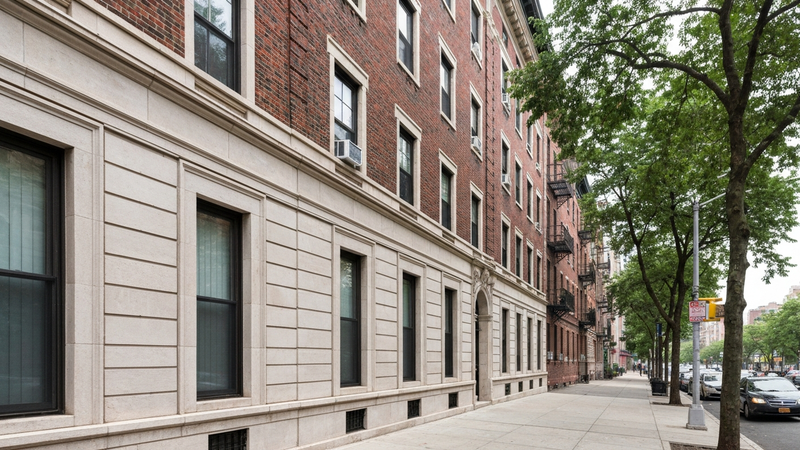
Buyers routinely put a $1,400 condo common charge next to a $2,100 co-op maintenance figure and conclude the condo is cheaper to carry. It is a comparison of two different things.
Co-op maintenance bundles the building's real estate taxes and the debt service on its underlying mortgage into a single monthly bill. Condo common charges exclude both. Add your separate city tax bill to the condo figure before either number means anything.
Tax treatment splits as well. Under Internal Revenue Code Section 216, a co-op shareholder may generally deduct a pro-rata share of the building's real estate taxes and underlying mortgage interest — often cited at 40 to 60 percent of maintenance — subject to the state and local tax limits that apply to any homeowner.
A condo owner deducts the property tax bill directly instead, and the common charge itself is not deductible on a personal residence. On a rental unit the arithmetic changes again: common charges become an ordinary deductible operating expense against rental income.
However, some argue the deductibility gap makes co-ops the cheaper carry on an after-tax basis, and the shield is real. In practice it is offset by what the co-op bill is paying for — building debt the shareholder never chose, on terms the shareholder cannot refinance.
That distinction bites when the underlying mortgage matures. A co-op refinancing a building loan into a materially higher rate passes the increase straight into maintenance, and individual shareholders vote on none of it. Condo owners carry their own debt at their own rate. Our condo versus co-op guide sets out the full structural comparison.
Reading the Number as a Risk Signal
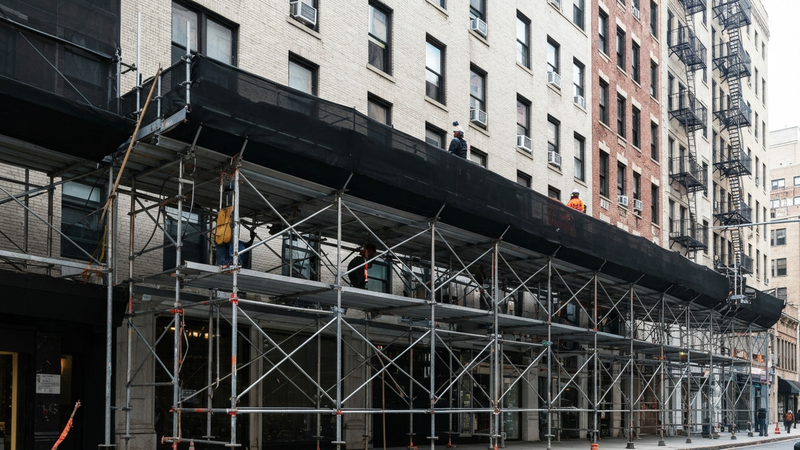
A common charge well below the neighborhood norm is a warning, not a discount. Buildings that underprice the monthly bill are usually deferring something, and deferred building work in New York does not get cheaper with time.
Two compliance cycles make that concrete. Local Law 11, the Facade Inspection Safety Program administered by the NYC Department of Buildings, requires buildings taller than six stories to file a facade inspection every five years, and a single cycle of shedding, pointing, and lintel work routinely reaches seven figures on a large building.
Local Law 97 is the second. It caps greenhouse gas emissions for most buildings over 25,000 square feet, with limits tightening in 2030 and penalties assessed at $268 per metric ton of CO2 equivalent above the cap. Boilers, windows, and controls are capital items, and capital items become assessments.
| Signal in the financials | What it may indicate | What to ask the managing agent |
|---|---|---|
| Charges 30%+ below comparable buildings | Underfunded reserves or deferred work | Reserve balance and five years of capital spending |
| Two or more assessments in five years | Budget structurally short of true cost | Why each was levied and whether it recurs |
| Reserve under three months of expenses | Thin cushion for a facade or elevator cycle | The written capital plan and its funding source |
| No Local Law 97 study on file | Unbudgeted retrofit or penalty exposure | Current emissions position and the 2030 plan |
| Charges flat for several years running | Increases postponed rather than avoided | The board's policy on annual increases |
None of these disqualifies a building on its own. Each is a question to ask, not a verdict to reach.
We model 3 to 5 percent annual growth in common charges on any hold longer than three years, and we stress a facade cycle into year five for older buildings above six stories. A building that has held charges flat for four years is not cheaper than its neighbors — it is simply later in the same cycle. The component-level detail sits in our NYC HOA fee guide.
Final Thoughts

The common charge is the only number in a condo purchase that is both permanent and outside your control. The price is negotiated once. The monthly bill is reset by a board every year for as long as you own the unit.
Treat it as underwriting rather than as a line item. Pull three years of financials, ask the managing agent what the reserve balance is and what it is earmarked for, and price a facade cycle and a Local Law 97 retrofit into the hold period.
Four questions to the managing agent settle most of it: what is the current reserve balance, what capital work is scheduled in the next five years, when did the building last complete a Local Law 11 cycle, and what has the annual increase been for each of the last five years.
Buyers who do that work often conclude the building with the higher charge is the better asset, because the charge is honest. Reviewing the financials alongside your attorney costs an afternoon. Discovering the gap after closing costs considerably more, and on a schedule the board sets.
Reinvent NY provides business consulting, operational support, and coordination services. Legal advice and immigration filings are handled by independent licensed attorneys. Real estate services are provided through licensed professionals and applicable brokerage relationships. This article is for informational purposes only and does not constitute legal or investment advice.

Satoshi Onodera
Founder & CEO, Reinvent NY Inc.
Founded Reinvent NY in 2024. Providing relocation support from all over the world to America.
Ready to Get Started?
Our team in New York is ready to help with your visa, real estate, or relocation needs.
Schedule a ConsultationFrequently Asked Questions
What do common charges cover in a NYC condo?
Common charges fund the building's operating budget: staff payroll and benefits, the master insurance policy, common-area utilities, elevator and boiler service, roof and facade upkeep, the managing agent's fee, amenity operations, and — in a well-run building — an annual contribution to the reserve fund. They do not cover anything inside your own walls.
Do NYC condo common charges include property taxes?
No. New York City assesses each condominium unit as its own tax lot, so you receive and pay a separate real estate tax bill from the Department of Finance. This is the single biggest reason condo common charges look lower than co-op maintenance, which bundles the building's taxes into one monthly figure.
How much are common charges per square foot in NYC?
Most Manhattan and prime Brooklyn condominiums run roughly $1.00 to $2.50 per square foot per month, with new luxury developments frequently above $3.00. Staffing levels and amenity load explain most of the variation. Treat these as approximate ranges and verify the actual figure against the building's current budget.
Are common charges tax deductible?
On a personal residence, common charges themselves are not deductible, though the separate property tax bill may be within applicable state and local tax limits. On a rental unit, common charges are generally deductible as an ordinary operating expense against rental income. Confirm treatment with your own tax advisor.
Can a condo board raise common charges without owner approval?
In most New York condominiums the board adopts the annual budget and sets common charges without a unit-owner vote, within the limits of the declaration and bylaws. Special assessments may require broader approval depending on the governing documents, which is why reading those documents during due diligence matters.
What is a special assessment and how is it different?
A special assessment is a one-time or temporary charge levied on top of regular common charges to fund a specific capital project or shortfall — a facade cycle, an elevator modernization, a boiler replacement. Frequent assessments usually indicate that regular charges have been set below the building's true operating and capital cost.
Why are low common charges a warning sign?
Charges well below comparable buildings often mean the budget is not funding reserves or is deferring capital work. With Local Law 11 facade cycles every five years for buildings over six stories and Local Law 97 emissions limits tightening in 2030, deferred work in New York tends to arrive as an assessment rather than disappear.
How fast do common charges typically rise?
We generally model 3 to 5 percent annual growth over a multi-year hold, driven by payroll, insurance, and energy costs. Buildings that hold charges flat for several consecutive years are usually postponing increases rather than avoiding them, so a flat history is not evidence of a cheaper building.
Real Estate Guides & Data
More guides
- Buying New Development: The Costs Sponsors Shift to You
- Renting in New York: What It Costs and How Approval Works
- Owning Through Cycles: The Holder's Playbook
- Pre-Approval and Proof of Funds
- Searching for US Property: Zillow, StreetEasy, Redfin
- REITs vs Direct Ownership: Two Ways to Hold US Property
Related Articles
The Ritz-Carlton Residences NoMad: Service, Downtown
Rafael Vinoly's tower at 25 West 24th Street put Ritz-Carlton service in NoMad. What a branded residence delivers, and what a buyer should confirm first.
Crown Heights Brooklyn Real Estate Guide 2026
A senior local advisor's guide to buying and renting in Crown Heights, Brooklyn: boundaries, buildings, prices, transit, and who the neighborhood truly suits.
Choosing a New York Property Advisor From Overseas
How overseas buyers pick a New York advisor: who the buyer's agent is paid by, what to verify before engaging.
How the NYC Luxury Buying Process Works Above $5M
What changes above five million dollars in New York: off-market inventory, mansion tax reaching 3.9 percent, board scrutiny, and how the timeline stretches.