Manhattan House: The White Brick Block That Changed NYC
Manhattan House is why so much of New York is white brick. The block-long building at 200 East 66th Street, completed in 1950 by Skidmore, Owings and Merrill with Mayer and Whittlesey, introduced glazed white brick and modernist planning to the city's apartment housing, and the type spread from here across every borough.
It later converted to condominium, which makes it one of the few buildings of its stature that an overseas buyer can actually purchase. Let's take both facts.
1. What the Building Is
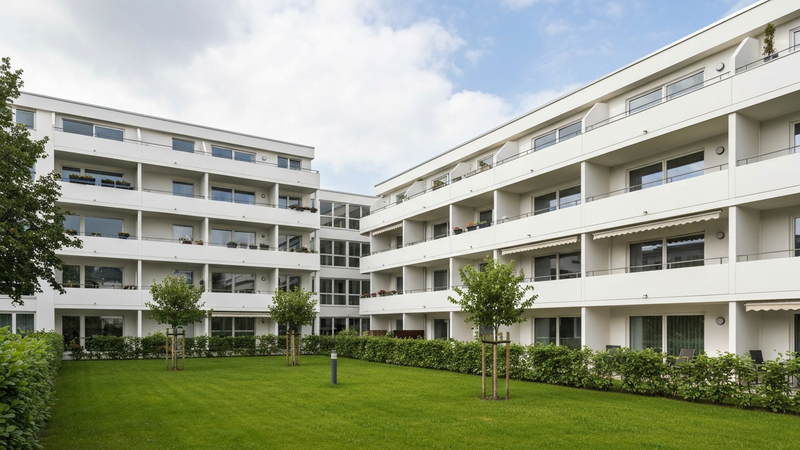
A designated landmark occupying a full block, set back behind a landscaped forecourt rather than built to the lot line. That setback is the design idea — light, air and planting at the street, which prewar Manhattan almost never provided.
The apartments follow mid-century planning: balconies, generous glazing for the period, and room proportions that sit between prewar formality and contemporary openness.
It is neither prewar nor modern, and that is precisely its position in the market. Buyers who find prewar rooms too compartmentalised and new towers too much like hotels frequently end up here.
| Attribute | Detail |
|---|---|
| Address | 200 East 66th Street, Manhattan |
| Completed | 1950 |
| Architects | Skidmore, Owings and Merrill with Mayer and Whittlesey |
| Facade | Glazed white brick |
| Status | Designated landmark |
| Ownership form | Condominium |
Building facts. Unit-level figures - size, exposure, charges, tax - must be obtained for the specific residence.
The location is on Google Maps here.
2. Why the Ownership Form Is the Story

Roughly three quarters of Manhattan's pre-1980 apartment stock is cooperative, and cooperative boards approve every purchaser, require verified financial disclosure and frequently restrict entity and trust ownership.
A condominium of this age removes all of that. No board approval vote, only a right of first refusal that is almost never exercised, and non-resident and entity ownership generally accepted.
For an international buyer who wants an established building rather than new construction, that narrows the field to a handful of candidates city-wide — and this is one of the largest of them.
Our foreign buyer guide explains why ownership form usually settles an international search before price is discussed.
3. The Diligence a 1950 Building Requires

Start with the ordinary review: audited financial statements, the reserve balance in dollars, assessment history and two years of board minutes. Those four describe the next decade of ownership better than any tour.
Then the questions specific to the age and the designation. What is landmarked, what facade and system work is anticipated, and how the reserve study funds it.
A mid-century building that assesses periodically and spends is in better condition than one that has not assessed in twenty years. Read the pattern rather than the absolute number.
Our building diligence guide lists every document and what each reveals when read properly.
4. Buying Here as an Overseas Purchaser

Straightforward: no board approval vote, non-resident and entity ownership accepted, subletting governed by written rules rather than by discretion.
Mansion tax applies from $1 million on the whole price, reaching 2.25% between $5 and $10 million and 3.25% above $10 million, paid by the buyer at closing. Obtain common charges and property tax for the specific unit.
Settle ownership structure before contract; US estate tax reaches non-resident owners above a $60,000 exemption on US-situs assets. See our estate tax guide and buying from overseas guide.
Balconies and what they are worth
Private outdoor space is scarce in Manhattan and priced accordingly. A building of this period that provided balconies as standard offers something most prewar stock does not and most new towers charge heavily for.
Confirm the size, orientation and condition of the balcony for the specific apartment, and ask what the reserve study says about balcony and facade work. Both are the condominium's responsibility rather than the owner's alone.
The Upper East Side position
The district's character was set before the war and is protected by the buildings already standing in it, which means the surroundings a purchaser buys into are unlikely to change materially.
Transport, schools and the Fifth Avenue museums are all within walking distance, and the neighbourhood functions as a residential one rather than as an extension of Midtown.
Comparables in a large converted building
Closed sale prices are public record, and a building of this size produces a genuinely useful series rather than a handful of points. Ask for them by line and exposure rather than for the building as a whole.
Mid-century apartments vary less than prewar ones but more than new construction, so adjust for floor, exposure and condition. Our negotiation guide covers the method.
Final Thoughts: An Established Building You Can Actually Buy
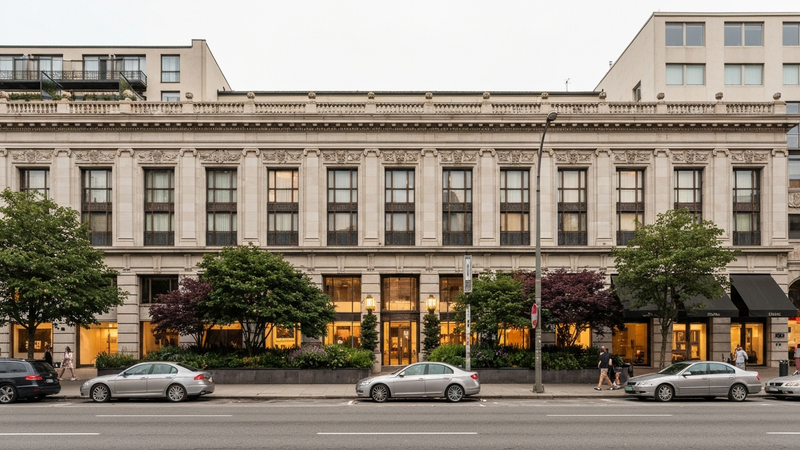
Most buildings with this much history in New York are cooperative, and most of those are effectively closed to a buyer whose assets sit abroad. This one is not, which puts it in a category of a dozen or so buildings city-wide. What it asks in return is diligence on a 1950 capital plan, and that is a document exercise rather than a gamble.
We cover the Upper East Side on Satoshi Onodera's YouTube channel and on Instagram. If a residence here is in view, talk to our team and we will obtain the financials and the landmark obligations first. Real estate brokerage services are provided through licensed professionals.
For a buyer comparing this with new construction nearby, the trade is clear. A new tower offers current systems, deeper amenity and predictable layouts at a higher price per square foot and a higher carrying cost.
This offers a landmark, a forecourt, balconies and seventy years of operating record, in a form that accepts a non-resident purchaser without a board interview. Both are defensible; only one of them is scarce.
A note on financing. Foreign national mortgages require a larger deposit and a longer underwriting period than domestic ones, and lenders assess older converted buildings with more care. Confirm early that your lender is comfortable with the building itself rather than only with you.
One further point specific to mid-century buildings. Window walls, heating systems and lift equipment from this period reach the end of their lives on a schedule, and a well-run building replaces them in planned phases rather than in emergencies.
Ask what has already been replaced and when. A building that completed a facade programme five years ago is in a very different position from one that has it ahead, and the difference is worth more than any figure in a listing.
Reinvent NY provides business consulting, operational support, and coordination services. Legal advice and immigration filings are handled by independent licensed attorneys. Real estate services are provided through licensed professionals and applicable brokerage relationships. This article is for informational purposes only and does not constitute legal or investment advice.
More buildings worth knowing: 100 Eleventh Avenue, 111 West 57th Street, 130 William. The full set is indexed under New York building profiles.

Satoshi Onodera
Founder & CEO, Reinvent NY Inc.
Founded Reinvent NY in 2024. Providing relocation support from all over the world to America.
Ready to Get Started?
Our team in New York is ready to help with your visa, real estate, or relocation needs.
Schedule a ConsultationFrequently Asked Questions
Where is Manhattan House?
200 East 66th Street, filling the block between Second and Third Avenues on the Upper East Side. The location is on [Google Maps](https://maps.google.com/?q=200+East+66th+Street+New+York).
When was it built?
It was completed in 1950, designed by Skidmore, Owings and Merrill with Mayer and Whittlesey, and is a designated landmark.
Why is it historically important?
It introduced glazed white brick and modernist planning to New York apartment housing, and the white brick building became a city-wide type as a direct result.
Is it a co-op or a condominium?
It converted to condominium. That is unusual for a building of its era and is the key fact for an international buyer.
Can a non-resident buy here?
Yes. As a condominium there is no board approval vote, and non-resident and entity ownership are generally accepted.
What are the apartments like?
Mid-century planning with balconies and generous glazing for the period, set back from the street behind a landscaped forecourt rather than built to the lot line.
What should I confirm first?
The reserve balance and capital plan for a 1950 structure, landmark obligations, assessment history, board minutes, and the actual charges for the specific residence.
Real Estate Guides & Data
More guides
- Smart Apartments: Technology Worth Installing
- Umbrella Liability: The Cheap Layer Above Everything
- Utilities and Internet: The First Month in NYC
- Waterfront Property and Flood Zones: Pricing the Water
- ACRIS and Public Records: Researching Any NYC Property
- Banking for US Property Owners: The Account Architecture
Related Articles
Quay Tower: Harbour Views From Brooklyn Bridge Park
Quay Tower sits inside Brooklyn Bridge Park with the harbour and Manhattan skyline in front of it. What it offers a buyer, and what to confirm first.
Morris Park Bronx Real Estate Guide 2026
What Morris Park in the Bronx costs in 2026: the housing stock street by street, sale and rent ranges, how residents commute, and what buyers should check.
Grand Concourse Bronx Real Estate Guide 2026
Our team in New York breaks down Grand Concourse real estate for 2026: prices, rents, historic buildings, transit, and who this Bronx boulevard suits.
Country Club Bronx Real Estate Guide 2026
An authoritative 2026 guide to Country Club, Bronx: housing stock, prices, rents, transit, and schools for international buyers and renters.