What You Need to Buy Your First Apartment in New York
Most first-time buyers in New York arrive with a down payment and a mortgage pre-approval and believe they are ready. They are usually short on two things: the cash required at closing beyond the deposit, and the liquidity a co-op board expects to see after the purchase completes.
Both are knowable in advance and neither is negotiable at the last minute. Let's set out exactly what a first New York purchase requires.
1. The Cash, Item by Item

Four separate pools of money are involved, and they are needed at different moments. The contract deposit — commonly 10% of the price — goes into escrow at signing. The balance of the down payment is due at closing. Closing costs run 2-5% for a resale condo and 4-6% for new development. And post-closing liquidity is what remains afterwards.
None of the last three can be financed. They are cash, and a buyer who has planned only for the down payment discovers the gap at the worst possible moment.
| Requirement | On a $1,000,000 purchase | When |
|---|---|---|
| Contract deposit | $100,000 (10%) | At contract signing |
| Balance of down payment | $100,000 - $200,000 | At closing |
| Closing costs (resale condo) | $20,000 - $50,000 | At closing |
| Mansion tax (from $1M) | $10,000 (1%) | At closing, included above |
| Post-closing liquidity (co-op) | 1-2 years of maintenance | Demonstrated before approval |
Illustrative for a $1,000,000 purchase with 20-30% down. Actual figures depend on the building, the lender and the price bracket.
The mansion tax deserves attention at this price point: it applies from $1 million and is charged on the whole price rather than the excess. Our closing costs article itemizes every line.
2. The Documents Nobody Warns You About

A lender wants two years of income documentation, recent statements for every account, and employment verification. A co-op board wants considerably more: a complete financial statement listing assets and liabilities, tax returns, bank references, and two personal plus two professional reference letters.
For buyers whose income or assets sit outside the United States, add certified translation and, in some cases, an accountant's letter mapping home-country documents to US equivalents. Both take weeks rather than days.
The practical instruction is to assemble the file during the search rather than after an accepted offer. Our co-op package guide lists the full document set, and the overseas buyer article covers the additional requirements for non-resident purchasers.
Pre-approval versus pre-qualification
Sellers in New York distinguish sharply between the two, and first-time buyers frequently do not. A pre-qualification is an opinion based on what you told the lender; a pre-approval follows an actual review of your documents and carries weight in a competitive situation.
Obtain the pre-approval before viewing rather than after finding an apartment. It also serves a second purpose: the process surfaces problems in your file — an unexplained deposit, a gap in employment history — while there is still time to address them without a contract deadline running.
The monthly figure that decides affordability
Work out the total monthly commitment before setting a price ceiling: mortgage payment, common charges or maintenance, property tax where the condo owner pays it directly, and a reserve for assessments. That combined number, not the purchase price, is what you live with.
In many New York buildings the charges and tax together approach the mortgage payment itself. A buyer who priced only the loan finds the real cost roughly double what they planned, which is the single most common reason a first purchase becomes uncomfortable in year two.
3. The Decision That Sets Everything Else
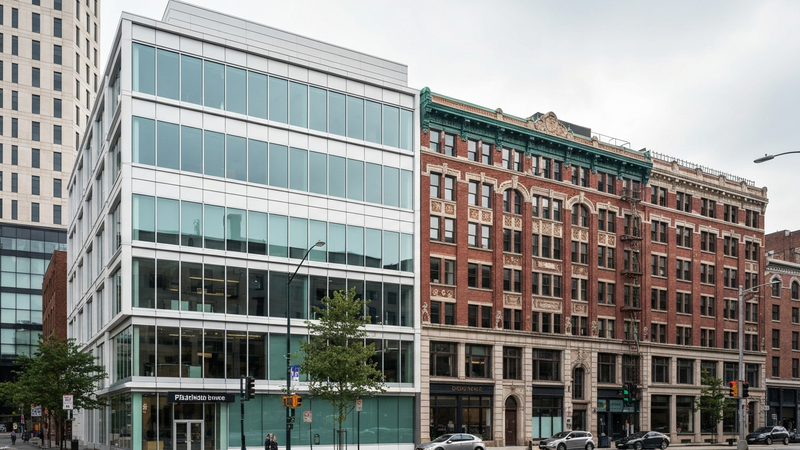
Condo or co-op determines the cash required, the documents demanded, the timeline and what you may do with the apartment afterwards. Co-ops are cheaper — 10-25% below comparable condos per square foot, with no title insurance and no mortgage recording tax — and they demand board approval, higher down payments and restrictions on subletting.
Condos cost more at every stage and impose almost no conditions: a right of first refusal rather than an approval vote, subletting generally permitted, non-resident and entity ownership accepted.
For a first purchase the honest test is mobility. A buyer certain they will occupy the apartment for years should take the co-op discount; a buyer who might relocate, let it out, or need to sell quickly should pay the condo premium — the full structural comparison is in our condo versus co-op guide.
4. The Counterargument: Should a First-Timer Buy Here at All?

Renting is a defensible answer in New York and more often the right one than agents admit. Round-trip transaction costs of roughly 10-15% mean a purchase held for two or three years frequently loses to renting, and the monthly carrying cost of ownership is closer to rent than buyers expect once charges and tax are included.
The rebuttal is the holding period rather than the market. Beyond about five to seven years the arithmetic reverses, because the transaction costs amortize while rent compounds. A first-time buyer who knows they will stay is in a genuinely different position from one who might move for work — and only the buyer knows which they are.
Run both against your actual numbers rather than a rule of thumb. Our rent versus buy analysis and the cost simulators let you test a specific price and a specific holding period.
One factor deserves more weight than it usually gets in that comparison: flexibility has a value even when it does not appear in a spreadsheet. A renter who is offered a role in another city can accept it in thirty days. An owner in the same position is looking at a two to three month sale, roughly 10% in round-trip costs, and a market that may not be cooperating that quarter. If the next few years are genuinely uncertain, that constraint belongs in the decision alongside the arithmetic.
Final Thoughts: Prepare the Cash and the File First

The buyers whose first New York purchase goes smoothly did three things before viewing anything: they priced the total cash including closing costs and post-closing liquidity, they assembled the document file, and they decided condo or co-op deliberately rather than by whichever apartment they liked.
If only one thing from this article survives, make it this: work backwards from the total monthly commitment rather than forwards from the down payment. A buyer who can comfortably fund the charges, the tax and the mortgage together has bought well even in a modest apartment, and a buyer who cannot has bought badly in a beautiful one.
We prepare cash requirement estimates and document checklists before clients start viewing, with brokerage services provided through licensed professionals. Talk to our team about your budget and we will tell you what it actually buys.
Reinvent NY provides business consulting, operational support, and coordination services. Legal advice and immigration filings are handled by independent licensed attorneys. Real estate services are provided through licensed professionals and applicable brokerage relationships. This article is for informational purposes only and does not constitute legal or investment advice.
More buying guides: Buying a House in New York State, Rent vs Buy in NYC, Buying a New York Condo as an International Buyer.

Satoshi Onodera
Founder & CEO, Reinvent NY Inc.
Founded Reinvent NY in 2024. Providing relocation support from all over the world to America.
Ready to Get Started?
Our team in New York is ready to help with your visa, real estate, or relocation needs.
Schedule a ConsultationFrequently Asked Questions
How much cash do I need to buy in New York?
Beyond the down payment, budget 2-5% of the price in closing costs for a resale condo and 4-6% for new development. Co-ops also require post-closing liquidity, commonly one to two years of maintenance held after the purchase.
What is the minimum down payment?
Condos may accept 10-20% depending on the lender, while co-op boards frequently require 20-50% by building policy. Buyers without US credit history typically face 25-30% under foreign national programmes.
What documents will I need?
Two years of tax returns or their home-country equivalent, recent bank and investment statements, employment verification, identification, and — for a co-op — a full financial statement plus personal and professional references.
What is post-closing liquidity?
The assets you hold after the purchase completes. Co-op boards test it directly, commonly expecting one to two years of maintenance payments to remain available, and lenders check reserves separately.
Should a first-time buyer choose a condo or a co-op?
Co-ops are cheaper to buy and to close but require board approval and restrict subletting. Condos cost more and impose far fewer conditions. Buyers who may relocate or let the apartment usually find the condo premium worth paying.
How long does the process take?
Typically 60 to 90 days from accepted offer to closing when financed, and longer where a co-op board review is involved. Cash purchases can close in about 30 days.
What is the most common first-purchase mistake?
Budgeting for the down payment and the mortgage while ignoring the monthly carrying cost. Common charges plus property tax frequently approach the mortgage payment itself, and both continue permanently.
Real Estate Guides & Data
More guides
- Searching for US Property: Zillow, StreetEasy, Redfin
- REITs vs Direct Ownership: Two Ways to Hold US Property
- Rental Yield: Gross, Net, Cap Rate, Cash-on-Cash
- Security Deposits in NY: The One-Month Rulebook
- NYC Short-Term Rental Rules: Local Law 18
- Smart Apartments: Technology Worth Installing
Related Articles
How to Evaluate a Large New Condo Tower in New York
What to check before buying in a 300-unit New York tower: unsold sponsor inventory, abatement expiry, amenity carrying costs, and how resale works at scale.
Miami Real Estate Market 2026: Prices, Yields and Costs
Miami home values in 2026: a $582,621 typical value after 43.4% five-year growth, $3,004 rents, a 6.19% gross yield.
Selling US Property as a Foreign Owner: What You Net
The exit for a non-resident owner: 15% FIRPTA withholding at closing, seller costs of 8-10%, reduced withholding certificates, and how to reclaim the excess.
New Development or Resale in NYC: The Real Cost Difference
New construction versus resale in New York: the transfer taxes sponsors shift to buyers, working capital contributions, closing timing risk.