New Development or Resale in NYC: The Real Cost Difference
The price on a new development listing is not comparable to the price on a resale listing, and the gap is not small. Sponsors customarily shift the New York City and State transfer taxes onto the buyer — roughly 1.8-2.0% of the purchase price — before adding their own attorney fees and a working capital contribution.
On a $3 million apartment that is $54,000 to $60,000 in transfer taxes alone that a resale buyer would not pay. Let's put both routes on the same basis and see where each one wins.
1. The Cost Comparison, Stated Honestly
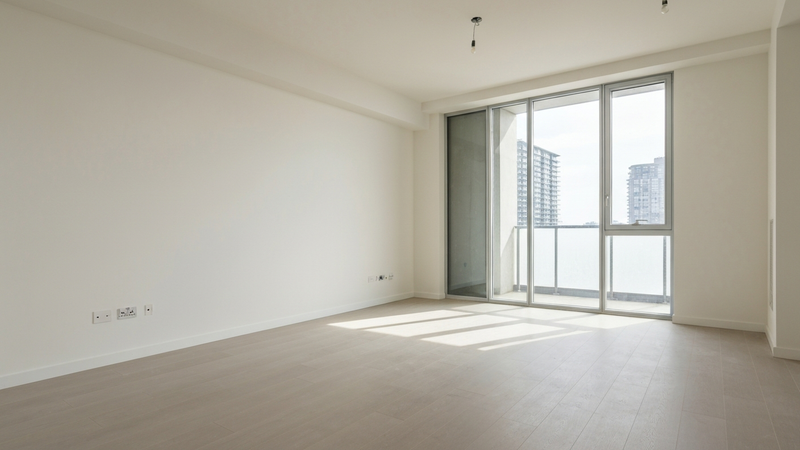
Both routes pay the mansion tax, title insurance, mortgage recording tax and attorney fees. New development adds three items on top: transfer taxes shifted from sponsor to buyer, the sponsor's attorney fee, and a working capital contribution into the building's reserve — commonly one to two months of common charges.
None of these appear in the marketing. All are disclosed in the offering plan, which is where the real price of a new development purchase is written down.
| Cost | Resale | New development |
|---|---|---|
| Mansion tax (above $1M) | Buyer | Buyer |
| NYC transfer tax (1.425% above $500k) | Seller | Buyer, customarily |
| NYS transfer tax (0.4%) | Seller | Buyer, customarily |
| Sponsor attorney fee | Not applicable | Buyer, commonly |
| Working capital contribution | Not applicable | Buyer, 1-2 months of charges |
| Total buyer closing costs | 2-5% | 4-6% |
Customary allocation in New York. Every item is contractual and therefore negotiable in principle; confirm against the offering plan.
That 2-5% versus 4-6% difference is roughly $60,000 on a $3 million purchase — real money that belongs in the comparison from the first shortlist. Our closing costs article itemizes both sides.
2. What New Development Actually Buys

The premium is not only for newness. New development is procedurally simpler for an overseas buyer: no co-op board interview, no approval vote, non-resident and entity ownership accepted as a matter of course, and a sponsor whose sales team handles international purchasers routinely.
Add warranty coverage on new construction, systems that have not yet been repaired three times, and a building where every owner arrives at once — which avoids inheriting a decade of unresolved disputes recorded in someone else's board minutes.
The trade is that you are buying a projection. First-year budgets in an offering plan are estimates, and common charges in new buildings frequently rise once the sponsor's control period ends and actual operating costs land. Our sponsor units analysis covers what to check.
Why the first-year budget usually understates
The projected budget is prepared while the building is still an idea. Staffing levels are estimated before anyone knows how the building actually runs, insurance is quoted before a claims history exists, and reserve contributions are set at a level that helps the units sell.
The practical adjustment is to underwrite at a figure above the projection rather than at it. Comparing the projected charge per square foot against operating buildings of similar size and staffing in the same area is a five-minute check that prevents a predictable surprise in year three.
Sponsor control, and when it ends
Until a defined proportion of units has sold, the sponsor controls the board. During that period decisions about budgets, reserves and building operations are made by the party still selling apartments, whose interests are not identical to those of the owners who have already bought.
Ask when control transfers and how many units remain unsold. A building where the sponsor holds a large unsold block for years is a building where someone else sets your monthly costs, and where a bulk disposal at a discount can reset the comparables under your own resale.
3. What Resale Buys

Resale buys evidence. Two years of actual financial statements rather than a projected budget, a reserve balance you can read, an assessment history, and board minutes recording exactly which arguments the building has had and how it resolved them.
It also buys immediacy: the closing happens in 60 to 90 days rather than in a construction schedule, so the financing you arrange is the financing you use and the rate you were quoted is close to the rate you pay.
For a co-op resale there is the board to clear, which for non-resident buyers is a substantial filter — the analysis is in our co-op board article. For condo resale, the procedural difference from new development largely disappears.
4. The Counterargument: Is Pre-Construction Worth the Wait?
Buyers are drawn to pre-construction by early pricing and first choice of exposures. The case against is that you commit at today's confidence and close at a future rate — one to three years of interest rate, currency and completion risk carried entirely by the buyer, on top of higher closing costs.
The rebuttal is capacity rather than optimism. A buyer who could close in cash if financing disappoints carries that gap comfortably, and in exchange gets selection and staged payments rather than a single large outlay. A buyer depending on a specific rate should buy completed inventory, where the loan and the keys arrive in the same month. The question is not whether pre-construction is good — it is whether your balance sheet can absorb the gap it creates.
Where a branded operator is involved, the licence terms add another document to the same analysis — covered in our branded residences article.
There is also a middle route that suits many overseas buyers better than either extreme: completed new development with remaining sponsor inventory. The building is finished and operating, so the budget is real rather than projected, and the sponsor is motivated to clear the last units — which is precisely when concessions on transfer taxes and fees are most available.
Final Thoughts: Compare Total Cash, Not List Price
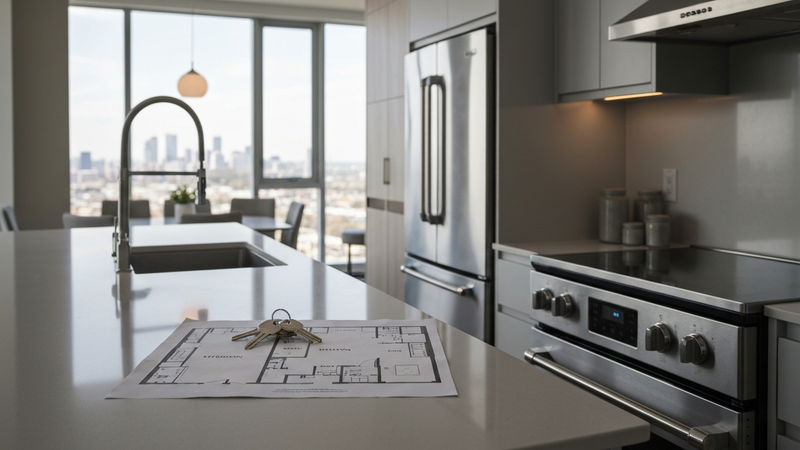
Put both candidates on one page with every cash item included: price, mansion tax, transfer taxes where the sponsor shifts them, sponsor legal fees, working capital, title and recording. Then compare total monthly carrying cost per square foot. Shortlists reorder themselves once that is done, and the reordering is the point.
One last practical note for buyers weighing both at once. Sponsor sales teams work for the sponsor, and resale listing agents work for the seller, so neither is positioned to run this comparison for you honestly. That is the work your own representation exists to do.
We read offering plans and building financials before contract and price both routes on the same basis, with brokerage services provided through licensed professionals. Talk to our team with the specific buildings you are weighing.
Reinvent NY provides business consulting, operational support, and coordination services. Legal advice and immigration filings are handled by independent licensed attorneys. Real estate services are provided through licensed professionals and applicable brokerage relationships. This article is for informational purposes only and does not constitute legal or investment advice.
More buying guides: Buying a House in New York State, Rent vs Buy in NYC, Buying a New York Condo as an International Buyer.

Satoshi Onodera
Founder & CEO, Reinvent NY Inc.
Founded Reinvent NY in 2024. Providing relocation support from all over the world to America.
Ready to Get Started?
Our team in New York is ready to help with your visa, real estate, or relocation needs.
Schedule a ConsultationFrequently Asked Questions
Is new development more expensive to close than resale?
Yes. Sponsors customarily shift the New York City and State transfer taxes onto the buyer — roughly 1.8-2.0% of the price — and often add their attorney fees and a working capital contribution. Budget 4-6% versus 2-5% for a resale.
What is a working capital contribution?
A one-time payment into the building's reserve fund at closing, commonly one to two months of common charges. It is separate from the purchase price and appears in the offering plan rather than in marketing materials.
Are new development prices negotiable?
Concessions are more common than headline price reductions, because a recorded price sets the comparable for remaining units. Sponsors frequently absorb transfer taxes or credit fees instead of cutting the price.
What is the risk of buying pre-construction?
The closing may be one to three years after contract, so financing terms, interest rates and currency all move in between. Deposits are staged and held in escrow, but the completion date itself can slip.
Do new buildings have lower running costs?
Not necessarily. Newer systems reduce some maintenance, but amenity-heavy buildings carry higher staffing and operating costs. Compare total monthly cost per square foot rather than assuming age determines it.
Which is better for an overseas buyer?
New development is procedurally simpler — no board approval vote, non-resident and entity ownership accepted, and a sponsor accustomed to international purchasers. Resale is cheaper to close and lets you see the actual building operating.
What should I read before signing a sponsor contract?
The offering plan and all amendments, the projected budget for the first year, the schedule of closing costs the sponsor allocates to buyers, and the escrow terms for deposits.
Real Estate Guides & Data
More guides
- Trusts and US Property: The Structures Behind the Names
- US Real Estate Investing: Yields, Taxes and How to Buy
- Walk-Up vs Doorman Buildings: The Service Premium
- 1031 Exchanging Into NYC: Trading Up to Manhattan
- Assessed vs Market Value: Why the City's Number Differs
- Co-op to Condo Conversion: Why Buildings Rarely Switch
Related Articles
What You Need to Buy Your First Apartment in New York
The cash, documents and decisions required before a first New York purchase: down payment, closing costs, post-closing liquidity.
Selling US Property as a Foreign Owner: What You Net
The exit for a non-resident owner: 15% FIRPTA withholding at closing, seller costs of 8-10%, reduced withholding certificates, and how to reclaim the excess.
Manhattan vs Brooklyn: Where International Buyers Should Buy
Manhattan or Brooklyn for an overseas purchase: running costs of $15.52 against $10.92 per square foot, condo supply.
Trusts and LLCs for US Property: Which Structure, and Why
How international buyers hold US property: personal name, LLC, corporation or trust, and what each one does to income tax, estate exposure and privacy.