Philadelphia Real Estate Market 2026: 9.2% Gross Yield
Philadelphia is the only large city in the American Northeast where a rental property still clears 9% gross. A $237,459 typical home value collecting $1,814 a month produces 9.17% — nearly double Boston's 5.28% and triple Seattle's 3.12%.
It is also a city that has added 7.1% in five years while its own state added 23.4%. Let's look at what that combination means for a buyer, and where the income actually settles after costs.
1. Where Philadelphia Prices Stand in 2026
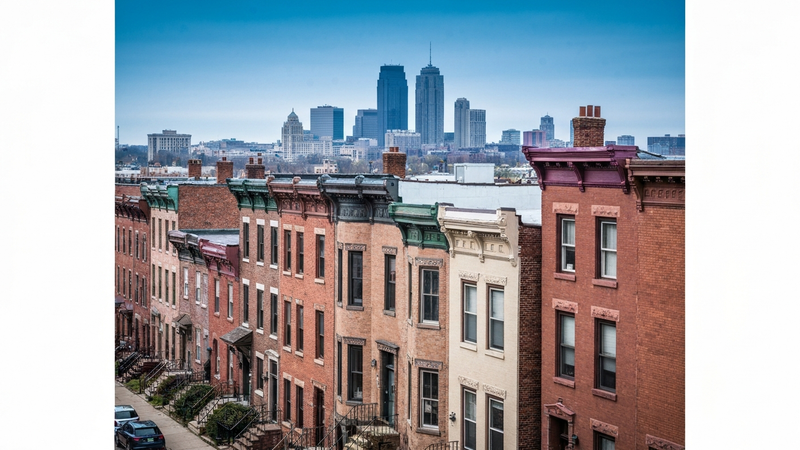
The city is up 0.4% year over year — flat rather than falling, which distinguishes it from most metros in our data this year. Pennsylvania overall is up 2.4%, and the state's decade gain of 70.9% shows the appreciation happened, just not recently in the city itself.
The growth has been in the state's smaller cities. Reading is up 42.0% over five years and Erie 43.6%, both from bases under $270,000. Pittsburgh, the state's other major city, sits at $246,117 with a 7.77% yield.
| City | Typical value | 1-yr | 5-yr | Gross yield |
|---|---|---|---|---|
| Philadelphia | $237,459 | +0.4% | +7.1% | 9.17% |
| Pittsburgh | $246,117 | -0.7% | +9.6% | 7.77% |
| Reading | $268,714 | +3.2% | +42.0% | 6.23% |
| Erie | $209,960 | +5.9% | +43.6% | 5.92% |
| Pennsylvania | $294,099 | +2.4% | +23.4% | 5.96% |
Zillow ZHVI and ZORI, mid-2026. Gross yield is annualized rent divided by typical value, before all costs.
Read the pattern: the highest yields sit in the two big cities, the fastest growth in the smaller ones. Full state detail is on our Pennsylvania market page.
Why the city lagged its own state
Pennsylvania's five-year gain came disproportionately from places within commuting reach of stronger job markets and from small cities rebounding off very low bases. Philadelphia had neither dynamic: it is its own employment centre rather than a satellite, and its base was never low enough to produce a percentage rebound.
What the city does have is scale and stability. Its health systems and universities employ steadily through cycles, which is why rents held flat-to-up through a period when the price barely moved. That divergence — stable rent, static price — is exactly what manufactures a 9% yield.
Where the submarkets diverge
Citywide medians conceal a wide spread in Philadelphia, wider than in most metros of its size. Neighbourhoods near the universities and hospitals carry higher prices and lower yields; older residential districts further out invert both.
The practical implication is that the citywide 9.17% is a starting point rather than an expectation for any specific purchase. Underwrite the block, the building condition and the actual signed rents in the immediate area — in a city of row housing, two streets apart can be two different investments.
2. What 9.17% Gross Becomes After Costs

Work the arithmetic. A $237,459 house at $1,814 a month grosses $21,768 a year. Deduct Philadelphia property tax, insurance, management at 8-10%, maintenance appropriate to pre-war row housing, and a month of vacancy — the unlevered net commonly lands at 5.5-6.5%.
Philadelphia's tax structure deserves particular attention because it is more layered than most US cities: property tax plus taxes reaching rental business activity. A non-resident owner should have a CPA confirm the full local position before modelling returns rather than after.
Even at 5.5-6.5% net unlevered, this comfortably beats Boston or Seattle after their own deductions. The rental yield guide walks through the same sequence step by step.
3. The Housing Stock Is the Real Diligence

Philadelphia is a row-house city, and row houses fail differently from detached homes. Party walls mean a neighbour's roof or water problem becomes yours, basements in older stock take water, and systems in houses built before 1950 have usually been modified repeatedly rather than replaced cleanly.
Lead paint disclosure obligations apply to pre-1978 housing nationally, and Philadelphia has additional local requirements for rental properties. Rental licensing and certification are also city requirements — confirm the current obligations with the city before you plan to lease.
The practical rule: budget seriously for inspection and for a capital reserve. Our inspection guide covers what a standard US inspection includes, which is less than most overseas buyers assume.
What a capital reserve should actually cover
For pre-war row housing, the items that consume reserves are predictable: flat or low-slope roofs on a replacement cycle, pointing and party-wall repairs, sewer laterals, and heating systems installed decades ago. None of these are emergencies until they are, and all are foreseeable at inspection.
A reasonable working assumption is a materially larger annual reserve than a comparable newer property in a Sun Belt market would require. Investors who model Philadelphia on Phoenix maintenance assumptions are the ones whose returns disappoint, and the shortfall shows up as capital events rather than as monthly leakage.
4. The Counterargument: Is Flat Growth Acceptable?

The bear case is the five-year number. An investor who bought in 2021 has 7.1% to show for it while Pennsylvania's smaller cities delivered forty. Add older housing with real capital needs and a layered local tax structure, and the argument writes itself: the yield is compensation for a market going nowhere.
The rebuttal is that Philadelphia is not going nowhere — it is going slowly, which is a different asset. The city holds a genuine anchor economy in health care and higher education, a stable rental population, and the largest housing supply on the Northeast corridor at a price a normal investor can reach. For an income buyer, slow-and-steady with a 9% gross is precisely the shape of the trade; for a growth buyer it is the wrong city, and the price says so.
See where Philadelphia ranks against the other high-income markets in our highest-yield cities analysis, and against twenty metros on the same measures in the metro comparison.
There is also a middle position worth naming. Philadelphia is the only city on the high-yield list that sits on the Northeast corridor, within rail reach of New York and Washington. If the pessimistic price forecast proves wrong anywhere on that list, geography argues it is most likely to be wrong here — and an investor collecting 5.5-6.5% net while waiting is paid to hold the option.
Final Thoughts: Who Philadelphia Fits

Philadelphia fits the income investor who wants Northeast-corridor location, a rental population anchored by hospitals and universities, and a genuine 9% gross — and who is willing to underwrite pre-war row housing properly. It does not fit anyone expecting appreciation to do the work.
We underwrite specific properties including inspection scope and local tax exposure, and coordinate financing and management for overseas owners, with brokerage services provided through licensed professionals. Talk to our team before you commit to a Philadelphia purchase.
Reinvent NY provides business consulting, operational support, and coordination services. Legal advice and immigration filings are handled by independent licensed attorneys. Real estate services are provided through licensed professionals and applicable brokerage relationships. This article is for informational purposes only and does not constitute legal or investment advice.
More market reports: Highest Rental Yield US Cities 2026, Austin Real Estate Market 2026, California Real Estate Market 2026. The full set is indexed under market data for all 51 states.

Satoshi Onodera
Founder & CEO, Reinvent NY Inc.
Founded Reinvent NY in 2019. Providing relocation support from all over the world to America.
Ready to Get Started?
Our team in New York is ready to help with your visa, real estate, or relocation needs.
Schedule a ConsultationFrequently Asked Questions
How much does a home cost in Philadelphia in 2026?
Zillow's typical home value for Philadelphia is $237,459 as of mid-2026, up 0.4% over the past year. Pennsylvania statewide sits at $294,099, up 2.4%.
What is the rental yield in Philadelphia?
About 9.17% gross — $1,814 median asking rent against a $237,459 typical value, before taxes, insurance and management. It is the highest of any large city in the Northeast.
Why is Philadelphia cheaper than other Northeast cities?
Abundant older row-house stock, a population well below its historic peak, and slower income growth than Boston, New York or Washington. Rents track local wages while the housing supply remains plentiful.
Is Philadelphia appreciating?
Slowly. The city has added 7.1% over five years while Pennsylvania statewide added 23.4% — smaller cities like Reading and Erie have grown far faster from lower bases.
Can a non-US resident buy property in Philadelphia?
Yes. Pennsylvania imposes no citizenship or residency requirement on ownership. Buyers without US credit typically use foreign national or DSCR loans with 25-30% down.
What should investors know about Philadelphia's housing stock?
Much of it is pre-war row housing. Party walls, older systems, roof and basement conditions and lead paint disclosure obligations all mean inspection quality matters more here than in newer markets.
How do Philadelphia taxes affect returns?
The city levies property tax plus taxes on rental business activity, and non-resident owners should confirm the full local picture with a CPA. Philadelphia's tax structure is more layered than most US cities.
Real Estate Guides & Data
More guides
- The Second Property: From Owner to Portfolio
- Buying Short Sales: Discounts on the Lender's Clock
- Tax Treaties and US Property: Avoiding Double Taxation
- Trusts and US Property: The Structures Behind the Names
- US Real Estate Investing: Yields, Taxes and How to Buy
- Walk-Up vs Doorman Buildings: The Service Premium
Related Articles
Pros and Cons of Buying Property in New York in 2026
An honest accounting of New York property in 2026: liquidity, legal certainty and tenant depth set against thin yields, high carry and slow board approvals.
Is It Safe to Buy Property in New York? What Protects You
The protections behind a New York purchase: recorded title, title insurance, attorney representation, escrowed deposits, and the wire fraud risk nobody insures.
Highest Rental Yield US Cities 2026: Where 9%+ Exists
Cleveland at 14.1%, Baltimore at 11.2%, Toledo at 10.0% — the US cities with the highest gross rental yields in 2026.
Buying NYC Property From Abroad: The Practical Logistics
The mechanics overseas buyers struggle with: moving funds and proving their source, remote signing, documentation, and the sequence that avoids closing delays.