NYC Landlord Requirements: Deposits, Heat and Disclosures
Buying an apartment in New York makes you an owner. Renting it out makes you a regulated business — and the regulations do not care that you live eight time zones away.
New York's landlord obligations are scattered across state law, city ordinances, and building-level rules, which is why so many first-time landlords discover them one violation notice at a time. The obligations attach the moment a tenant signs, and ignorance is not a defense.
This guide collects the ones that matter in practice: money rules, habitability duties, paperwork, and the compliance calendar. It is written for the owner who is not on site — the buyer in Tokyo, Singapore, or London renting out a Manhattan condo.
The Money Rules: Deposits, Fees and Late Charges

Start with the rules that changed most recently, because older advice on the internet is now wrong. Since New York's 2019 reforms, residential security deposits are capped at one month's rent — no two-month deposits, no "last month plus deposit" stacking. Deposits must be returned within the statutory window after move-out with an itemized statement, and the tenant is entitled to a walkthrough inspection before leaving.
Application fees are capped at $20, and late fees are limited to the lesser of $50 or 5% of monthly rent, chargeable only after a grace period. These caps apply regardless of what the lease says — a lease clause that exceeds them is simply unenforceable.
For owners renting to tenants without US credit history, the one-month deposit cap raises the value of alternatives: institutional lease guaranty services, or screening that weighs verified income more heavily. Our rental application guide covers what documentation you can and cannot require.
Habitability: Heat, Hot Water and Repairs
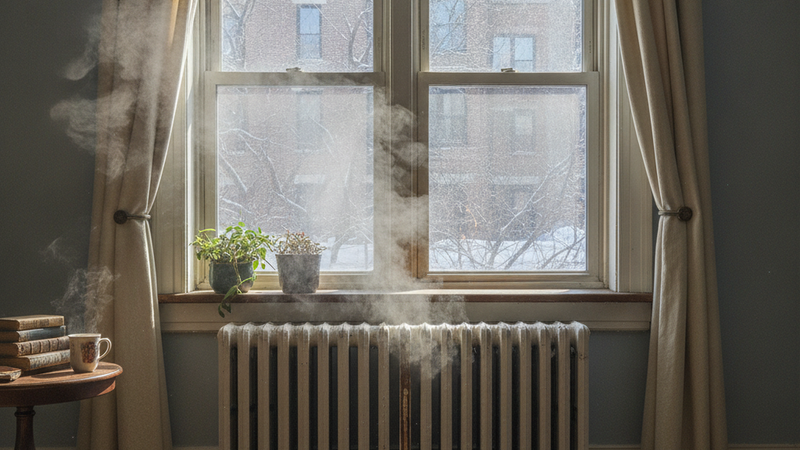
Every residential lease in New York carries an implied warranty of habitability that cannot be waived. The most concrete expression is heat season: from October 1 through May 31, landlords must maintain minimum indoor temperatures — during the day when it is cold outside, and at night regardless. Hot water is a year-round obligation.
In a condominium, the building's systems are the association's responsibility, but the tenant's remedy runs against you, the landlord — you cannot point at the board and walk away. This is why condo landlords still need a repair pipeline: someone who answers the phone, dispatches a plumber, and documents the fix. Unresolved conditions become rent abatement defenses in housing court, and they surface at the worst possible time — see our guide to the eviction process for how habitability claims play out there.
Lead paint deserves its own line: pre-1960 buildings (and some 1960-1978 buildings) carry annual notice and inspection duties where a young child resides. The penalties for ignoring lead rules are severe and the compliance is cheap — send the notices, keep the records.
Paperwork: Disclosures, Registrations and the Lease

New York leases must be accompanied by a growing list of notices, and several depend on the building's vintage and status. The table maps the common ones.
| Requirement | Applies to | When |
|---|---|---|
| Security deposit receipt & bank info | All residential leases | At lease signing |
| Lead paint disclosure & annual notice | Pre-1960 buildings (some to 1978) | Signing + annually |
| Window guard notice | NYC apartments | Signing + annually |
| Bedbug disclosure | NYC apartments | At lease signing |
| Sprinkler disclosure | All NY residential leases | In the lease |
| Rent registration | Rent-stabilized units | Annual filing |
Common NYC lease disclosures and filings. Building age and regulatory status determine which apply.
Two structural points. First, if the unit is rent-stabilized, an entire second rulebook applies — renewal rights, registration, limits on increases. Verify status before you buy: rent stabilization for investors explains how. Second, short-term rentals are effectively closed to absentee owners: rentals under 30 days require the host to be present and registered, so the Airbnb fallback does not exist in NYC.
Fair housing law sits over all of it. Screening criteria must be objective and applied uniformly — income, payment history, references — never protected characteristics, and New York City adds protections beyond the federal list, including source of income. A criteria sheet written once and applied to every applicant protects you twice: it keeps decisions lawful, and it documents that they were.
Building rules add a private layer on top of the public one. Condo and co-op boards impose their own leasing requirements — minimum lease terms, board application packages, move-in deposits and fees, limits on renewal frequency. These are contractual rather than statutory, but a violation can cost you leasing privileges. Read the house rules before you buy a unit you intend to rent, not after.
The Compliance Calendar

Most obligations recur on a cycle, which makes them delegable. Annual window guard and lead notices go out with a January rent bill. Heat season starts October 1. Deposit interest, where applicable, credits annually. Rent-stabilized registrations file each year. Smoke and carbon monoxide detectors must be installed and maintained, with tenant sign-off at move-in.
None of this is intellectually hard; all of it is easy to miss from abroad. The practical answer is a property manager whose engagement letter names each recurring obligation explicitly — not "handles compliance" but "sends lead and window guard notices each January, files the stabilization registration each year." Our property management guide covers what a management contract should pin down, and managing from abroad covers the delegation structure for overseas owners.
Keep the paper. Notices sent, inspections done, detector sign-offs — the file is what protects you when a claim surfaces years later.
What This Means for the Overseas Owner

Read as a list, New York's landlord rules look heavy. Read as a system, they are manageable: caps you set once in the lease, seasonal duties a manager runs on a calendar, and disclosures that repeat annually. The owners who get into trouble are not the ones with difficult buildings — they are the ones who treated a regulated rental as a passive asset.
Two closing points. The rules are priced in: NYC yields already reflect compliance costs, so you are not being uniquely penalized — you are operating in a market where the rules are old, known, and stable. And the obligations are delegable but the liability is not: the manager sends the notices, but the owner answers for them. Choose the manager accordingly, and document what you delegated.
Rental income from a US property also has its own tax reporting for non-resident owners — elections, withholding, and annual filings — covered in rental income tax for non-residents.
Reinvent NY provides business consulting, operational support, and coordination services. Legal advice and immigration filings are handled by independent licensed attorneys. Real estate services are provided through licensed professionals and applicable brokerage relationships. This article is for informational purposes only and does not constitute legal or investment advice.

Satoshi Onodera
Founder & CEO, Reinvent NY Inc.
Founded Reinvent NY in 2024. Providing relocation support from all over the world to America.
Ready to Get Started?
Our team in New York is ready to help with your visa, real estate, or relocation needs.
Schedule a ConsultationFrequently Asked Questions
How much security deposit can a landlord collect in NYC?
One month's rent, maximum, for residential leases under New York's 2019 reforms. The deposit must be returned within the statutory window after move-out with an itemized statement, and lease clauses demanding more are unenforceable.
What are the heat requirements for NYC landlords?
During heat season, October 1 through May 31, landlords must maintain minimum indoor temperatures by day when outdoor temperatures drop, and at night regardless of outdoor temperature. Hot water must be provided year-round.
Can I rent my NYC condo on Airbnb while living abroad?
Effectively no. Rentals under 30 days require the host to be present in the unit and registered with the city, so short-term rental of an absentee owner's apartment is not lawful in NYC. Rentals of 30 days or more are the workable model.
What annual notices does a NYC landlord have to send?
Window guard notices and, for older buildings, lead paint notices go to tenants annually; rent-stabilized units require an annual registration filing. Deposit interest, where applicable, is credited annually as well.
Is the landlord responsible for repairs in a condo rental?
Yes, as far as the tenant is concerned. The warranty of habitability runs from landlord to tenant even when the building association controls the systems. The landlord pursues the association separately but cannot use it as a defense.
Do NYC landlord rules apply if the owner is a foreign company?
Yes. The obligations attach to the landlord regardless of where the owner resides or how title is held. An LLC or overseas owner needs the same notices, deposit handling, and habitability compliance, typically delegated to a local property manager.
Real Estate Guides & Data
Related Articles
All Cash vs Mortgage in NYC: How Foreign Buyers Decide
Cash closes faster and wins bids in NYC, but financing has quiet advantages for foreign buyers: estate tax exposure, liquidity, and yield.
NYC Apartment Renovation Rules: Permits, Boards, Approvals
What it takes to renovate a NYC condo or co-op: alteration agreements, board approval, DOB permits, landmark review, and honest timelines before work begins.
NYC Eviction Process for Landlords: Steps and Timeline
How eviction works in New York City: why a lockout is illegal, the notices that start the case, the housing court steps, and the timelines to plan around.
New York, California, Texas, Florida: 2026 Compared
The four states international buyers ask about most: New York up 5.2% on the year, California at a 4.22% yield, and what Texas and Florida really cost.