Average HOA Fees in NYC: $1,025 a Month per 1,000 Sq Ft
Every article on this question quotes a single monthly dollar figure, and every one of them is misleading. New York common charges are billed per square foot, so a monthly number without the apartment size attached describes nothing. The comparable figure is the rate.
The rate is knowable. New York City's Department of Finance publishes the operating expense it attributes to condominiums when valuing them for tax, covering 2,970 buildings: a median of $12.30 per square foot a year, or about $1,025 a month on 1,000 square feet. Let's look at what that means by borough and what drives the variation.
1. The Citywide Numbers, and How to Read Them
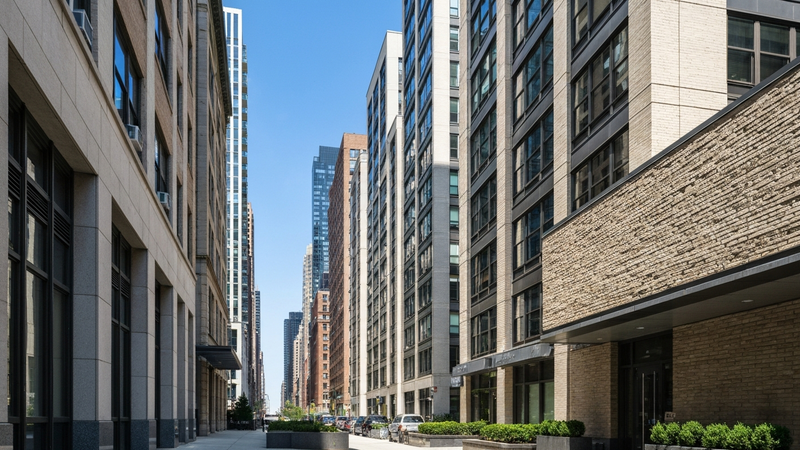
Across the 2,970 buildings in the city's 2023 dataset, the median operating expense is $12.30 per square foot per year. The middle half of buildings falls between $9.77 and $15.45 — a spread of roughly 58% from the 25th to the 75th percentile, which is why averages mislead as much as monthly figures do.
Translated to apartment sizes at the citywide median: a 700 square foot one-bedroom carries about $718 a month, a 1,000 square foot two-bedroom about $1,025, and a 2,000 square foot apartment about $2,050.
| Borough | Median per sq ft / yr | 1,000 sq ft monthly | Buildings |
|---|---|---|---|
| Manhattan | $15.52 | $1,293 | 1,154 |
| Brooklyn | $10.92 | $910 | 1,059 |
| Bronx | $10.49 | $874 | 142 |
| Queens | $9.98 | $832 | 602 |
| Citywide median | $12.30 | $1,025 | 2,970 |
NYC Department of Finance, Condominium Comparable Rental Income, report year 2023. Operating expense excludes property tax, which condo owners pay separately.
Manhattan runs about 56% above Queens on the same measure. Our NYC running cost guide carries the neighbourhood-level breakdown and the percentile ranges behind each of these medians.
2. What the Money Actually Pays For

The single largest driver of the rate is staffing. A full-service building with 24-hour doormen, a concierge, a resident manager and porters carries a payroll that a six-unit walk-up simply does not have, and payroll in New York buildings is largely governed by collective bargaining rather than by each board's preferences.
After staffing, the cost stack is insurance, heating fuel and electricity, elevator maintenance and inspection, water and sewer, repairs, and contributions to reserves. Amenity space is the multiplier that surprises buyers: a pool, gym, roof deck and residents' lounge all consume heat, insurance and cleaning whether or not any given owner uses them.
One line deserves separate attention. Reserve contributions are the item boards cut when they want the monthly figure to look attractive, and a thin reserve reappears later as a special assessment. A low charge in an old building with no reserve is not a saving.
Why the same building charges more each year
The citywide median has risen from $8.43 per square foot in 2013 to $12.30 in 2023 — roughly 3.9% a year compounded. Three forces drive most of it: building payroll under collective bargaining, insurance premiums that have risen faster than general inflation, and energy costs for heating and cooling older stock.
For a buyer this means modelling escalation rather than today's figure. An apartment carrying $1,025 a month now should be underwritten at meaningfully more within a decade even if the building is well run, and any purchase whose numbers only work at the current charge is a purchase with no margin.
How to read a charge against its building
Convert the monthly figure to an annual per-square-foot rate before comparing anything. Then place that rate against the borough median: a $14 rate in Queens is high, the same rate in Manhattan is below the 25th percentile, and neither judgment is possible from the monthly number alone.
Then ask what the building offers for it. Staffing level, elevator count, amenity space and age explain most legitimate variation. If a charge sits well above the borough median without the services to account for it, the answer is usually in the financials — an aging heating plant, an insurance claim history, or debt service on past work.
3. Condo Charges Versus Co-op Maintenance
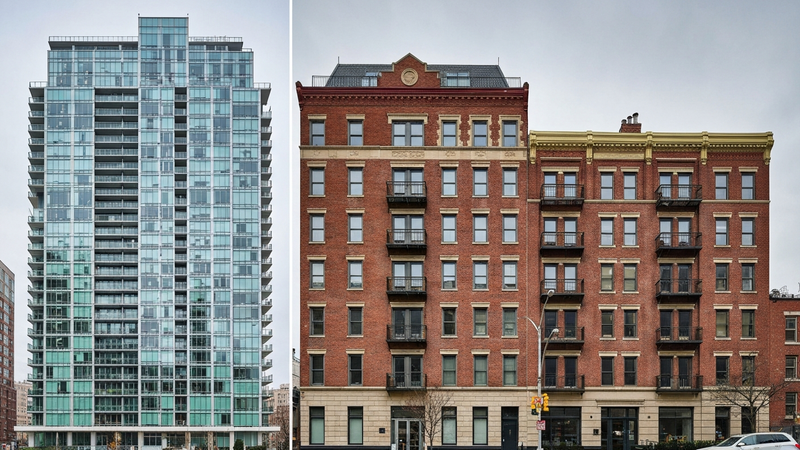
Comparing a condo's common charges to a co-op's maintenance is the most common error in New York apartment shopping, because the two numbers cover different things. A co-op's maintenance includes the building's property tax and often its underlying mortgage debt service; a condo's common charges include neither.
So a co-op quoting $2,200 a month may be cheaper in total than a condo quoting $1,300 plus a separate $900 tax bill. The only fair comparison is total monthly carrying cost — charges plus tax plus any assessment — measured per square foot.
Our condo versus co-op guide sets out the full structural comparison, and the NYC condo property tax article covers the tax side that condo buyers pay directly.
4. The Counterargument: Are Low Fees Good News?
Buyers routinely filter for low common charges, and the instinct is understandable — it is a monthly cost that never ends and never builds equity. On a $1 million apartment, a $400 monthly difference is $4,800 a year and materially changes the investment return.
The rebuttal is that the charge is a symptom, not the disease. A building with charges well below its neighbours is either genuinely efficient — no doorman, no amenities, modern systems — or it is deferring maintenance and underfunding reserves, in which case the saving is a loan you repay with interest through an assessment. New York's facade inspection cycle and elevator compliance requirements arrive on a schedule regardless of what a board has set aside.
The diligence answer is to read the financials rather than the listing. Reserve balance, recent assessment history, and the minutes of the last two years tell you whether a low charge is efficiency or a deferred bill — the checklist is in our building financials guide.
There is also a resale consequence worth weighing. Buildings with charges well above their neighbourhood carry a discount on price per square foot, because every future buyer runs the same monthly arithmetic you are running. A high charge is therefore paid twice: monthly while you hold, and again in the price when you sell.
Final Thoughts: Use the Rate, Verify the Building

For budgeting, $12.30 per square foot a year citywide and $15.52 in Manhattan are the numbers to work from — about $1,025 and $1,293 monthly at 1,000 square feet. For an actual purchase, those medians are only the sanity check. The building's own financials decide whether its charge is sustainable, and that is a document review, not a market statistic.
We review building financials and carrying costs as part of underwriting a purchase, with brokerage services provided through licensed professionals. If you are comparing specific apartments, talk to our team and we will check what the charges are actually funding.
Reinvent NY provides business consulting, operational support, and coordination services. Legal advice and immigration filings are handled by independent licensed attorneys. Real estate services are provided through licensed professionals and applicable brokerage relationships. This article is for informational purposes only and does not constitute legal or investment advice.

Satoshi Onodera
Founder & CEO, Reinvent NY Inc.
Founded Reinvent NY in 2019. Providing relocation support from all over the world to America.
Ready to Get Started?
Our team in New York is ready to help with your visa, real estate, or relocation needs.
Schedule a ConsultationFrequently Asked Questions
What is the average HOA fee in NYC?
New York condo operating expense runs a median $12.30 per square foot a year across 2,970 buildings — about $1,025 a month on a 1,000 square foot apartment. The middle half of buildings falls between $9.77 and $15.45 per square foot.
What are average HOA fees in Manhattan?
Manhattan's median is $15.52 per square foot a year, roughly $1,293 a month on 1,000 square feet. The middle half of Manhattan buildings runs $13.09 to $18.16, or about $1,091 to $1,513 monthly at that size.
Why can nobody quote one monthly HOA figure for NYC?
Because charges are billed per square foot. A $1,400 monthly charge is expensive on a 700 square foot studio and inexpensive on a 2,000 square foot loft. Only the per-square-foot rate is comparable between buildings.
Do common charges include property tax?
No. A condo owner pays property tax separately and directly. Common charges cover building operations — staff, heat, insurance, maintenance and reserves. A co-op's monthly maintenance does include the building's property tax, which is why co-op figures look higher.
Which borough has the lowest fees?
Queens, at a median $9.98 per square foot a year, with Brooklyn at $10.92 and the Bronx at $10.49. Manhattan runs about 56% above Queens on the same measure.
Have NYC common charges been rising?
Yes. The citywide median has moved from $8.43 per square foot in 2013 to $12.30 in 2023 — roughly 3.9% a year compounded, driven by staffing, insurance and energy costs.
What makes one building more expensive than another?
Staffing level is the largest single driver — a full-service building with doormen and a concierge costs multiples of a walk-up. Amenity space, building age, elevator count, heating plant type and insurance history account for most of the remainder.
Real Estate Guides & Data
More guides
- Micro-Units and Alcove Studios: Small-Space Buying
- Two-to-Four Family Buildings: The Underwriting
- Noise and Light Diligence: Testing What Photos Hide
- NYC vs the Suburbs: Where the Same Money Goes
- Buying a Penthouse: The Top Floor's Own Rules
- US Home Price History: Ten Years, Five Years, and Last Year
Related Articles
Common Charges NYC: A Condo Buyer's Guide
What NYC condo common charges cover, typical per-square-foot ranges in 2026, and the reserve-fund red flags that signal a special assessment is coming.
Condo vs Co-op in NYC: Costs, Rules & Which to Buy in 2026
Condos cost about 30% more but allow foreign buyers, subletting, and LLC ownership. Co-ops are cheaper with stricter boards. Which fits your 2026 plan?
NYC Property Tax on a Condo: How It Actually Works
How NYC property tax works for condo and co-op owners: the Class 2 rules, the 45% assessment ratio, real effective rates, and the 17.5% to 28.1% abatement.