Buying the Second US Property Without Selling
Owners who complete a first US purchase almost always ask the same question next: how do we fund the second one. Saving another deposit is the obvious answer and the slow one.
Owners who actually build US portfolios use the property they already hold as the source of the next deposit, and avoid crystallising tax when they trade up. Two mechanisms do most of the work, and a third consideration decides whether the structure survives the owner.
In this article, we set out how each works, the deadlines that make one of them fail, and why owners living outside the United States need to plan the succession separately.
1. Raising the Deposit Without a Sale
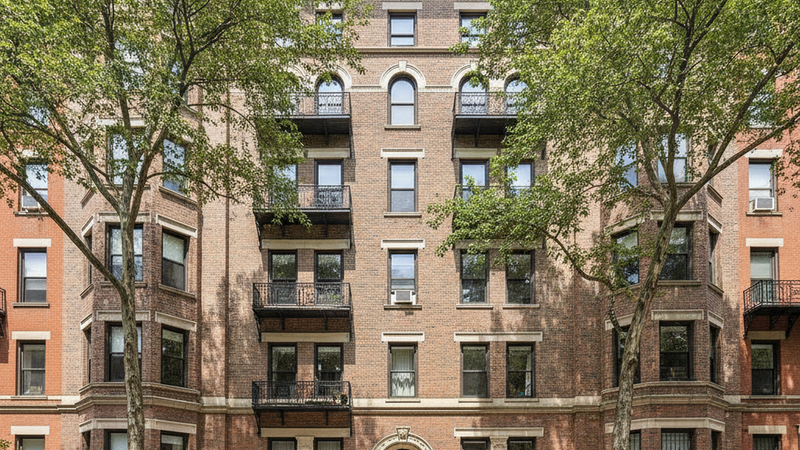
As a property appreciates and the loan amortises, the gap between the two — the equity — widens. A cash-out refinance converts part of that gap into cash without a sale.
Take a property bought at $1,000,000 that is now worth $1,300,000, with $600,000 of loan outstanding. A lender willing to advance 70% of value writes a new loan of $910,000; $600,000 retires the existing debt and $310,000 arrives as cash for the next deposit.
The point that makes this work is a tax point rather than a financing one: borrowed money is not income. A sale that produces $310,000 of gain is taxed; a loan that produces $310,000 of cash is not. Terms and eligibility for overseas owners are covered in our refinancing guide and in our article on the foreign national mortgage.
Three constraints shape what is actually available. Lenders apply tighter loan-to-value limits to non-resident borrowers than the headline 70%, they price investment property above owner-occupied, and they underwrite the new payment against the property's income rather than the equity on paper.
Costs also matter at the margin. A refinance carries appraisal, title and lender fees, and in New York the mortgage recording tax applies again on new debt — though a CEMA assignment can reduce it substantially, as our mortgage recording tax guide explains.
2. When You Do Sell, Exchange Instead

Sooner or later a property needs replacing — a management burden, a market that has run its course, a building that no longer fits the plan. Sold conventionally, the appreciation is taxed.
Federal long-term capital gains, the 3.8% net investment income tax, state tax where applicable, and depreciation recapture all land in the same year. A Section 1031 exchange defers that liability into the replacement property, so the whole of the proceeds keeps working.
| Selling outright | Exchanging under Section 1031 | |
|---|---|---|
| Tax on the gain | Payable in the year of sale | Deferred into the replacement |
| Capital available next | Proceeds after tax | Full proceeds |
| Deadlines | None | 45 days to identify, 180 days to close |
| Eligible property | Any | Investment property only, never a residence |
A general comparison. Whether an exchange is available in your circumstances is a question for a US CPA and a qualified intermediary.
As the comparison shows, the advantage is bought with rigidity. The 45-day and 180-day clocks start at closing and do not pause — an owner who has not shortlisted replacements before selling will struggle to meet them. Our 1031 exchange article covers the identification rules in detail.
Mechanically, the proceeds never touch the seller's hands. A qualified intermediary holds them between the sale and the purchase, and receiving the money directly disqualifies the exchange. That intermediary must be engaged before the sale closes, not afterwards.
A non-resident seller has one further step: FIRPTA withholding applies at closing, and the interaction with an exchange needs to be arranged in advance so the withheld amount does not break the reinvestment. Our FIRPTA guide covers when a withholding certificate can reduce it.
3. A Home Follows Different Rules

The rule most often confused with Section 1031 is Section 121, the principal residence exclusion. It excludes a set amount of gain on the sale of a home the owner lived in for at least two of the previous five years.
The two do not overlap. Section 1031 applies to investment property, defers rather than forgives, and requires a replacement purchase. Section 121 applies to a residence, excludes gain outright, and requires nothing to be bought. Which is available is determined by how the property was actually used.
Converting a property acquired through an exchange into a residence later is possible but conditioned on holding periods and use, and it is not a plan to improvise. Design it with a CPA before the first transaction, not after. Our guide to holding structures covers how ownership form interacts with these choices.
4. How Long Deferral Lasts, and What It Does Not Solve

Exchange repeatedly and the income tax keeps moving forward. The natural question is where it stops. Under US rules, an heir's basis in inherited property is generally adjusted to fair market value at death, so the deferred income tax on that appreciation is not inherited with the asset.
That is the structure behind the American shorthand of never selling, only exchanging. For an owner living outside the United States, it is only half the picture. US estate tax applies to US-situs assets held by non-residents, and the exemption available to them is very small — the exposure is set out in our article on the $60,000 estate tax trap.
A Japanese-resident owner may also face Japanese inheritance tax on the same asset. Deferring income tax perfectly while ignoring succession simply relocates the bill. The two must be designed as separate problems, which our US estate tax planning guide addresses. For financing the second purchase itself, income-qualified lending is often the practical route — see our DSCR loans guide.
Depreciation recapture deserves a specific mention here, because it is the part owners forget. Every year of depreciation reduces basis, and on a taxable sale that reduction is recovered at its own rate before ordinary capital gains treatment applies. Exchanging defers it along with the rest; selling does not.
5. Final Thoughts

However, some argue that layering debt to buy again is simply leverage dressed up in tax language, and that a paid-off building beats a larger encumbered one. In a rising rate environment or a thin rental market, that caution is well placed — refinancing raises the payment, and a portfolio that only works at low rates is fragile.
The answer is that the two mechanisms are not a licence to over-borrow but a way to avoid paying tax before it is due. Each refinance should still clear its own debt service at today's rates, and each exchange should be into a property that stands on its own merits.
The practical sequence is straightforward: build equity, borrow against it rather than selling, exchange when you trade up, and plan succession as a separate exercise. Tell us how many properties you intend to hold and we will work backwards — the answer changes how the first one should be bought.
Reinvent NY provides business consulting, operational support, and coordination services. Legal advice and immigration filings are handled by independent licensed attorneys. Real estate services are provided through licensed professionals and applicable brokerage relationships. This article is for informational purposes only and does not constitute legal or investment advice.
More on investing: How to Buy Investment Property 2026, Real Estate Crowdfunding USA, REIT Investment for Foreigners 2026.

Satoshi Onodera
Founder & CEO, Reinvent NY Inc.
Founded Reinvent NY in 2019. Providing relocation support from all over the world to America.
Ready to Get Started?
Our team in New York is ready to help with your visa, real estate, or relocation needs.
Schedule a ConsultationFrequently Asked Questions
Is cash from a cash-out refinance taxable?
Borrowed funds are not income, so the proceeds are not taxed at the time of the refinance. The loan must still be serviced, and the interest deduction depends on how the funds are used. Confirm the treatment for your circumstances with a US CPA.
How much equity can I take out of a US rental property?
Lenders commonly advance up to around 70% of appraised value on an investment property, with terms tighter for non-resident borrowers. On a property worth $1,300,000 with $600,000 outstanding, that implies roughly $310,000 of proceeds before costs.
What are the 45-day and 180-day rules in a 1031 exchange?
Replacement property must be identified in writing within 45 days of the sale closing, and the acquisition completed within 180 days. Both clocks run from the same date and do not pause, which is why candidates should be shortlisted before selling.
Can I use a 1031 exchange on my own home?
No. Section 1031 applies to property held for investment or business use. A principal residence falls under Section 121, which excludes a set amount of gain provided the owner lived there for at least two of the previous five years.
Does a 1031 exchange eliminate the tax or only postpone it?
It defers. The gain carries into the replacement property's basis and surfaces on a later taxable sale. Owners who keep exchanging can postpone indefinitely, but the liability remains attached to the asset until then.
Does deferring income tax also solve estate tax?
No. They are separate systems. US estate tax applies to US-situs assets held by non-residents, and the exemption available to them is very small. An owner resident in Japan may also face Japanese inheritance tax on the same property.
How do lenders assess a second property for an overseas owner?
Many use DSCR lending, which qualifies the loan on the property's rental income rather than the borrower's personal income — useful where earnings sit outside the United States. Expect a larger deposit and a higher rate than an owner-occupier would see.
Should I pay down the first property before buying a second?
It depends on whether each loan clears its own debt service at current rates. Equity is what funds the next purchase, so paying down quickly and borrowing against it later are two routes to the same place. Model both before committing.
Real Estate Guides & Data
More guides
- Sending Money to the US for a Property Purchase
- NYC Tax Abatements: What Happens When They Expire
- Buying a NYC Townhouse: One Building, All Yours
- US Property Tax for Overseas Owners: Why Averages Mislead
- US Property Ownership Myths: What Buying Does Not Do
- 1031 Exchange: Deferring Gain on US Investment Property
Related Articles
200 Amsterdam: The Tallest Tower on the Upper West Side
200 Amsterdam is the tallest building on the Upper West Side and survived a court challenge to its height. Recorded sales since 2023 and the median price.
Throggs Neck Bronx Real Estate Guide 2026
An authoritative 2026 guide to Throggs Neck, Bronx: housing stock, prices, rents, transit, and schools for international buyers and renters.
Pelham Bay Bronx Real Estate Guide 2026
An overseas buyer's guide to Pelham Bay, Bronx: housing stock, prices, rents, transit, and schools, from Reinvent NY's local advisory team.
Skyline Tower: The Tallest Building in Queens
Skyline Tower is the tallest building in Queens, minutes from Midtown by subway. See the sales the city has recorded there since 2023 and the median price.