Hell's Kitchen Real Estate Guide 2026
What Hell's Kitchen Actually Is
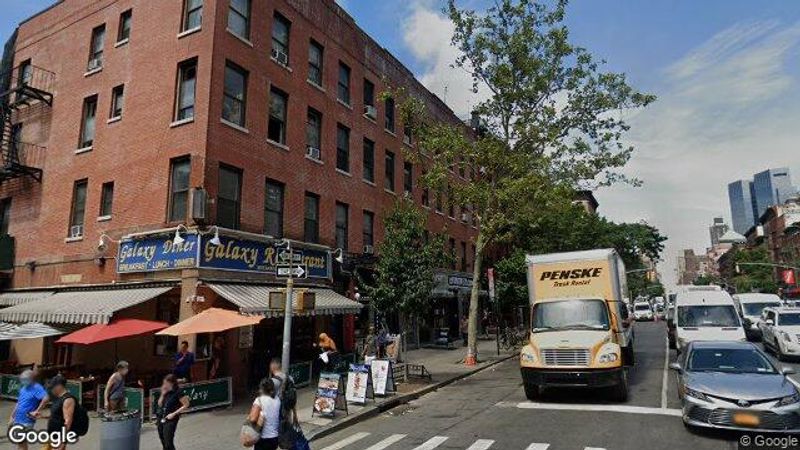
Hell's Kitchen sits on Manhattan's West Side, generally bounded by 8th Avenue to the east, the Hudson River to the west, 34th Street to the south, and 59th Street to the north. Some brokers now market the southern blocks as Hudson Yards, but longtime residents still call the core district by its original name. Our team in New York treats these as one continuous market for pricing purposes.
The neighborhood's character was shaped by Irish and Puerto Rican working-class communities, rail yards, and tenement housing built for dockworkers and rail employees in the late 1800s. What was once considered rough is now one of Manhattan's more dynamic mixed-use corridors, anchored by Restaurant Row on 46th Street, the theater district's western edge, and the Hudson River Park waterfront.
Rezoning in the 2000s, followed by the Hudson Yards development, accelerated a wave of high-rise construction along 9th, 10th, and 11th Avenues. Today the area blends pre-war walk-ups, mid-century rentals, and glass towers within a few blocks of each other. Our team in New York finds this contrast is precisely what draws international buyers seeking both texture and modern inventory.
The Housing Stock
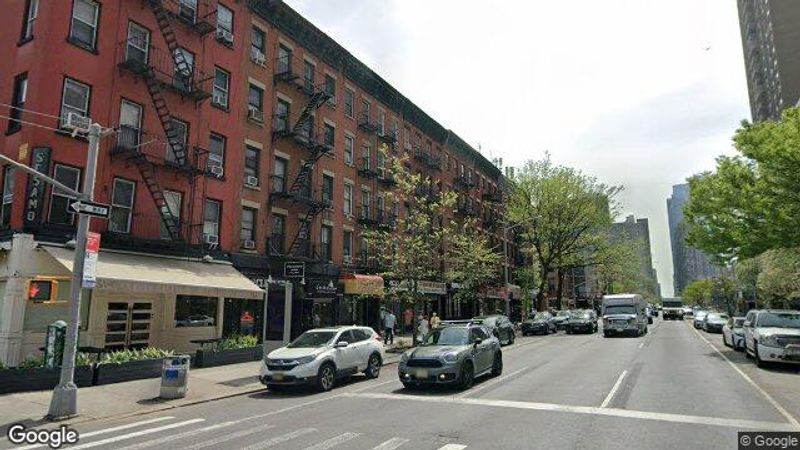
Hell's Kitchen's housing spans pre-war tenements from the 1900s–1920s, many walk-ups on 44th through 56th Streets, alongside postwar rental blocks and contemporary condominium towers. Original tenement buildings typically offer studios and one-bedrooms with limited amenities, while conversions have modernized kitchens and baths without altering the narrow footprints characteristic of the era.
Notable developments include MiMA at 460 West 42nd Street, designed by Costas Kondylis, offering full-service condo living with hotel-style amenities, and The Orion at 350 West 42nd Street, a large-scale condo tower from the mid-2000s boom. Silver Towers, designed by Cesar Pelli near 11th Avenue, and 555TEN on West 42nd Street represent newer glass construction favored by overseas buyers seeking doorman service and river views.
Renters gravitate toward mid-rise elevator buildings on 9th and 10th Avenues, many built in the 1960s–1980s, offering one- and two-bedroom layouts with modest amenities. Co-ops are less common here than on the Upper West Side, meaning purchase transactions skew heavily toward condominiums, which simplifies board approval for international buyers working through our licensed brokerage network.
Prices and Rents
Pricing in Hell's Kitchen sits below comparable Midtown West and Chelsea inventory, offering relative value for buyers wanting proximity to Midtown and the theater district. As of early 2026, condo resale prices per square foot generally range from $1,300 to $1,900, with new-development towers commanding premiums above that band. All figures below are approximate and subject to market conditions.
Rental demand remains strong given the neighborhood's walkability to Midtown offices and the theater district, keeping vacancy low. Studios and convertible one-bedrooms in pre-war walk-ups rent at a discount to full-service towers, while amenity-rich buildings like MiMA command a consistent premium. Our team in New York advises clients to weigh maintenance and common charges carefully against comparable Chelsea or Midtown East pricing.
| Unit Type | Purchase Price (Approx.) | Monthly Rent (Approx.) | Common Charges/Maint. (Approx.) |
|---|---|---|---|
| Studio, pre-war walk-up | $450,000–$650,000 | $2,600–$3,300 | $500–$800 |
| 1-Bedroom, mid-rise elevator | $700,000–$950,000 | $3,400–$4,300 | $700–$1,100 |
| 2-Bedroom, full-service condo | $1.4M–$2.1M | $5,500–$7,500 | $1,400–$2,200 |
| 3-Bedroom, new development tower | $2.5M–$4.2M | $8,500–$12,000 | $2,500–$3,800 |
| Penthouse/river-view unit | $4.5M and up | $14,000 and up | $3,500 and up |
Approximate Hell's Kitchen Prices and Rents, Early 2026
Compared with the Upper West Side or Chelsea, Hell's Kitchen offers roughly 10–20% savings per square foot for similar building quality, though inventory in true luxury towers is thinner. Buyers targeting new construction with river views should expect pricing closer to Chelsea's high end, while pre-war stock remains the market's most accessible entry point.
Daily Life and Transit
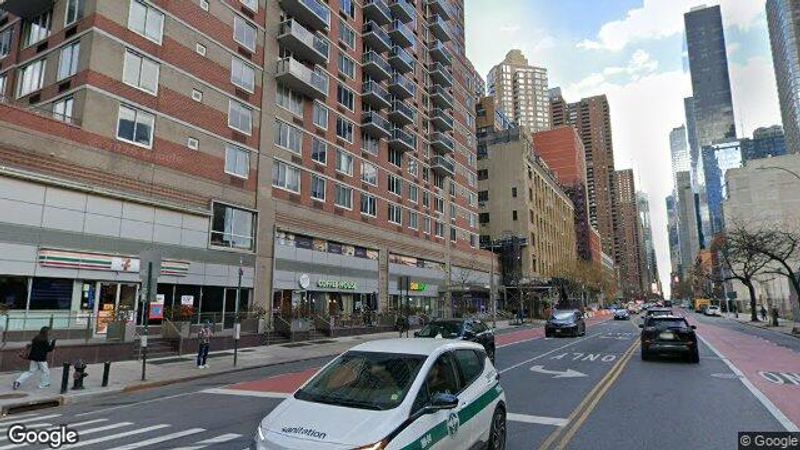
Hell's Kitchen is served by the A, C, E trains along 8th Avenue, the 1, 2, 3 at 7th Avenue and Times Square, and the N, Q, R, W, S shuttle at 42nd Street, giving residents fast access to Midtown, Downtown, and Queens. Crosstown buses on 42nd and 34th Streets connect to the East Side and the 7 train extension at Hudson Yards.
Daily errands are covered by Gristedes, Westside Market, and Trader Joe's-style options nearby, plus the year-round Hell's Kitchen Flea Market on 39th Street on weekends. Families use Clinton Park and DeWitt Clinton Park for green space, while the Hudson River Greenway offers running and cycling paths. Public school zoning includes P.S. 51 and P.S. 111, both serving neighborhood families.
| Destination | Subway Line(s) | Approx. Commute Time | Notes |
|---|---|---|---|
| Times Square | 1, 2, 3, N, Q, R, W | 5–10 minutes | Walkable from most blocks |
| Grand Central | S Shuttle, 7 | 12–18 minutes | Via 42nd Street shuttle |
| Wall Street/FiDi | A, C, E to 2, 3 | 30–35 minutes | One transfer typical |
| Hudson Yards/West Side | 7, A, C, E | 5–15 minutes | Extension opened 2015 |
| JFK Airport | A train to AirTrain | 60–75 minutes | Direct A train access |
Typical Commute Times from Hell's Kitchen (Approx.)
The neighborhood's density of theaters, restaurants along Restaurant Row (46th Street), and proximity to Central Park's southwest corner make it highly walkable. Noise and nightlife are noticeable factors near 9th Avenue's restaurant strip, something our team in New York flags for buyers prioritizing quiet over convenience.
Final Thoughts
Hell's Kitchen suits buyers and renters who value Midtown proximity, walkability, and access to transit hubs over quiet residential calm. International clients drawn to theater, dining, and river views find strong rental demand here, supporting investment strategies focused on steady occupancy rather than rapid appreciation.
It is less suited to those seeking the townhouse quiet of the West Village or the classic prewar co-op culture of the Upper West Side. Families prioritizing top-tier public schools or large private outdoor space may find better fits elsewhere in Manhattan, though newer towers do offer child-friendly amenities.
For buyers comfortable with condo ownership, urban density, and a mixed-use streetscape, Hell's Kitchen offers relative value against neighboring districts. Our team in New York regularly connects international clients with our licensed brokerage network to evaluate specific buildings against these priorities before committing capital.
Reinvent NY provides business consulting, operational support, and coordination services. Real estate services are provided through licensed professionals and applicable brokerage relationships. This article is for informational purposes only and does not constitute legal or investment advice.
Nearby neighbourhoods: Hudson Yards, Inwood, Kips Bay. All Manhattan guides are indexed under New York neighbourhood guides.

Satoshi Onodera
Founder & CEO, Reinvent NY Inc.
Founded Reinvent NY in 2024. Providing relocation support from all over the world to America.
Ready to Get Started?
Our team in New York is ready to help with your visa, real estate, or relocation needs.
Schedule a ConsultationFrequently Asked Questions
What are the exact boundaries of Hell's Kitchen?
Hell's Kitchen runs roughly from 8th Avenue west to the Hudson River, and from 34th Street north to 59th Street. Some listings label the southern portion near 34th to 41st Streets as Hudson Yards instead.
Is Hell's Kitchen mostly condos or co-ops?
Condominiums dominate the purchase market, particularly in newer towers. Co-ops exist in older buildings but are far less common than on the Upper West Side or Upper East Side.
How does pricing compare to Chelsea?
Hell's Kitchen typically runs 10–20% below comparable Chelsea inventory per square foot, though top new-development towers with river views can approach Chelsea's higher pricing tiers.
What subway lines serve the neighborhood?
The A, C, E trains run along 8th Avenue, the 1, 2, 3 serve 7th Avenue, and the N, Q, R, W plus shuttle connect at 42nd Street. The 7 train extension serves Hudson Yards.
Are there good schools in Hell's Kitchen?
P.S. 51 and P.S. 111 serve the zoned public school population. Families seeking additional options often consider private schools in nearby Midtown or Chelsea.
Is Hell's Kitchen noisy?
Blocks near 9th Avenue's restaurant corridor and the theater district can be lively at night. Quieter pockets exist closer to the Hudson River and on higher floors of full-service towers.
What kind of rental demand exists here?
Rental demand is consistently strong due to Midtown office proximity and theater district access, keeping vacancy rates low across studio, one-bedroom, and two-bedroom inventory.
Real Estate Guides & Data
More guides
- Buying Short Sales: Discounts on the Lender's Clock
- Tax Treaties and US Property: Avoiding Double Taxation
- Trusts and US Property: The Structures Behind the Names
- US Real Estate Investing: Yields, Taxes and How to Buy
- Walk-Up vs Doorman Buildings: The Service Premium
- 1031 Exchanging Into NYC: Trading Up to Manhattan
Related Articles
Upper East Side NYC Real Estate Guide 2026
Our 2026 guide to Upper East Side Manhattan real estate covers buildings, prices, rents, transit, and schools for international buyers and renters.
Hudson Yards NYC Real Estate Guide 2026
Our 2026 guide to buying and renting in Hudson Yards, Manhattan: buildings, prices, transit, and who this neighborhood really suits.
Midtown West Manhattan Real Estate Guide 2026
Our 2026 guide to Midtown West: buildings, prices, rents, transit and daily life for international buyers considering Manhattan's Theater District corridor.
Midtown East Manhattan Real Estate Guide 2026
Our 2026 guide to Midtown East real estate covers buildings, prices, rents, and daily life for international buyers and renters considering Manhattan.