Chelsea Mercantile: 252 Seventh Avenue Loft Condo
The Chelsea Mercantile at 252 Seventh Avenue is a pre-war loft building that Rockrose Development converted in 2000 into a full-service condominium of about 350 homes, filling the Seventh Avenue blockfront between West 24th and West 25th Streets.
It began as the home of a mail-order clothing company and later served as a Veterans Administration building. Here is what the building is and what buying there involves.
1. What the Building Is
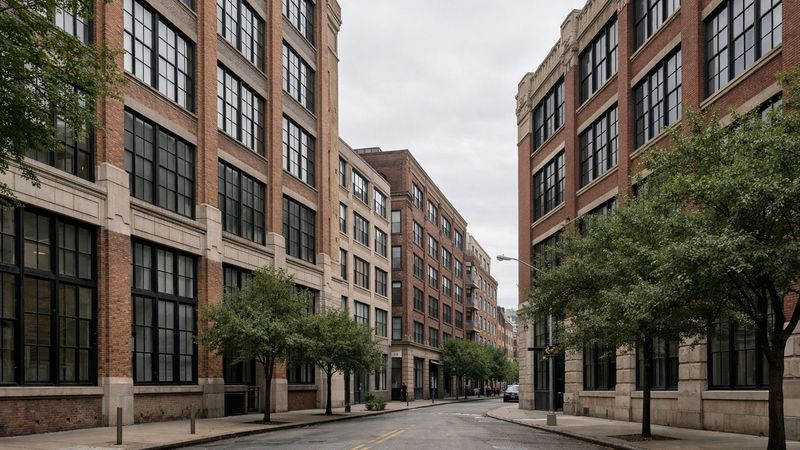
The Chelsea Mercantile stands on Seventh Avenue between West 24th and West 25th Streets. It joins four early 1900s buildings that once housed the National Cloak and Suit Company, a mail-order clothing house, and the complex later served as a Veterans Administration building.
Rockrose Development converted it to residential use in 2000, with Avinash K. Malhotra and Gruzen Samton as architects. City records give 1910 as the year built and 19 floors, while sources differ on the original construction date, which listings place between 1906 and 1910.
| Attribute | Detail |
|---|---|
| Address | 252 Seventh Avenue, Chelsea; Seventh Avenue between West 24th and West 25th Streets |
| Built | Early 1900s (1910 on city records); converted to condominiums in 2000 |
| Original use | National Cloak and Suit Company, later a Veterans Administration building |
| Developer | Rockrose Development |
| Architects | Avinash K. Malhotra; Gruzen Samton |
| Height | 19 floors on city records |
| Residences | 351 residential condominium units on the city tax roll, plus five commercial units |
| Ownership | Condominium; not within a designated historic district |
Building facts. Unit-level figures such as size, monthly charges and tax must be obtained for each apartment.
The city's tax roll lists 351 residential condominium units and five commercial units, all under 252 Seventh Avenue. The building is not in a designated historic district, and Rockrose kept the ground-floor retail space, which was leased in 2007 to Whole Foods Market and a parking operator.
The location is on Google Maps.
2. A Loft Conversion From 2000
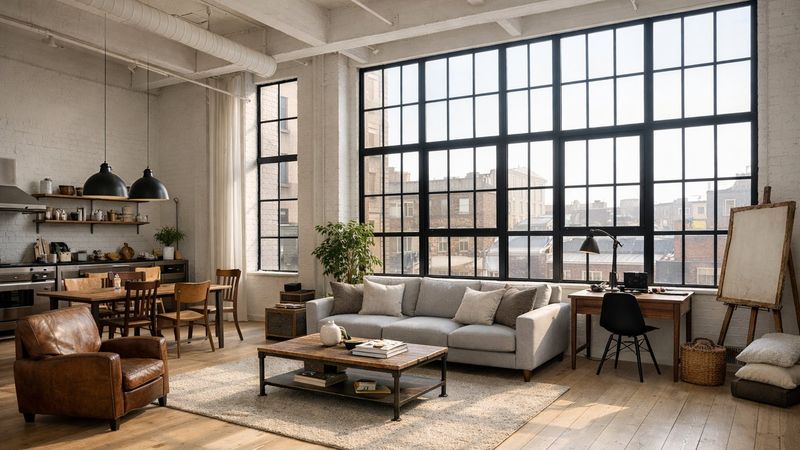
The appeal of the Mercantile is its pre-war loft structure, inherited from buildings designed for a commercial business rather than for apartments. Layouts vary widely across four joined buildings, so two apartments on the same floor can feel very different.
A conversion from 2000 is now more than 25 years old. Kitchens, bathrooms and building systems installed at conversion may have been replaced in some apartments and not others. Ask for the renovation history of a specific apartment and for the managing agent's capital plan for the building as a whole.
Older commercial buildings also carry facade obligations. New York requires owners of buildings taller than six storeys to have the exterior walls inspected every five years and to file a report with the Department of Buildings, so ask when the last inspection was filed and whether any repair work or sidewalk sheds are planned.
Ask which exposure a given apartment has, because avenue-facing and side-street lines differ in light and noise.
3. Amenities and the Neighbourhood
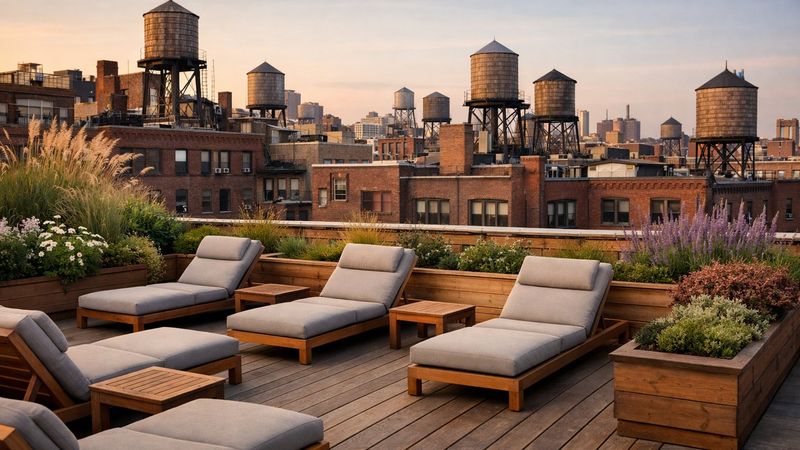
Amenities include a concierge and full-time doorman, a health club, a children's playroom, a garden, a roof deck, basement storage, valet and maid services and a garage. With about 350 homes, the cost of staff and shared spaces is spread across many owners.
The 1 train stops at 23rd Street and Seventh Avenue, a block south, and Chelsea Piers on the Hudson River is within walking distance to the west.
The tax lot is not flagged within FEMA's mapped floodplain on either the 2007 flood map or the 2015 preliminary map, according to city planning data, which is one less question than for waterfront buildings downtown.
Read the operating budget alongside the amenity list, because every staffed service is a shared cost.
4. Buying Here as an Overseas Purchaser
Because the Chelsea Mercantile is a condominium, there is no co-op board approval, and foreign buyers can purchase. Most condominiums keep a right of first refusal on resales, so ask how long the board takes to waive it and what documents it requires.
At closing the buyer pays New York's mansion tax on residential purchases of $1 million or more, charged on the whole price at graduated rates from 1% between $1 million and $2 million up to 3.9% at $25 million and above. On a later sale by a foreign owner, FIRPTA withholding of 15% of the gross price applies unless an IRS withholding certificate reduces it.
A non-resident who is not a US citizen has only a $60,000 US estate tax exemption on US-situs assets, so settle whether to hold personally, through an entity or through a trust with tax counsel before contract. Lenders for foreign nationals expect larger deposits and fuller documentation, so start that conversation early.
Settle structure and financing first, then make the offer.
Recorded Sales: What the Public Record Shows
NYC's Department of Finance records every sale with its address and price. Between January 2023 and October 2026 it recorded 53 sales of apartments at The Chelsea Mercantile, at a median price of $2.55 million. Half of them closed between $2.08 million and $3.55 million; the highest was $7.35 million.
| Year | Sales | Median price | Highest price |
|---|---|---|---|
| 2023 | 10 | $3.17 million | $7.1 million |
| 2024 | 11 | $2.55 million | $5.55 million |
| 2025 | 18 | $2.43 million | $7.35 million |
| 2026 (Jan–Oct) | 14 | $2.48 million | $4.25 million |
Recorded sales of residential units at The Chelsea Mercantile, by sale date. Source: NYC Department of Finance annualized sales 2023–2025 and rolling sales to October 2026. Sales under $100,000 and multi-unit bulk transfers are excluded; a combined purchase of two units counts once.
A median across a whole building mixes small and large apartments, low floors and high ones, so it describes the building rather than any one residence. Use it to see how often apartments here change hands and where the building's prices sit. Price a specific apartment from recorded sales on the same line and floor range, which can be pulled from the deed records before you make an offer.
These are recorded deed prices, not asking prices, and none of them is a Reinvent NY transaction. A sale appears in the record weeks after closing, and a deed price can include a parking space or storage unit bought at the same time.
Final Thoughts: Pre-War Bones, Condominium Rules
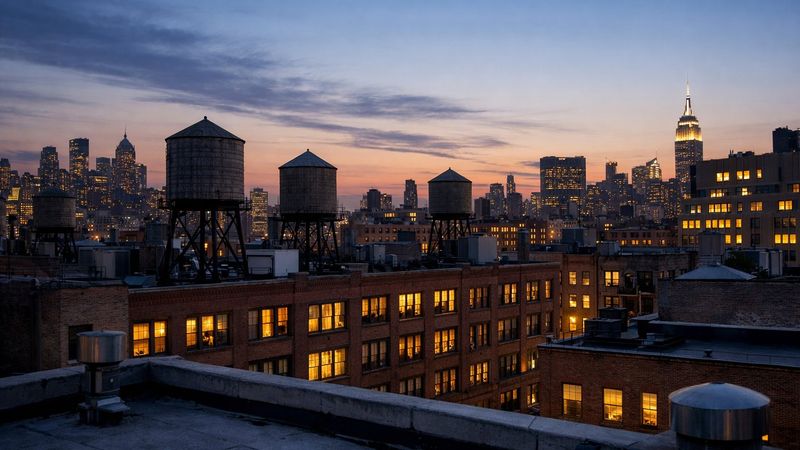
The Chelsea Mercantile combines the proportions of a pre-war loft with the flexibility of a condominium, in a central Chelsea location a block from the 1 train. That mix is uncommon at this scale.
The trade-offs come from age and size. A conversion of four older buildings needs a clear capital plan for facades, elevators and systems, and apartments vary widely in layout and renovation level.
Price a specific apartment from recorded sales on the same line and floor range rather than from a building-wide average, because layouts and condition vary. Then read the financial statements, the capital plan and the board minutes before committing.
Request the latest financials and board minutes before you schedule a viewing.
Figures here describe the building, not any one apartment. Asking prices, monthly carrying costs, tax abatement status and sublet rules are established unit by unit from the offering plan, the most recent financial statement and the managing agent.
Reinvent NY Inc. provides real estate and business expansion consulting in New York. This article is for informational purposes only and does not constitute legal, tax or investment advice.
Neighbourhood guide: Chelsea.
More buildings worth knowing: 100 Eleventh Avenue, 111 West 57th Street, 130 William. The full set is indexed under New York building profiles.

Satoshi Onodera
Founder & CEO, Reinvent NY Inc.
Founded Reinvent NY in 2019. Providing relocation support from all over the world to America.
Buying, renting or expanding to New York?
Our New York team helps international buyers, renters and companies with property and US business expansion.
Talk to our teamFrequently Asked Questions
Where is the Chelsea Mercantile?
At 252 Seventh Avenue in Chelsea, on the Seventh Avenue blockfront between West 24th and West 25th Streets. The location is on [Google Maps](https://maps.google.com/?q=252+Seventh+Avenue+New+York).
What was the Chelsea Mercantile originally?
Its four early 1900s buildings housed the National Cloak and Suit Company, a mail-order clothing house, and later a Veterans Administration building. Rockrose Development converted them to condominiums in 2000.
Who designed the Chelsea Mercantile conversion?
Avinash K. Malhotra and Gruzen Samton were the architects for Rockrose Development's 2000 conversion.
How many residences are in the Chelsea Mercantile?
The city's tax roll lists 351 residential condominium units and five commercial units. City records give the building 19 floors.
What amenities does the Chelsea Mercantile have?
A concierge and full-time doorman, a health club, a children's playroom, a garden, a roof deck, basement storage, valet and maid services and a garage.
Can foreign buyers purchase at the Chelsea Mercantile?
Yes. It is a condominium, so there is no co-op board approval. Plan for the mansion tax at purchase, FIRPTA withholding on a later sale and US estate tax exposure, and set the ownership structure with tax counsel before contract.
What have apartments at The Chelsea Mercantile sold for recently?
NYC Department of Finance records show 53 sales at The Chelsea Mercantile between January 2023 and October 2026, at a median recorded price of $2.55 million, with half between $2.08 million and $3.55 million. A building-wide median mixes very different apartments, so price a specific unit from recorded sales on the same line and floor range.
Real Estate Guides & Data
More guides
- Open Houses: The Buyer's Working Visit
- Donating US Property: Charitable Structures for Real Estate
- US Property Insurance: The Line That Breaks a Rental Model
- Reading Building Financials: The Numbers Behind the Lobby
- Rent Stabilization for Buyers: What Regulation Means
- Schools and School Zoning in New York
Related Articles
Flatiron House: COOKFOX Condo at 39 West 23rd Street
Flatiron House at 39 West 23rd Street, COOKFOX's 44-residence condo in the Ladies' Mile Historic District: garden design, amenities and overseas buyer notes.
30 Lincoln Plaza: A Converted Condo Tower by Lincoln Center
30 Lincoln Plaza at 30 West 63rd Street: a 33-storey Milstein tower by Philip Birnbaum, converted to condominiums, and what buying there involves.
One United Nations Park: Richard Meier's 685 First Avenue
One United Nations Park at 685 First Avenue: Richard Meier's 42-storey black glass tower in Murray Hill, its 148 condominiums, and what buying there involves.
200 Chambers Street: Tribeca Condominium Tower
200 Chambers Street in Tribeca: a 29-storey Costas Kondylis condo by Jack Resnick & Sons with about 250 homes, a pool and a garage, and what buying involves.