101 Central Park West: A Full-Block Prewar Co-op
101 Central Park West is a neo-Renaissance cooperative that fills the entire blockfront between West 70th and West 71st Streets, designed by Schwartz & Gross and built in 1929 and 1930.
It has been a co-op since 1953, and that ownership form decides more about buying here than the park view does. Here is what buying there involves.
1. What the Building Is
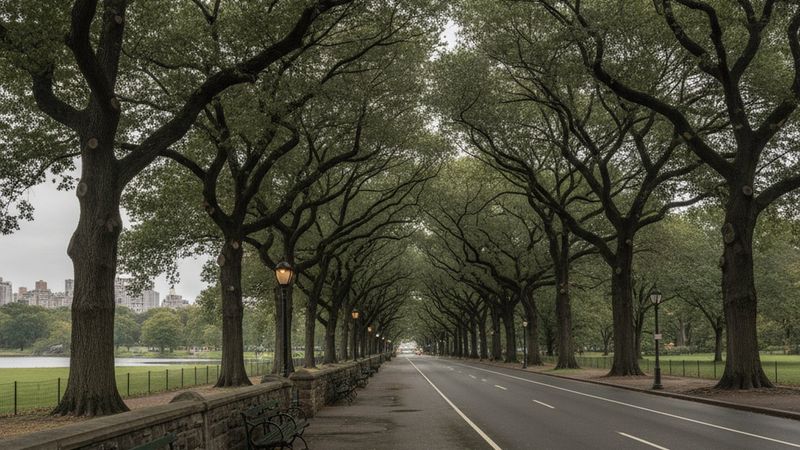
101 Central Park West occupies the full western blockfront of Central Park West between West 70th and West 71st Streets, with side addresses at 1-7 West 70th Street and 2-4 West 71st Street. Schwartz & Gross designed it, and it was built in 1929 and 1930 as a 17-storey steel-frame apartment house.
The facades are brick, stone and terracotta in the neo-Renaissance style, rising from a limestone base, with six-over-one wood windows in the original design. The Majestic, an Art Deco landmark built in 1930 and 1931, stands directly to the north across West 71st Street. The full-block site gives apartments exposures over the park and over the side streets.
| Attribute | Detail |
|---|---|
| Address | 101 Central Park West (also 1-7 West 70th Street and 2-4 West 71st Street), the full block from West 70th to West 71st Street |
| Built | 1929 to 1930 |
| Architect | Schwartz & Gross (Simon I. Schwartz and Arthur Gross) |
| Style and facade | Neo-Renaissance; brick, stone and terracotta |
| Height | 17 storeys in the Landmarks Preservation Commission record |
| Apartments | 104 cooperative apartments on the city tax roll |
| Ownership | Cooperative since 1953 |
| Landmark status | Upper West Side/Central Park West Historic District (1990); contributing building, Central Park West Historic District (National Register, 1982) |
Building facts. Unit-level figures such as size and maintenance must be obtained for each apartment, and cooperative policies must be confirmed with the board.
The building is a cooperative, converted in 1953, and the city's tax roll lists 104 cooperative apartments. It lies within the Upper West Side/Central Park West Historic District, designated by the city in 1990, and is a contributing building in the Central Park West Historic District on the National Register.
The location is on Google Maps.
2. A Schwartz & Gross Block on the Park
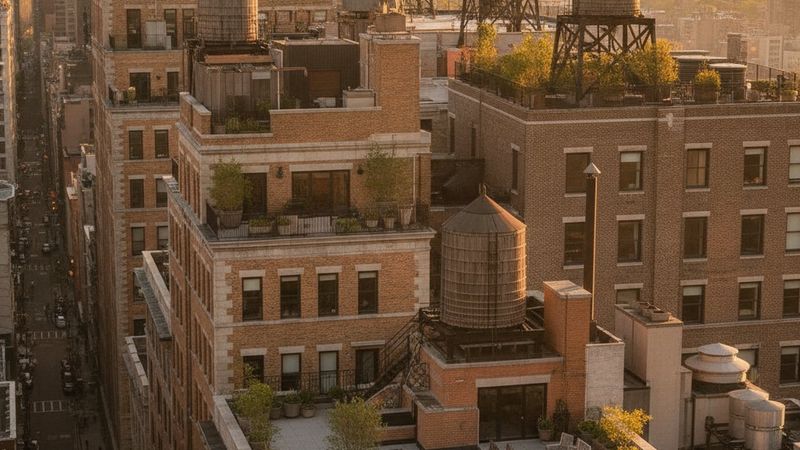
Simon I. Schwartz and Arthur Gross designed apartment houses across the Upper West Side, and the Landmarks Preservation Commission credits the firm with eight buildings on Central Park West alone, among them 55, 91 and 336. At 101 they built across an entire block, replacing two brick-fronted buildings of ten and twelve storeys.
The design is plainer than some of its neighbours on the avenue, with ornament gathered at the base, around the lower windows and on the upper floors, where tall stone pilasters mark the corners. Above them the building steps back, creating terraces for some apartments.
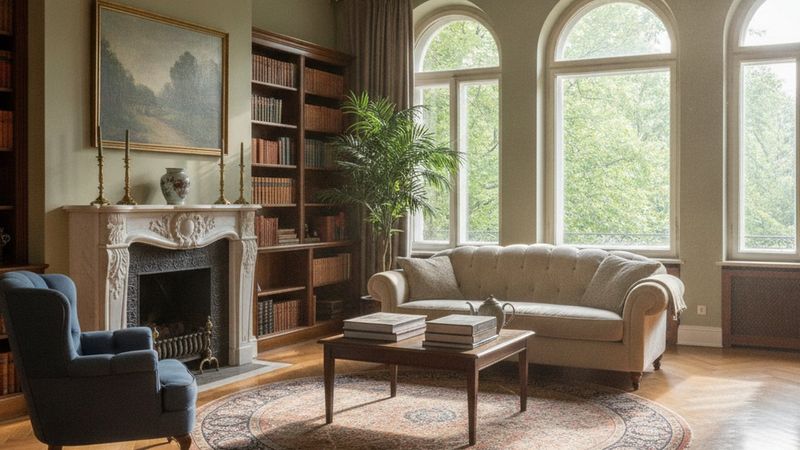
Prewar planning still shows in the apartments, with high ceilings and, in some, wood-burning fireplaces and staff rooms. Many apartments are combinations of original units and some are duplexes, so layouts vary widely from one line to the next.
Ask for the floor plan of the specific apartment as it exists today, including any combinations and the board approvals behind them.
3. Service, Amenities and Historic District Rules
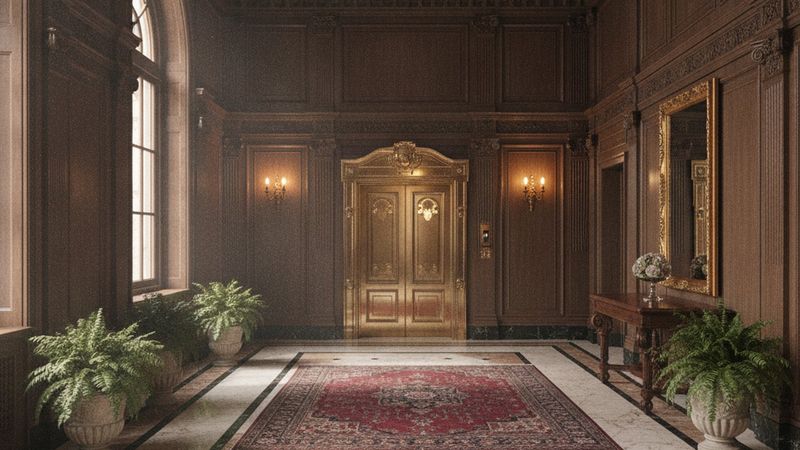
101 Central Park West is a full-service building, with full-time doormen, a concierge, a live-in superintendent and elevator operators. Residents have a fitness centre, a bike room and storage, and cats and dogs are permitted. There is also on-site laundry.
Central Park lies directly across the avenue, and the building is convenient to Lincoln Center and public transport. Its neighbours on the avenue include The Majestic to the north and other prewar apartment houses within the same historic district. For a household living in New York full time, that mix of park, culture and transit is the practical case for the address.
Because the building is in a historic district, work that affects the exterior, including window replacement, needs a Landmarks Preservation Commission permit. The co-op also sets its own alteration rules, usually through an alteration agreement that the board must approve.
Before buying with renovation in mind, ask the managing agent for the alteration agreement and the building's rules on when work may be done.
4. Buying Here as an Overseas Purchaser
Because 101 Central Park West is a cooperative, a buyer purchases shares in the corporation and receives a proprietary lease, and the board must approve every purchaser after a full financial package and an interview. A board may decline without giving a reason, so overseas purchasers face more conditions here than in a condominium.
Building profiles report that the board allows financing of up to 50% of the price and considers pied-à-terre purchases case by case, a position that has changed over time. Co-op boards also commonly limit purchases through entities or trusts and restrict subletting, so get each policy in writing.
The buyer pays New York's mansion tax from $1 million, on the whole price, at 1% between $1 million and $2 million, rising to 3.9% at $25 million and above. A foreign owner's later sale faces 15% FIRPTA withholding on the gross price unless an IRS certificate reduces it, and a non-citizen non-resident has only a $60,000 US estate tax exemption.
Ask your attorney for the board package checklist before you make an offer.
Recorded Sales: What the Public Record Shows
NYC's Department of Finance records every sale with its address and price. Between January 2023 and September 2026 it recorded 16 sales of co-op apartments at 101 Central Park West, at a median price of $6.8 million. Half of them closed between $4.41 million and $8.86 million; the highest was $11.7 million.
| Year | Sales | Median price | Highest price |
|---|---|---|---|
| 2023 | 3 | $9 million | $11.04 million |
| 2024 | 5 | $6.6 million | $8.93 million |
| 2025 | 5 | $5.8 million | $11.7 million |
| 2026 (Jan–Sep) | 3 | $7 million | $8.65 million |
Recorded sales of residential units at 101 Central Park West, by sale date. Source: NYC Department of Finance annualized sales 2023–2025 and rolling sales to September 2026. Sales under $100,000 and multi-unit bulk transfers are excluded; a combined purchase of two units counts once.
A median across a whole building mixes small and large apartments, low floors and high ones, so it describes the building rather than any one residence. Use it to see how often apartments here change hands and where the building's prices sit. Price a specific apartment from recorded sales on the same line and floor range, which can be pulled from the deed records before you make an offer.
These are recorded deed prices, not asking prices, and none of them is a Reinvent NY transaction. A sale appears in the record weeks after closing, and a deed price can include a parking space or storage unit bought at the same time.
Final Thoughts: A Park Block on Board Terms
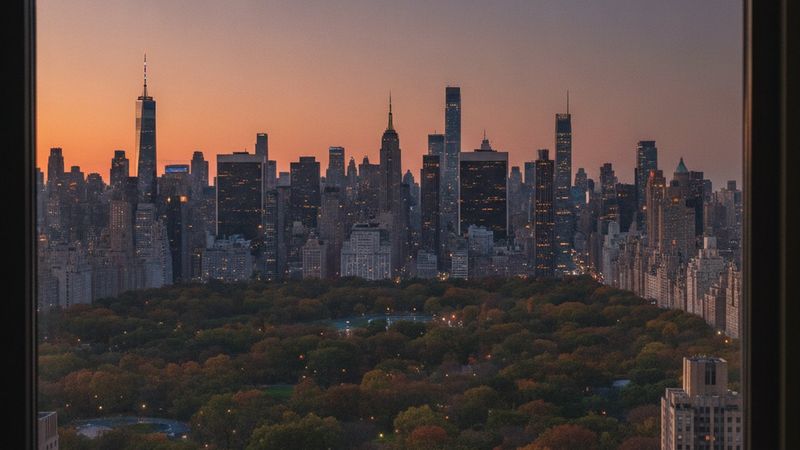
101 Central Park West offers a full block of park frontage, prewar construction and a staffed building inside a protected historic district. What it asks in return is acceptance of a cooperative's rules on financing, use and renovation, decided by a board rather than written into a deed.
Because the estate tax exemption for a non-resident is so small, settle the ownership structure with tax counsel before contract, bearing in mind that co-op boards often limit entity and trust ownership. Since July 2026 the city has also levied an annual pied-à-terre surcharge on high-value apartments that are no one's primary residence, and its administration is before the courts.
Read the co-op's latest financial statements, house rules and recent board minutes, and ask about the underlying mortgage and any planned assessments. Then price a specific apartment from recorded sales on the same line and floor range rather than a building-wide average. Park-facing, side-street and combined apartments differ widely, so a building median says little about one home.
Request the financial statements and house rules before you schedule a viewing.
Figures here describe the building, not any one apartment. Asking prices, monthly carrying costs, tax abatement status and sublet rules are established unit by unit from the offering plan, the most recent financial statement and the managing agent.
Reinvent NY Inc. provides real estate and business expansion consulting in New York. This article is for informational purposes only and does not constitute legal, tax or investment advice.
More buildings worth knowing: 100 Eleventh Avenue, 111 West 57th Street, 130 William. The full set is indexed under New York building profiles.

Satoshi Onodera
Founder & CEO, Reinvent NY Inc.
Founded Reinvent NY in 2019. Providing relocation support from all over the world to America.
Buying, renting or expanding to New York?
Our New York team helps international buyers, renters and companies with property and US business expansion.
Talk to our teamFrequently Asked Questions
Where is 101 Central Park West?
101 Central Park West fills the west side of Central Park West between West 70th and West 71st Streets on the Upper West Side, with side addresses at 1-7 West 70th Street and 2-4 West 71st Street. The location is on [Google Maps](https://maps.google.com/?q=101+Central+Park+West+New+York).
Who designed 101 Central Park West?
The architecture firm Schwartz & Gross, led by Simon I. Schwartz and Arthur Gross, designed the building, which was built in 1929 and 1930 in the neo-Renaissance style.
How many residences are in 101 Central Park West?
The city's tax roll lists 104 cooperative apartments. Published building profiles give lower figures and many apartments have been combined over the years, so confirm the current count with the managing agent.
Can foreign buyers purchase at 101 Central Park West?
Possibly, but on the board's terms. It is a cooperative, so every buyer needs board approval after a financial review and interview, the board may decline without giving a reason, and financing is limited, so overseas purchasers face more conditions than in a condominium.
Is 101 Central Park West a landmark?
It is not an individual landmark, but it lies within the Upper West Side/Central Park West Historic District, designated in 1990, so exterior work needs Landmarks Preservation Commission approval. It is also a contributing building in the Central Park West Historic District on the National Register.
When did 101 Central Park West become a co-op?
The building was converted to a cooperative in 1953, about two decades after it was completed in 1930.
What have apartments at 101 Central Park West sold for recently?
NYC Department of Finance records show 16 sales at 101 Central Park West between January 2023 and September 2026, at a median recorded price of $6.8 million, with half between $4.41 million and $8.86 million. A building-wide median mixes very different apartments, so price a specific unit from recorded sales on the same line and floor range.
Real Estate Guides & Data
More guides
- Commercial vs Residential: Two Investment Grammars
- Cost Segregation: Accelerating US Property Depreciation
- Divorce and NY Real Estate: Dividing the Apartment
- Exit Planning Five Years Out: Selling Starts Early
- Furnished and Corporate Rentals: The 30-Day-Plus Market
- How to Hold US Property: Personal, LLC or Corporation
Related Articles
US Real Estate Tax Strategies 2026: Keep More Yield
1031 exchanges, depreciation, entity choice, and estate tax exposure: the tax levers that decide what US real estate investors actually keep in 2026.
VA Loan Guide 2026: Zero Down & Fee Rules
Master VA loan eligibility, funding fees and occupancy rules for veterans. Secure zero down payments with our step-by-step application guide.
550 Park Avenue: A 1917 Carpenter Co-op at East 62nd Street
550 Park Avenue, J.E.R. Carpenter's 1917 cooperative at East 62nd Street: its history, historic district rules and what board approval means for foreign buyers.
378 West End Avenue: A 1915 Corner and a New Condo Tower
378 West End Avenue at West 78th Street: a restored 1915 Schwartz & Gross building and a new COOKFOX wing combined as one condominium, and what buying involves.