The Apartment Viewing Checklist Overseas Buyers Should Use
A buyer standing in an apartment absorbs a hundred things without listing them: the noise from the avenue, the smell in the corridor, how long the lift takes, whether the lobby feels maintained. A buyer on a video call gets none of it unless someone deliberately looks for it.
That gap is closable with a structured checklist and a person who works for you. Let's set out what to check, in the order a viewing should follow.
1. Before the Apartment: The Approach and the Building
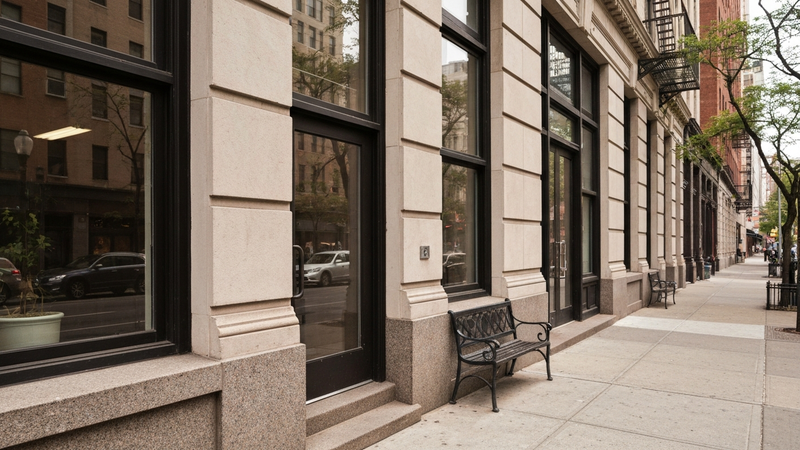
Half the value of a viewing happens before the front door. Ask the walkthrough to start at the nearest subway entrance and walk to the building in real time, so you see the actual route, its length and its condition rather than a map estimate.
Then the building itself: the entrance, the lobby, the mailroom, the corridor on the apartment's floor, the rubbish and recycling area, and the basement or service level if accessible. A well-run building looks well-run in the places nobody photographs.
| Check | What you are looking for |
|---|---|
| Walk from transit | Real distance, lighting, condition |
| Lobby and corridors | Maintenance standard, wear, cleanliness |
| Service areas and rubbish room | How the building is actually operated |
| Lift speed and condition | Age of systems, daily friction |
| Windows in the unit | Type, seal, operation, draught |
| Water pressure and drainage | Run every tap, flush every toilet |
| Ceiling and wall staining | Past or present water intrusion |
| Noise, windows open | Traffic, mechanical plant, neighbours |
Ask for each of these explicitly. An agent conducting a live walkthrough will do all of it if asked and none of it if not.
The logistics of arranging live viewings across time zones are covered in our buying from abroad article.
2. Inside the Apartment
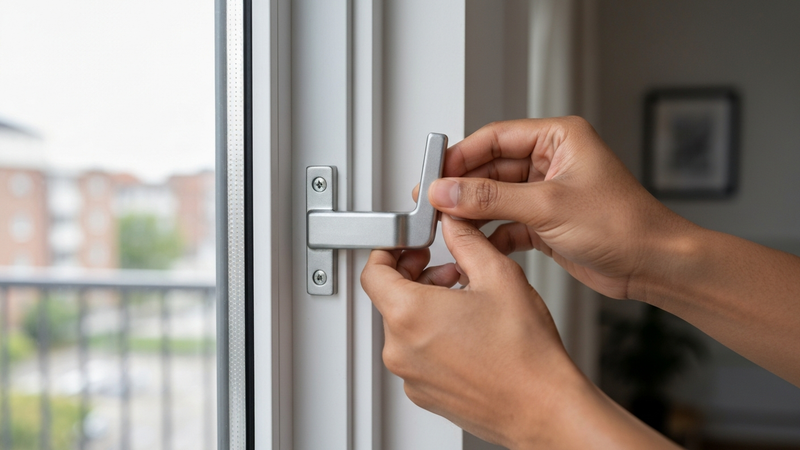
Run the systems rather than looking at them. Every tap on, simultaneously, to test pressure. Every toilet flushed. The heating and cooling switched on even out of season. Windows opened and closed. Closets opened, including the ones the camera would naturally skip.
Look up and down at the edges: ceiling corners, the base of exterior walls, under sinks and around window frames. Staining, bubbling paint or patched plaster in those places is the visible record of water, which is the most expensive thing an apartment can hide.
Ask for the view from each window filmed continuously rather than photographed, and ask what is planned for any adjacent lot. A protected view and a temporarily open one look identical on camera. A professional inspection covers the systems formally — our inspection guide sets out its scope and its limits.
Measure, do not estimate
Advertised square footage in New York is not a regulated measurement and is frequently generous. Ask for room dimensions taken with a tape or laser during the walkthrough, and for the ceiling height, which affects how a space feels more than most buyers expect.
Check that your own furniture fits, that doors open fully into rooms, and that any wall you plan to change is not structural. These are ordinary questions with expensive answers, and all of them are settled in five minutes by someone holding a measure.
Ask what the seller is not saying
Two questions produce more useful information than any inspection: how long has the apartment been on the market, and why is the seller selling. A long listing history in a liquid market is a signal about price, condition or the building, and the answer is usually knowable.
Also ask what work has been done in the unit and whether it was permitted. Unpermitted alterations become the buyer's problem at resale, and in some buildings they become the buyer's problem immediately when the managing agent notices.
3. The Documents Are Half the Viewing
No walkthrough reveals a reserve fund. The building's financial condition is invisible in every photograph and decisive in every purchase: reserve balance, assessment history, current litigation, planned capital work, and the minutes recording what the board has been arguing about.
For an overseas buyer, two further questions matter more than any finish: does the building permit non-resident ownership, and what does it allow by way of subletting. Both are answerable in writing before you view anything.
The full document review is set out in our building financials guide. Doing it before the viewing rather than after saves the most expensive kind of time.
4. The Counterargument: Is a Checklist Too Rigid?

Experienced buyers sometimes argue that a list produces box-ticking rather than judgement, and that the feel of a home cannot be reduced to eight rows in a table. There is something to that — nobody buys an apartment because the rubbish room was tidy.
The rebuttal is that the checklist exists to protect the judgement, not to replace it. A remote buyer's attention is scarce and mediated, and without structure it goes to the things the camera emphasises — the finishes, the light, the staging — rather than to the things that cost money later. Get the mechanical questions answered systematically, and the remaining impression is a real one rather than a directed one.
The same logic applies to who conducts the viewing. Someone representing the seller will show you the apartment; someone representing you will show you the problems, as our advisor article sets out.
One more argument for structure: a checklist creates a record. Six weeks later, comparing four apartments seen over three time zones, memory blurs and photographs flatter. Written answers to the same questions for each candidate make the comparison possible at all — and they make it obvious which building answered readily and which one did not.
Final Thoughts: Two Calls, Not One

The single most useful change a remote buyer can make is to insist on two walkthroughs at different times of day — one at a weekday rush hour with the windows open, one in the evening. Noise and light are the two things buyers regret most, and both are free to check twice.
Keep the sequence in mind as well. Building documents first, because they eliminate candidates without anyone travelling; then the live walkthrough on the survivors; then a professional inspection on the one you intend to buy. Viewing before reading is how buyers fall for an apartment in a building that was never going to work.
We conduct structured live viewings and building document review for clients purchasing from abroad, with brokerage services provided through licensed professionals. Talk to our team before you schedule a viewing, and we will tell you what to have them look at.
Reinvent NY provides business consulting, operational support, and coordination services. Legal advice and immigration filings are handled by independent licensed attorneys. Real estate services are provided through licensed professionals and applicable brokerage relationships. This article is for informational purposes only and does not constitute legal or investment advice.
More buying guides: Buying a House in New York State, Rent vs Buy in NYC, Buying a New York Condo as an International Buyer.

Satoshi Onodera
Founder & CEO, Reinvent NY Inc.
Founded Reinvent NY in 2024. Providing relocation support from all over the world to America.
Ready to Get Started?
Our team in New York is ready to help with your visa, real estate, or relocation needs.
Schedule a ConsultationFrequently Asked Questions
Can I really buy without seeing the apartment myself?
Yes, and it happens regularly. What replaces your presence is a structured live walkthrough, a professional inspection, and building document review — not a series of photographs.
What should a video walkthrough cover?
The street approach, the building entrance and lobby, the corridor, every room including closets, the actual view from each window, the mechanical fixtures, and the service areas. Live, unedited, with the phone held steady.
What does a professional inspection cover in an apartment?
Systems within the unit, visible plumbing and electrical, appliances, windows, and signs of water intrusion. It does not cover the building's structure, finances or shared systems, which is why document review is separate.
How do I judge noise remotely?
Ask for the walkthrough at a weekday rush hour with the windows open, then again on a separate call in the evening. Noise is the single most common post-purchase regret and it is the hardest to detect from photographs.
What questions should I ask about the building?
Reserve balance, assessment history, any current litigation, planned capital work, subletting policy, and whether the building has approved a non-resident purchaser recently.
Should I hire my own inspector?
Yes. The inspector should be engaged by you, not recommended solely by the seller's side, and should report to you directly in writing with photographs.
What is the biggest thing a video cannot show?
Smell, vibration, and the feel of the walk from the subway at night. Delegate those to someone representing your interests rather than the seller's.
Real Estate Guides & Data
More guides
- Bidding Wars in NYC: Winning Without Overpaying
- Building Staff and Holiday Tipping: The Unwritten Rules
- Buying Your Office: Commercial Condos for Founders
- The US Closing Timeline: Attorney States vs Escrow States
- NYC Contract Deposits: The 10% Between Offer and Close
- When a Property Owner Dies: The Family's First Steps
Related Articles
Building a US Property Portfolio From Outside the Country
How overseas owners scale beyond one US property: financing limits on non-residents, entity structure, management depth, and the order to add markets in.
Negotiating a New York Purchase: What Actually Moves Price
What sellers weigh besides price in New York: certainty of closing, timing, contingencies and board risk, and how a buyer turns those into a better number.
When a NYC Tax Abatement Expires: What Your Bill Becomes
How New York condo tax abatements phase out, what the unabated bill looks like, why resale prices adjust ahead of expiry.
How to Evaluate a Large New Condo Tower in New York
What to check before buying in a 300-unit New York tower: unsold sponsor inventory, abatement expiry, amenity carrying costs, and how resale works at scale.