Thorough Comparison and Explanation of the Advantages of Investing in U.S. Real
Hello everyone.
Thank you for visiting our site and for your interest in New York real estate among other real estate investments around the world.
In this article, I will write about Differences between Japanese and US real estate investment.
We hope you will bear with us until the end.
Japan is said to be reluctant to increase real wages.In contrast, how about the United States?
It is said that further economic growth can be expected in the U.S., where prices have not stopped rising in a sense, and real wages have risen significantly along with these increases.
By comparing the Japanese and U.S. economies, we may find differences and get a better picture of the reality of U.S. real estate investment.
In this issue, we will focus mainly on the process of acquiring real estate.
Japan-U.S. Comparison of Real Estate Investment Delivered in Five Themes

We will unravel the comparison between Japan and the U.S. in real estate investment from the following five perspectives.
- Transparency of indicated real estate prices
- Loan guarantee fees
- Financial instruments for real estate investment
- Down Payment
- Inspection
Even those familiar with Japanese real estate may be surprised to hear that real estate transactions in the U.S. and Japan are very different.
By comparing the differences between the two, the advantages may become more apparent, and vice versa.We hope you will find this information useful.
Japan-U.S. Comparison Part 1 - Transparency of indicated real estate prices

In terms of transparency of real estate prices, it is often said that "Japan of opacity / America of transparency".
The most significant factor is the business practices of Japanese real estate, but it does not seem to be the only factor.
We will explore this in more detail in the next chapter.
Are Japanese Real Estate Prices a Black Box?
In Japanese real estate, of the consumption tax on real estate purchases is clear, as land is exempt from taxation and buildings are subject to taxation.
The Japanese practice of displaying the total price is partly due to real estate business practices, but it is also largely required by law.It is also true that a certain number of buyers are not interested in the ratio of land to building and do not pursue it in depth.
However, past transaction prices of real estate are not known, and this information is not always managed in a database (Raines is used in the industry), which is a major characteristic of Japanese real estate.In a sense, this is a major characteristic of Japanese real estate.
American real estate is characterized by information that is more open and easy to understand.
In contrast, American real estate is characterized by more open and easy-to-understand information.It is easy for even non-professionals to find current real estate prices on the Internet.
The reason for the difference in price indications between Japan and the U.S. is based on the idea of a fair house market, as consumers are seeking information.The openness of information on U.S. real estate is a sign of high consumer interest.
Japan-U.S. Comparison #2 - Loan Guarantee Fees
Regarding loan guarantee fees, these are incurred in Japan, but the concept is somewhat different in the US.
In contrast to the Japanese loan guarantee fee, a different approach to real estate loans in the U.S. is to require collateral.This section delves into the differences between Japan and the U.S. in terms of loan guarantee fees.
Loan guarantee fees in Japan are approximately 2% of the loan amount?
When a loan is obtained from a financial institution, a guarantee agreement is usually concluded with the guarantee company through the financial institution.The cost associated with this cost is called the guarantee fee.
The amount of the guarantee fee is around 0 to 2% of the loan amount, and is generally deducted from the loan amount when the loan is executed.
While there is much debate as to whether or not a guarantee fee is required, guarantee companies have an important role to play.They are to make a lump-sum repayment to the financial institution on behalf of the debtor when the debtor defaults on payment.
Thereafter, the guarantee company acts as a new creditor and discusses repayment with the debtor.The guarantee fee is essential to these activities.
In the U.S., if you have less than a 20% down payment, you must join PMI
When purchasing real estate in the U.S., there is no guarantee fee if you obtain financing from an American financial institution, but if your down payment is less than 20% of the loan amount, you may be required to purchase insurance called PMI.Insurance may be required.
Short for Private Mortgage Insurance, it is responsible for guaranteeing the borrower in the event of delinquency, with the insurance company acting as the guarantor in Japan.
The annual fee ranges from 0.3% to 1.5% of the loan amount and can be paid every month or in a lump sum upon loan approval.
Another feature of PMI is that the borrower can request cancellation once repayment is well underway and the repayment percentage exceeds 20%.
However, it is important to note that these are not always taken, and in the U.S., compared to Japan, insurance companies provide this service.
Japan-U.S. Comparison Part 3 - Financial Products for Real Estate Investment

When a loan is used for real estate investment in Japan, you do not necessarily have to reside in the property concerned. Only in cases where the property for one's own residence is acquired using a mortgage loan.
The only loans available for real estate investment in Japan are investment loans, with a choice of financial institutions and interest rates.In the U.S., on the other hand, you can choose from a variety of options in addition to financial institutions and government agencies.
This chapter explains the financial instruments and associated precautions.
Japan: Can I use my mortgage to invest in real estate?
Mortgage loans cannot be used for real estate investment.If you can acquire and manage investment real estate using a mortgage with a low interest rate, yields will be higher, but it is strictly prohibited.If you give a financial institution a reason that is not true and the loan is executed, you may be charged with fraud.
Suppose, however, that a person acquires real estate for his/her own residence and is transferred to another location after acquisition.In this case, it is possible to rent the property out as a rental, whether on a regular or irregular basis.
If the property is to be acquired for investment from the beginning, an investment loan is generally available.
The United States: A Wide Selection of Financial Instruments Advantageous to Real Estate Investment
In the United States, various types of real estate loans exist.The subprime loans that triggered the famous Lehman Brothers collapse (loans can be secured by real estate on which the loan is being repaid) are also loans related to real estate.
In addition to financial and government loans, short-term (slightly higher interest rates) loans for real estate such as hard money loans and commercial loans can be used for real estate investments.
Overall, interest rates are high, but with the potential for higher prices in U.S. real estate, there is a good chance that even hard money loans can be profitable.
It may be more accurate to say that a strong economy is generating interest rates rather than that interest rates are high.
In the U.S., there are also low-interest loans such as FHA loans with interest rates starting at around 3.5%, which are available only for those who intend to live in the property, and in New York, there are many properties called "coops," which are purchased on the assumption that the buyer will live in the property for at least a few years after purchase.For more details, please contact us.
Japan-U.S. Comparison #4 - With or Without Down Payment

A down payment is not necessarily required for both Japanese and U.S. financial products.
This chapter explains the differences between Japan and the U.S. regarding down payments and the rationale for including a down payment.
Japan: Depends on Attributes
In Japanese real estate investment, it is generally said that a down payment of 10-20% of the property price is the bottom line. However, there are cases where a loan can be obtained with a down payment of 1% or less, depending on the property.
Preparing a down payment reduces the following four risks
- Overdraft
- Failure to qualify for a financial institution
- Deterioration in yields
- Higher interest rates.
If you make the decision to exit your real estate investment, you may have to add cash immediately to the sale.By preparing a down payment, you can control the costs involved in doing so.
For U.S. real estate, a down payment of about 20% is often required
For investment in U.S. real estate, one guideline is about 20%.However, some properties may allow for more flexible adjustment if the decision is made with an eye on the property's value, including its future.
In general, real estate investment in the U.S., where real estate prices are on an upward trend, exit strategies (obtaining capital gains) are clear, so the down payment is considered a necessary investment expense.
Japan-U.S. Comparison Part 5 - Inspection

Inspection is considered important in both Japan and the United States.
This section details the realities in the U.S. and the discrepancy between Japanese law and reality.
Inspections in Japan
The Japanese Real Estate Business Law clearly states that inspections are to be mediated.In practice, however, it may be said that the decision is often left to the field.
If, in the case of a popular property with a shallow root number, asking the seller for an inspection will not get a very good response. "I want to find another buyer who will not ask for an inspection.This is a risk.
The Civil Code was amended in 2020 to compensate for defects within the scope of contractual nonconformity liability if an inspection was not performed and a defect occurred.The decision is that it is more reasonable to pay the actual costs if something happens than to foresee the risk in advance by conducting an inspection.
Although inspections are important, they are not actively conducted as often as they should be.
Inspections are almost mandatory in U.S. real estate.
In contrast, inspections are mandatory in the United States.It is no exaggeration to say that it is practically mandatory.It has become one of the indispensable indicators and indispensable for investors to judge real estate.
These differences may be one of the major differences between Japan and the United States.
Conclusion
In this article, we have explained the differences between the U.S. and Japan with regard to real estate investment in the United States.We hope you have learned about the differences in business practices between Japan and the U.S. as well as the differences in laws.
JapanUnited States of AmericaPrice indicationTotal price
- Difficult to check the ratio of land to building
Total amount
Easy to check the ratio of land to building
Guarantee feeNecessary in principleNot required
May be insured
Financial instrumentsMortgages are not available
Investment loans are the only option
The interest rate is a little high, but the value of the real estate itself
is also high, so there is no problem
Down payment20%
Needed depending on the financial institution's decision
It is better to prepare as much as possible
.
About 20% of the totalInspectionVirtually NegativeVirtually Must
Thank you for taking the time to read this article.
Our company, Reinvent NY Inc, continues to assist individuals and companies who are moving to the US, buying or renting real estate in 2019, offering comprehensive services to support all aspects of the process.
We would be happy to discuss your needs with you once you contact us using the form below.
If you are considering immigrating to the U.S., or have a small investment amount, or have no track record or history in the U.S., please contact us with any questions you may have.We promise to provide you with a friendly and sincere service.More details are below.
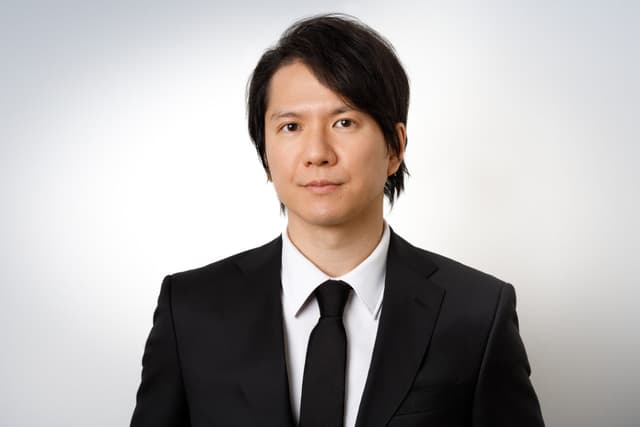
Satoshi Onodera
Founder & CEO, Reinvent NY Inc.
In 2019, Satoshi left his career at NTT Data and Mercari, self-funded an E-2 investor visa, and relocated to New York to start Reinvent NY. Today, the company serves over 100 clients from 20+ countries with E-2 visa consulting, real estate, and relocation support. Satoshi holds a New York State Real Estate License.
Ready to Get Started?
Whether you need help with visas, real estate, relocation, or business setup — schedule a consultation with our team.
Schedule a Consultation